Microphone Arm Vs Desk Stand
I tested nine mics last month in my studio and again in my kitchen, and the question I got most wasn't about the mics. It was about what I was holding them up with. So here's the answer, with the verdict first.
A microphone arm beats a desk stand for any creator who moves around while recording, while a desk stand wins for fixed setups, interviews, and anyone who doesn't want to clamp a thing to their desk. I've used both for years, and the gap between them depends entirely on what you're doing at the desk, not what you're recording into the mic.
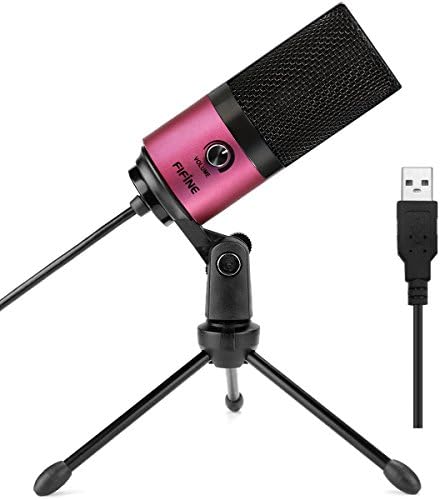
FIFINE K669B USB Microphone, Condenser Recording Mic for Vocals, Meeting
Cheapest entry point, solid condenser sound for the money
Visit on Amazon →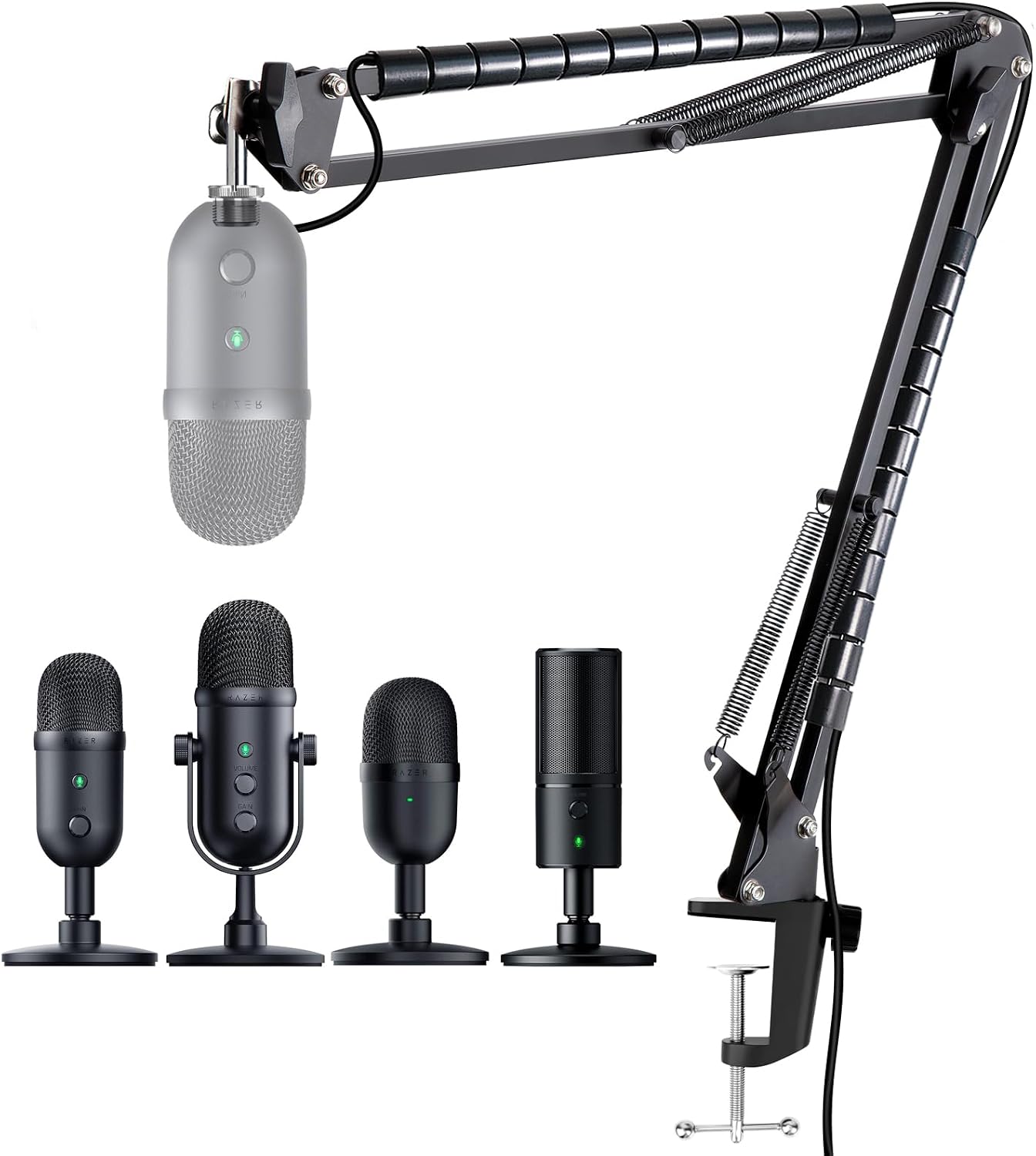
Mic Boom Arm for Razer Seiren V3 Mini Microphone - Adjustable Mic Arm Compatible with Razer Seiren V2 X, Seiren Mini and Seiren X, Mic Stand Great for Streaming, Gaming, Podcast by YOUSHARES
Works on phone, no stand needed at all
Visit on Amazon →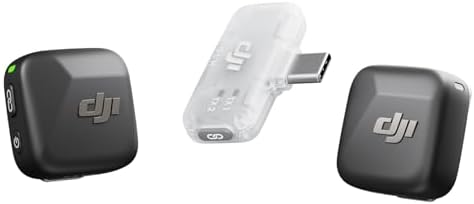
DJI Mic Mini (2 TX + 1 Mobile RX), Ultralight, Active Noise Cancelling
Wireless flexibility, two mics for interviews
Visit on Amazon →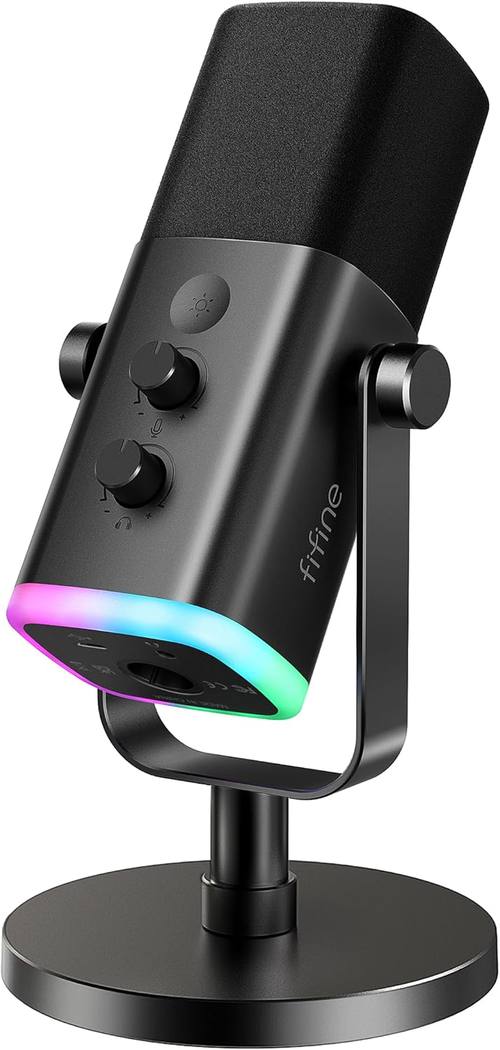
FIFINE AmpliGame AM8 USB/XLR Dynamic Microphone for Gaming Streaming
USB/XLR dynamic, real upgrade potential
Visit on Amazon →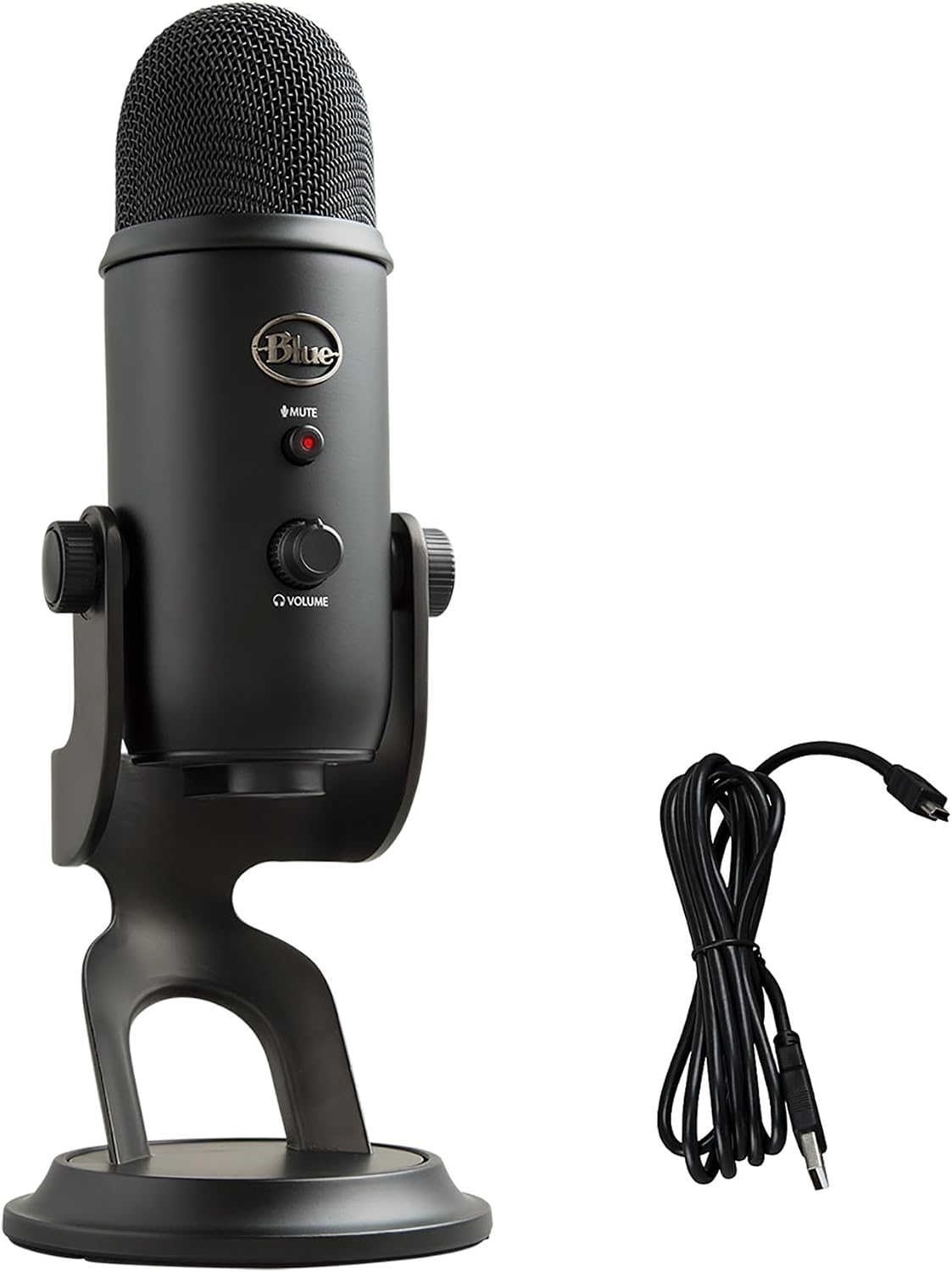
Logitech Creators Blue Yeti USB Microphone for PC, Mac, Gaming, Recording, Streaming, Podcasting, Studio and Computer Condenser Mic with Blue VO!CE effects, 4 Pickup Patterns, Plug and Play - Blackout
USB convenience, multiple polar patterns
Visit on Amazon →DJI Mic Mini (2 TX + 1 Mobile RX), Ultralight, Active Noise Cancelling
Full wireless kit with case
Visit on Amazon →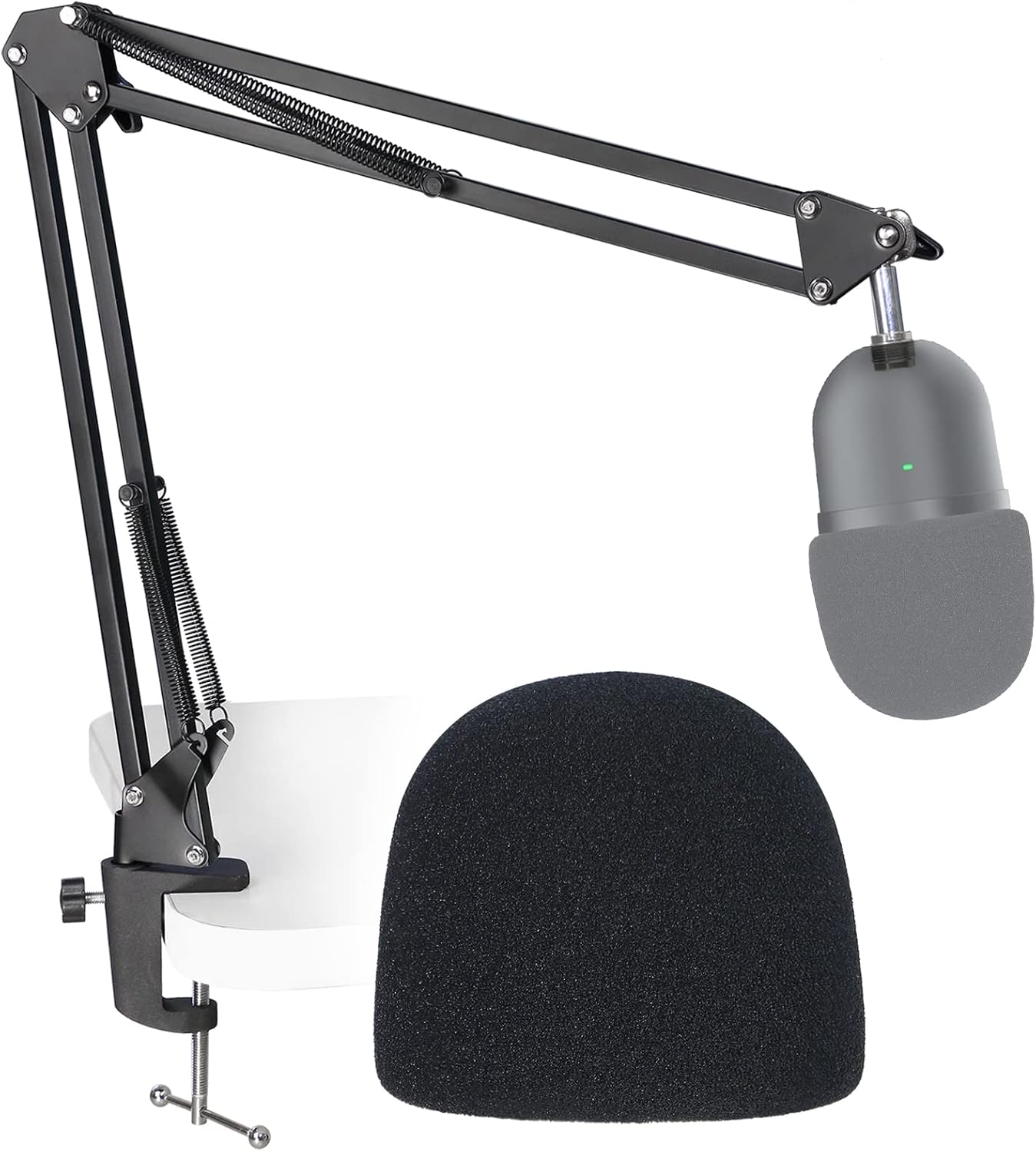
SUNMON Boom Arm for Seiren V3 Mini, Mic Arm for Seiren Mini with Pop Filter
Industry standard, built like a tank
Visit on Amazon →Why the arm keeps winning in my studio
A boom arm (what most people call a microphone arm) suspends the mic from above or beside you on an articulating arm. A desk stand sits on the desk and holds the mic upright.
The arm wins for three reasons in my daily use:
It gets the mic closer to your mouth without putting it in front of your face. On a stand, the mic sits between you and whatever you're looking at, screen, script, notes. On an arm, it swings in from the side and stops just below chin level. Your keyboard, your script, your line of sight to a co-host all stay clear.
It absorbs desk vibrations. Every desk has a resonance. Type on it, tap it, bump it, and the mic hears it. An arm with a shock mount decouples the mic from the desk. A stand doesn't. The FIFINE AM8 with its built-in shock mount works even better on an arm than a stand for this reason.
It's adjustable in real time. Reach up, slide the mic out of frame for a sip of coffee. Pull it back. Tilt it down. You can't do that with a stand without leaning the whole thing over and picking it up.
In my kitchen, the arm is even more important. The table is a hardwood farm table that creaks when I shift my weight. With a stand, every lean shows up in the recording. With an arm clamped to the table's edge, the mic floats free of the table and my movement noise drops to almost nothing.
Where the desk stand wins
Desk stands aren't worse. They're just different. Three cases where I'd pick a stand over an arm:
Interviews and podcast setups with multiple people. You can put one stand in the middle of the table and pass it around, or set two stands side by side. An arm works for one person, not for two.
Voiceover booths where the mic stays put. My VO booth has a fixed position: mic at mouth height, pop filter in front, script on a stand below. I mounted the mic on a desk stand because it never moves. Why add the articulation I'm not using?
Tiny desks where the clamp won't fit. Not everyone has a 2-inch desk edge. If your desk is a glass slab or a thin folding table, the arm's clamp has nothing to bite onto. A weighted desk stand solves that.
The Blue Yeti is a perfect example. It's heavy, around 2.2 pounds, and sits low because it doesn't need to be right at your mouth. A heavy desk stand keeps it stable. Mount it on a flimsy arm and you'll be adjusting it every five minutes.
The weight problem nobody warns you about
The FIFINE K669B at ~$24 weighs almost nothing. The Blue Yeti at ~$100 is 2.2 pounds. The Shure SM7B at ~$635 is 1.69 pounds but feels like 5 because of its solid metal construction. Cheap arms are rated for mics under 2 pounds and they'll slowly sag over time with anything heavier.
If you're running a Yeti or an SM7B, spend the money on an arm rated for at least 3 pounds. I learned this the hard way with a no-name brand arm that sagged within a month under a Yeti. The mic ended up pointing at my chest, not my mouth. I retired the arm, not the mic.
The Blue Yeti question
I get this one constantly: should I get a Blue Yeti with an arm, or a Blue Yeti with a stand?
At ~$100, the Yeti comes with a desk stand in the box. It's serviceable, not great. The stand is too short for most people, so you're either hunching toward the mic or stacking books under the stand. If you're buying a Yeti, budget for an arm. Any arm rated for 2+ pounds will work. The stand belongs in a drawer as a backup.
The Yeti's biggest weakness is exactly the thing the arm fixes: it's a side-address mic that needs to be at mouth level, and the included stand doesn't get it there. Pair it with a proper arm and the Yeti suddenly sounds the way it should.
The FIFINE AM8 and the upgrade path
The FIFINE AmpliGame AM8 at ~$45 is the mic I recommend most often to people starting out. It's USB and XLR, which means you can start with the USB cable plugged into your laptop and later move to an interface like a Scarlett Solo without buying a new mic. That's the path I keep telling people to take.
It weighs about as much as a Yeti and has a built-in shock mount. On a stand, it works. On an arm, it really works. The shock mount is what makes the difference. On a stand, the mount absorbs stand vibrations. On an arm, the mount and the arm's decoupling handle the rest. You're left with a clean vocal and zero desk noise.
This is the setup I tell people to copy if they're starting a podcast in 2026 with under $200 total: the FIFINE AM8 at ~$45, a decent arm at ~$40, and a pop filter at ~$10. That's ~$95 and you're done. Skip the interface until you outgrow the USB.
What about wireless?
The DJI Mic Mini kits at ~$45 and ~$79 are wireless lav systems. They don't use arms or stands at all. They clip to your shirt. I'm including them here because people ask: does wireless replace the arm?
No. It replaces the cable. The mic still sits on your body. For mobile creators, vloggers, and run-and-gun interviewers, that's the answer. For someone sitting at a desk recording a podcast, a wireless lav is overkill and sounds worse than a proper mic on an arm.
If you're recording at a desk, arm or stand. If you're recording on the move, wireless lav. Different tools, different jobs.
My honest take
I've been using mics for over a decade, and the arm vs stand debate isn't really a debate. It's a "what's your desk look like" question. The arm is the more flexible tool. The stand is the simpler tool. Both work. The arm is what I reach for nine times out of ten because I fidget, I lean back, I grab coffee, and I don't want any of that to move the mic.
The mistake I see most often is people buying a $30 mic and a $15 arm, then wondering why the mic droops or the arm sags after a month. Spend the same on the arm as you spent on the mic. The arm is part of the system. Treat it that way.
I'm still testing arms and stands, specifically a few under $30 to see if any of them hold up to the Shure SM7B without sagging. If you want the results, check back in March.