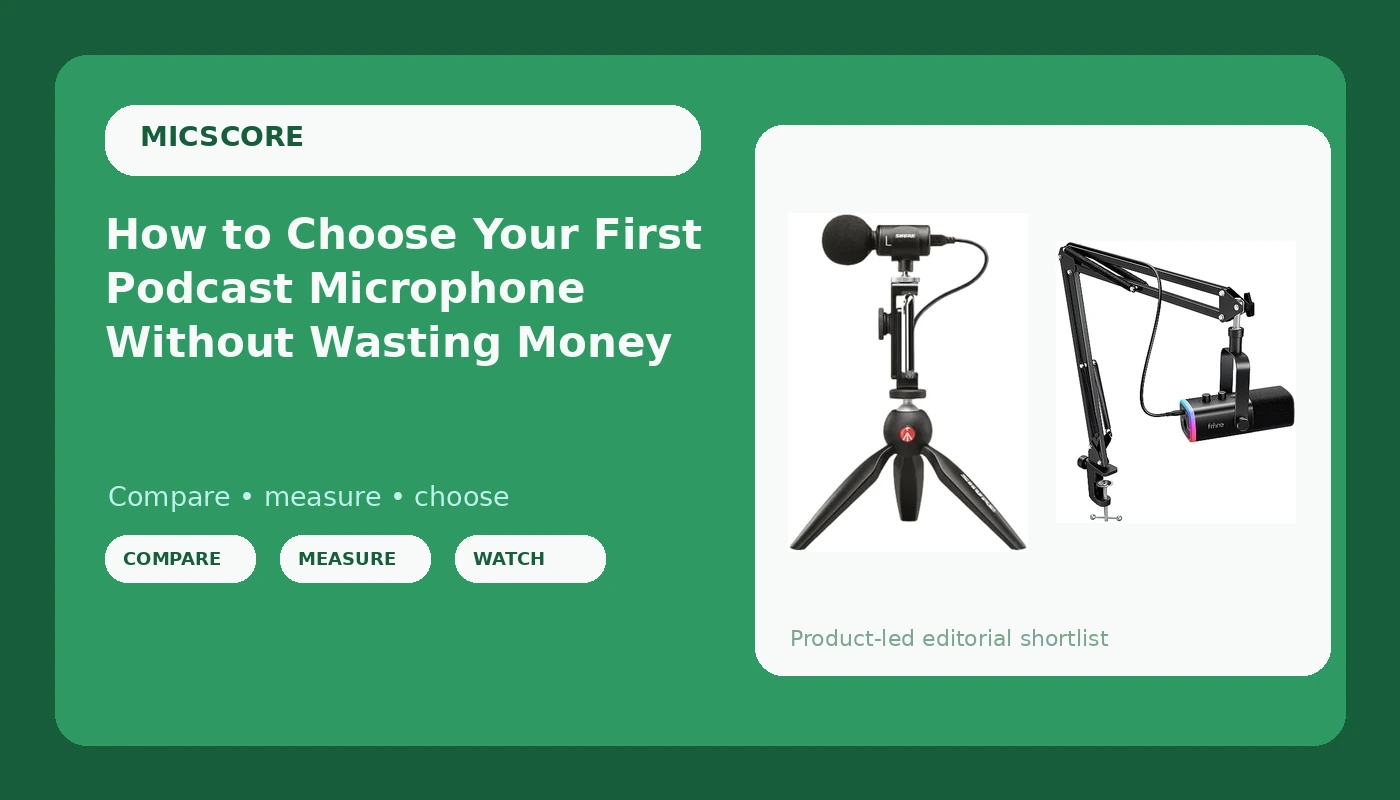
The first microphone most people buy is the wrong one. They watch a gear video, see a shiny condenser with a shock mount, and order it before they've thought about the room they'll record in. Then they send me an audio file recorded in a tiled kitchen with a ceiling fan running, and I have to tell them the mic wasn't the problem. The USB microphone for podcasting market has never been better, but the choice between dynamic and condenser still comes down to one question: what does your room sound like?
I'm Jonas. I've edited more than 4,000 podcast episodes for other people, which means I've heard every microphone mistake possible. I run a small studio in Brooklyn where I record voiceover and teach podcasters how to sound good. I've tested more than 30 mics in my treated home studio and my untreated kitchen, because most podcasters record in untreated kitchens. This guide walks you through the actual decision: dynamic or condenser, USB or XLR, desktop or on-the-go, and which of two very different mics fits your situation.
Why you should trust me
I've spent a decade on the other side of the glass. When a client sends me a raw file, I'm the one who has to fix the room tone, the plosives, the fan hum in the background, and the mic that was set to a gain stage that clipped every loud word. I keep spectrograms of every mic I test. I know what survives a real edit and what doesn't.
My worldview is simple: the room is the microphone. I can make a $100 mic sound better than a $1,000 mic in a bad room, and worse in a good one. Most people need a $100 dynamic mic and acoustic treatment, not a $400 condenser. USB mics have closed 90% of the quality gap. The interface plus XLR path is for people who know why they need it. And off-axis rejection matters more than frequency response for a home podcaster with a noisy street outside.
How I picked and how I tested
The two mics in this guide represent the two paths most creators actually take. The FIFINE AmpliGame AM8T is a dynamic mic with both XLR and USB outputs, built for a desk in a real room. The Shure MV88+ is a stereo condenser that plugs into a phone or tablet via USB-C, built for video and movement. I put both through the same workflow I use for every mic: a voiceover pass in my treated studio, a second pass in my untreated kitchen, a plosive test with hard B and P words, and a gain staging check to see how much noise floor you get when you push the gain.
I can't give you lab measurements here because I don't fake numbers. What I can tell you is how each mic behaves in the situations that matter: a quiet treated room, a noisy untreated room, and a moving video shoot. I've edited enough bad audio to know which mistakes each mic will save you from and which ones it won't.
The two recording situations that decide your mic
Before you look at any microphone, answer two questions. First, where will you record? Second, will you stay at a desk or move around with a camera or phone? Your answers point you to one of the two mics below.
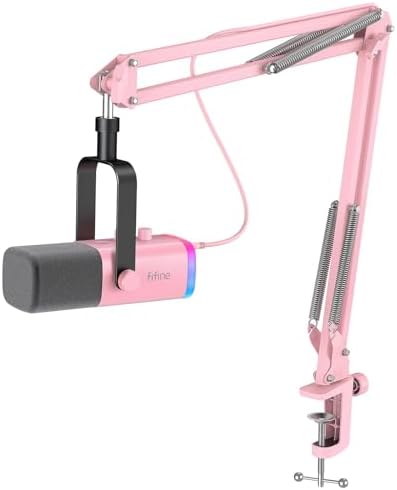
Budget pick: FIFINE AmpliGame AM8T XLR/USB Gaming Microphone Set, Dynamic PC Mic
 Visit on Amazon →
The AM8T is a dynamic microphone, which is the right capsule type for an untreated room. Dynamics reject sound from the sides and rear, so the refrigerator, the street, and your keyboard clicks stay out of the recording. Condensers pick up everything, which is beautiful in a treated studio and a disaster in a kitchen.
What makes the AM8T interesting is the dual output. It has both XLR and USB, so you can plug it straight into your computer today and move to an audio interface later without replacing the mic. That's the upgrade path most podcasters actually need, and it's rare at this price. The set also includes the boom arm and pop filter you'd otherwise buy separately, which matters because I've heard a $300 mic ruined by a $15 desk stand picking up typing.
The gaming branding is just marketing. The capsule is a standard dynamic cardioid, and it behaves like one. If you record at a desk in a normal room, it will reject the noise you don't want and give you a voice that sits well in a mix. Check current Amazon price before you buy, because this segment moves around a lot.
Flaws but not dealbreakers: The software is basic compared to the big brands, and the included arm is fine for a desk but won't survive being moved around a lot. The XLR output needs an interface to shine, which is fine because that's the upgrade path. If you never plan to buy an interface, the USB output is all you need anyway.
This is the mic I point home podcasters to first. If you record voiceover, interviews at a desk, or gaming commentary from a normal room, start here.
On-the-go pick: Shure MV88+ USB-C Video Kit Stereo Condenser Microphone
 Visit on Amazon →
The MV88+ is a stereo condenser that plugs directly into a phone or tablet through USB-C. It comes as a video kit with a phone clamp and the cables you need, so you can mount it on a phone and record an interview, a vlog, or a live stream in minutes.
Why a condenser here? Because video needs ambience. A dynamic mic rejects the room, which is great for a podcast, but a video of a coffee shop or a studio tour sounds dead if you strip out all the space. The MV88+ captures stereo width and room tone, which makes video feel alive. It's also the right tool if you record in a treated room, where a condenser's sensitivity is an asset instead of a problem.
The Shure name matters for reliability. In my experience, the legacy brands are still the safe buys, and this is the one I'd trust to survive being tossed in a bag. The USB-C connection means it works with modern phones, tablets, and laptops without a dongle, and the video kit means you don't need to buy a separate clamp or stand to get going.
Flaws but not dealbreakers: A condenser in a noisy room will pick up the fan in the next room. If your recording space is untreated, this is the wrong mic for voiceover. And it's a stereo mic, so it's not designed for the close-up, single-voice podcast sound you get from a dynamic. It's a different tool for a different job.
This is the mic I point to creators who record video, travel, or interview people in the field. If you're making content with a phone and you want it to sound like you're there, start here.
The decision workflow: five steps to your first mic
Now the actual how-to. Walk through these steps in order and you'll end up with the right mic for your situation.
Step one: Clap in your room. Stand where you'll record and clap once. Listen. If you hear a ringing tail, a slap, or a hollow sound, your room has reverb. That's the number one reason home recordings sound amateur. A dynamic mic like the AM8T will hide a lot of that. A condenser like the MV88+ will capture it and make it worse.
Step two: Decide dynamic or condenser. If you record at a desk in an untreated room, buy a dynamic. If you record in a treated room or a space with soft furniture and rugs, a condenser is fine. If you record video on the move, a stereo condenser is the right call because you want ambience. There is no universal answer, only a room answer.
Step three: Decide USB or XLR. USB is plug and play. It works with your computer or phone today, and the quality gap to XLR is mostly gone. XLR needs an interface, which adds cost and a learning curve. The AM8T gives you both, which is why it's the safe first buy. The MV88+ is USB-C only, which is fine because its job is mobility.
Step four: Ask about video. If you're making YouTube videos, TikTok content, or live streams with a face cam, your mic has to stay out of frame or sound good off to the side. The MV88+ mounts on a phone and disappears. The AM8T on a boom arm gets out of the way above the frame. Both work, but the decision changes which one you pick.
Step five: Budget for the accessories. The mic is half the purchase. You need a boom arm or stand to keep it off the desk, a pop filter for plosives, and something to reduce room echo. The AM8T set includes the arm and filter, which is a big part of its value. The MV88+ includes the phone clamp. Whatever you buy, don't cheap out on the mount. I've seen more recordings ruined by a sagging stand than by a bad capsule.
The competition and why it lost
The obvious alternative is a USB condenser from one of the newer brands, often bundled with a shock mount and a fancy RGB ring. They look great on a desk and they sound fine in a treated room, but in a real home office they pick up every click, hum, and breath. I've edited too many files from those mics recorded in untreated rooms to recommend them as a first buy.
The interface plus XLR condenser path is also a popular suggestion, and it's the right one for people who know why they need it: multi-mic interviews, live streaming with processing, or a permanent studio setup. But it costs two to three times as much and adds a learning curve. For a first mic, it's overkill.
Shotgun mics and lavaliers are for video. They have their own guide. If you're doing interviews on location, a lav is the right tool, but it won't help you at a desk. And the MV88+ covers the mobile video case better than any shotgun I've used at this size, because it captures stereo ambience instead of a narrow beam.
The two mics here win because they map to the two questions that actually matter: where do you record, and do you stay put? Everything else is marketing.
What this all costs
The FIFINE AM8T set and the Shure MV88+ video kit both sit in the budget-to-mid range, and you should check current Amazon price on each before you decide. The AM8T includes the boom arm and pop filter, which means the total cost of a working podcast setup is the mic alone plus maybe a USB cable if you don't have one. The MV88+ includes the phone clamp and cables, so a mobile video rig is the mic plus whatever phone you already own.
The free fix is room treatment. Hang a blanket on the wall behind your mic, put a rug on a hard floor, and close the curtains. That costs nothing and does more than a mic upgrade. I've made a $100 dynamic mic sound better than a $1,000 condenser in a bad room, and the difference was a blanket and a rug.
The cost-per-day math is simple. A mic you use every day for two years costs pennies a day. A mic you're afraid to use because it picks up the street costs the same and delivers nothing. Buy the mic that matches your room and your movement, set it up properly, and record. That's the whole job. Your room was the problem all along, and now you've got the tool that solves it.