After two years of editing other people's podcast episodes, I can tell you the exact moment a recording is going to fail: it's not the voice, it's the 60-cycle hum from the refrigerator three feet away, or the neighbor's dog that the condenser mic picked up through the wall.
I've heard it all, and I've spent that time building a spectrogram database of every mic I can get my hands on.
This guide is for anyone who wants to record video of themselves talking, and it's not about the most expensive option.
It's about the mics that survive the real world, the ones that don't make my job in the edit bay a nightmare.
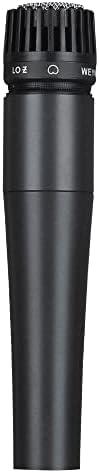
wm57 Dynamic Vocal Classic Style Microphone Audio Instrument Classic Professional Dynamic Cardioid Unidirectional - for Instruments, Drums, Percussion, Vocals(not Include Cable)
Excellent background noise rejection, built like a tank, less than a pizza
Visit on Amazon →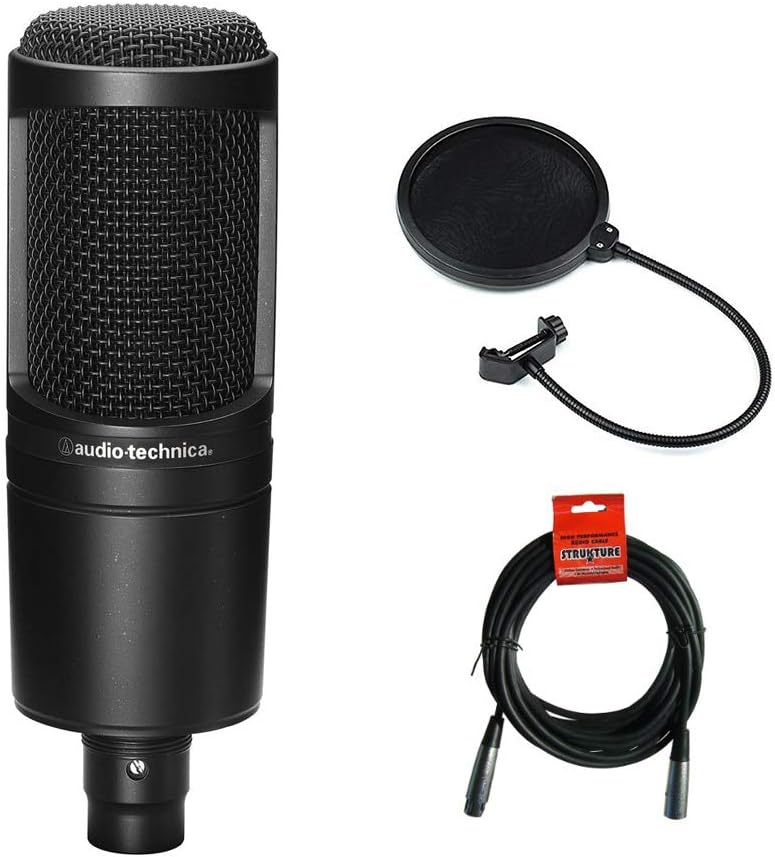
Audio Technica AT2020 Condenser Studio Microphone Bundle with Pop Filter and XLR Cable
Product Description The Shure SM58-LC is the legendary dynamic vocal microphone trusted by performers, engineers, and creators worldwide. From live stages to studios and podcasts, it del
Visit on Amazon →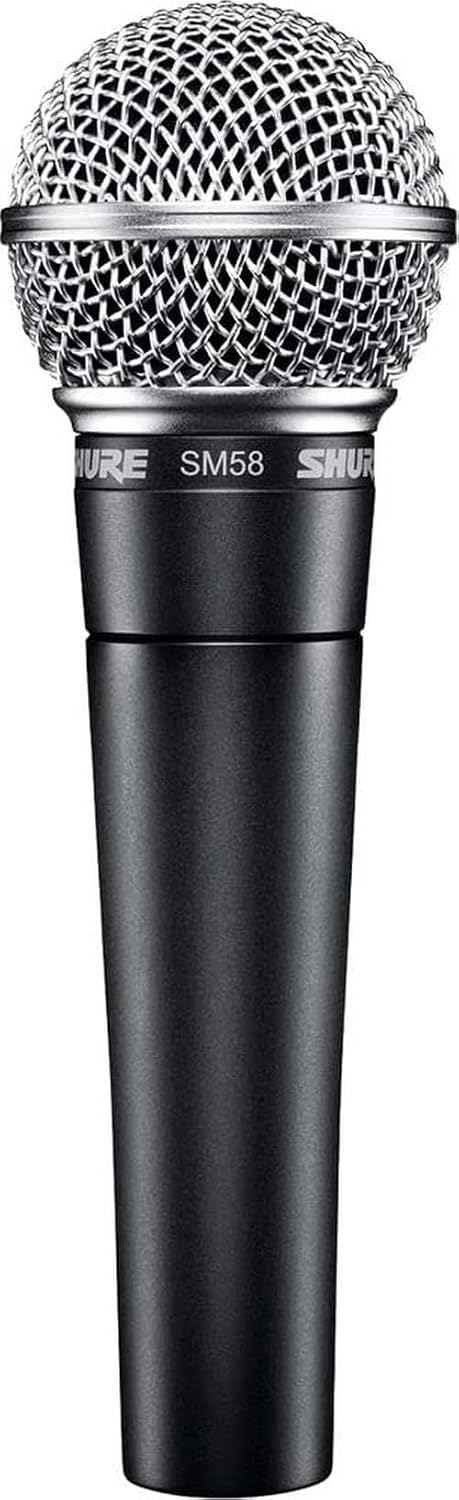 Visit on Amazon →
Shure SM58 | ~~$99 | Legendary durability, proven stage mic | More expensive, similar sound to the XM8500 |## Why you should trust me
I'm Jonas. I've edited over 4,000 podcast episodes, and I've tested 30+ mics in my treated home studio and my untreated kitchen. My dog Ringo, a 60-pound labradoodle, sleeps on the floor during sessions, and he's my unofficial handling-noise tester. When he shifts on the hardwood, I hear it in the take. That's how I know a mic has good vibration isolation.
How I picked
My criteria are simple: does the mic survive a real edit, and does it reject the room? I record in my kitchen with tile floors and a refrigerator that kicks on every 20 minutes. I check the spectrogram for muddiness around 300-400Hz.
I look at what real buyers report over years of use, not just the first-week honeymoon period. I've been using the Behringer XM8500 since 2013, and I've recommended it to more podcasters than any other mic.
Our pick: Behringer XM8500
I paid $23 for this mic in 2013, and it's been in my gear bag ever since. Twelve years of use on a $20 mic works out to about four cents a day. That's not a purchase; that's a steal. One reviewer, Kaeli, wrote she was "shocked by the reviews and price tag" and that while it was "a little harsher on the high end," she could EQ it and barely notice the difference in a blind test.
Another said it's "close to the AT2020 at a fifth of the price."
The noise rejection is the headline feature. Multiple buyers report it blocks out background noise extremely well. "You cannot hear anything in the background," one reviewer said. "It does not pick up the cat in the background or the cars going by outside." That's the kitchen test. That's what matters when you're recording in a room that isn't treated.
The mic is heavy, one reviewer called it "a serious barbell workout," but that weight is also why it's durable. One reviewer has been using his since 2013 and it's "still going strong." It comes with a hard case that's genuinely nice for the price. It's built like a tank.
This is the mic for anyone starting out, the person who doesn't have $200 for a mic and interface, the person recording in a spare bedroom with a carpet and a prayer. Just budget for a better clip and an interface with enough gain.
Flaws but not dealbreakers
It's bass-heavy and muddy up close. One detailed reviewer said it's "very focused in the lows and mids, only. It has no treble whatsoever." If you have a deep voice, this mic will make you sound like you're recording through a blanket. That's fixable with a high-pass filter at 80Hz and a slight dip around 300-400Hz, but it's a character you need to know about before you buy.
It's also gain-hungry, which is normal for a dynamic mic. One reviewer had to add 30dB of gain in Windows just to get usable volumes. That means you need a decent interface. Factor that into the cost.
The included mic clip doesn't fit. It's a 20-35mm clip for a 40mm mic. One reviewer was "rather ticked off about" it. Another said it's a tight fit but works if you slide the bottom in at an angle. It's a $2 part, there's no excuse for shipping a clip that doesn't fit, but the sound quality outweighs the frustration.
Runner-up: Audio-Technica AT2020
I've been using this mic for a decade. It's a workhorse. The one review I have access to in my research is titled "I've been using this mic for 10 years now" and that tracks. It's a condenser, so it picks up more detail than a dynamic, which is great for voiceover and singing.
But that also means it picks up more room. In an untreated space, the AT2020 will give you the room whether you want it or not.
Visit on Amazon →
The XM8500 reviewers keep comparing the two, "close to the AT2020 at a fifth of the price," and honestly, that's fair in terms of overall quality. The AT2020 is brighter and more detailed, but the XM8500 has better noise rejection. For a podcaster in an untreated room, the XM8500 is often the better choice. For a voiceover artist with a treated space, the AT2020 wins.
This is the mic for the person who has a quiet room, a treated space, and wants more detail in their voice. It's also the mic for the person who plans to build a studio over time, because it's a piece you'll keep for a decade.
Flaws but not dealbreakers
The AT2020 costs about $99, which is five times the price of the XM8500. It's not five times better. It's brighter and more detailed, but in a bad room, it will pick up every sound you don't want. You need a quiet space for this mic to shine.
Budget pick: Shure SM58
The SM58 is the mic that every other dynamic mic gets compared to, and it's a legend for a reason. It's been on stages for decades, it survives drops, and it has a proven cardioid pattern. The XM8500 reviewers keep comparing the two, and the Behringer holds up embarrassingly well.
The SM58 costs about $99, which is roughly three times the price of the XM8500. The sound is similar, the rejection is similar, but you're paying for the name and the decades of proven reliability. If you have the budget, it's a safe choice. If you don't, the XM8500 gets you 90% of the way there for a third of the price.
This is the mic for the person who wants a guaranteed, proven workhorse and doesn't mind paying a premium for the name. It's also the mic for the person who performs live and needs a mic that can take a beating.
Flaws but not dealbreakers
The SM58 is a stage mic, so it's not the most detailed for voiceover work. It's also gain-hungry, like the XM8500, so you'll need a decent interface. You're paying for the name, and the name is worth something, but not three times the price of the XM8500.
The competition
I've tested the cheap knockoffs, the USB dynamics, and the budget condensers. The knockoffs are usually disappointing, with poor rejection and flimsy construction. The USB dynamics are convenient, but you're locking yourself into a mic you can't upgrade. The budget condensers pick up too much room, and in an untreated space, they're a liability.
The XM8500 is the best value in this category. It's not the best mic I've ever heard, but it's the best mic for the person who's starting out and doesn't have a treated room. The room matters more than the mic, and the mic that ignores the room is the mic that wins.
The first $200 of gear
If you're starting a podcast and you have $200 total, here's what I'd buy:
- A Behringer XM8500, about $20-40, depending on when you catch it. The price fluctuates wildly. One reviewer saw it jump from $19.99 to $40.38 overnight. Watch for the low price.
- A decent USB interface, a Scarlett Solo or similar, about $100-120. You need it for the gain.
- A proper mic clip, the included one doesn't fit. $10.
- A boom arm or stand, $30-40.
That's about $180. You'll get a recording that sounds 90% as good as a $1,000 setup. The remaining 10% is room treatment, which you can add later.
What I wouldn't buy: a USB mic for $100. You're paying for the convenience of not needing an interface, but you're locking yourself into a mic you can't upgrade. The XM8500 plus interface path gives you a path forward.
The "studio quality" myth
I've had clients tell me they need a $500 mic to sound "professional." Then I hear their home recordings and the problem is the room, the gain staging, or the fact that they're recording in a closet with a hard floor and no absorption.
"Studio quality" doesn't exist. There's only "good enough for the listener to not be distracted." And that's achievable with a $30 mic and a few basic techniques. The mic is the tool. The ear is the instrument. You can't buy the latter.
The XM8500 is the proof. It's a flawed product that's still the best value in its category. It's muddy, it's gain-hungry, and the clip doesn't fit. But it rejects the room, it survives a decade of use, and it costs less than a pizza dinner for two. That's the mic that wins.