I have edited more than 4,000 episodes for other people, which means I have heard every microphone mistake a person can make. The pattern never changes. Someone buys a mic, records in an untreated room, hears the fan and the street and their own keyboard, and decides the microphone is bad. So when readers ask me to sort out budget mic setups for creators, I try to answer the question behind the question: what is each piece of gear actually for?
The four products here are not competitors in the usual sense. Two are microphones, one is a mount, and one is a wireless pair built for a party speaker. That is exactly why the comparison is useful. Between them they cover the four ways most creators get voice into a computer or a phone, and each one fails in a different way when you ask it to do a job it was not designed for.
The short answer: the Razer Seiren V3 Mini is the microphone most desk-based creators should start with, and the YOUSHARES boom arm is the accessory that makes it usable, because a mic sitting on a desk stand picks up every keystroke and every truck on the street below. The pink wireless lav is the right tool when the camera is a phone and the person has to move. The JBL PartyBox wireless pair is not a podcast microphone, and I will explain who it is actually for.
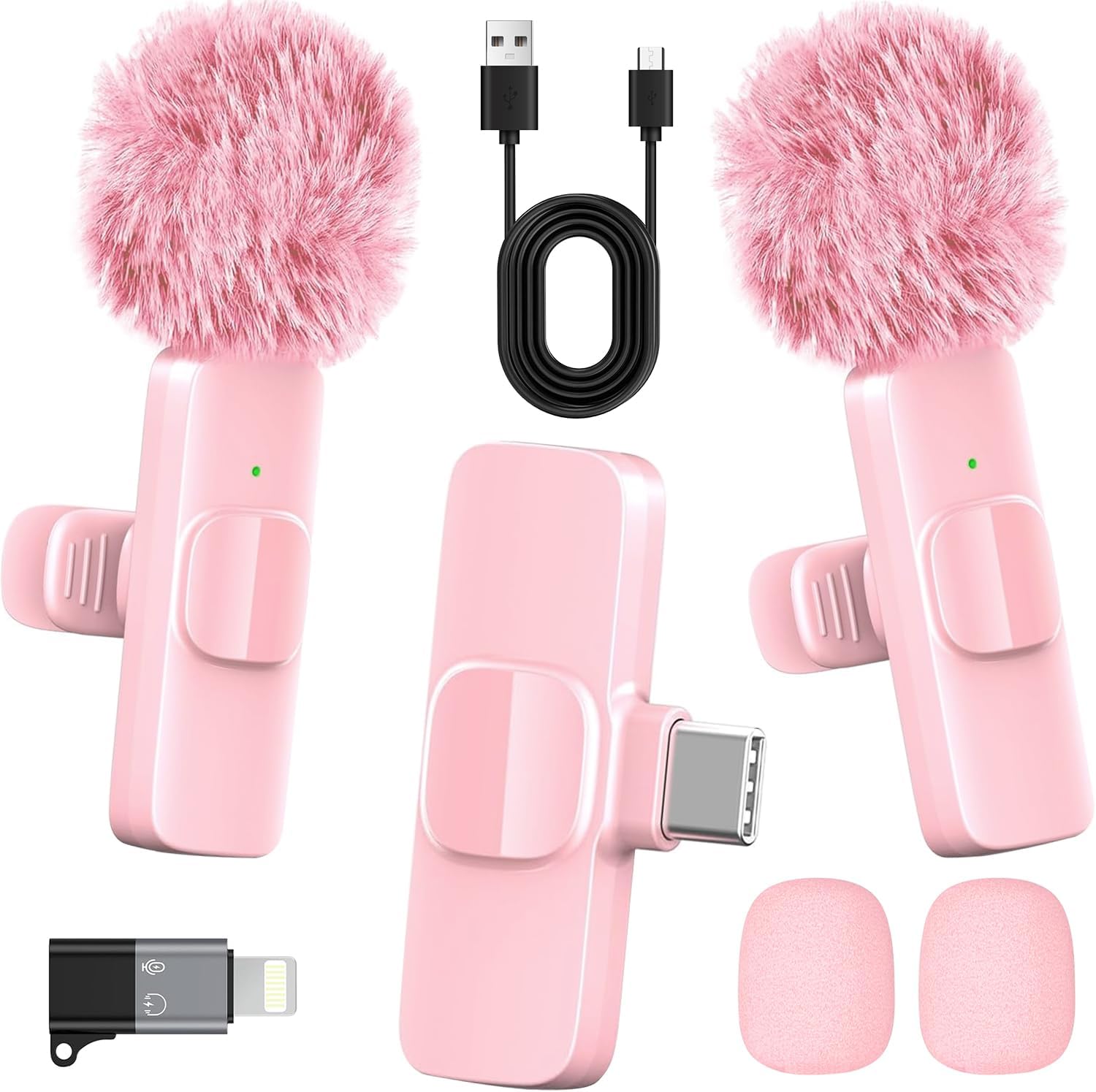
Pink Wireless Lavalier Microphone for iPhone & Android
The only option here that plugs straight into a phone and clips to a shirt, with USB-C and Lightning covered, a stated 65ft range, and 8 hours of battery
Wireless compression, 2.4GHz congestion, and a noise-cancellation mode that can make a voice sound processed. Clothing rustle is a real problem
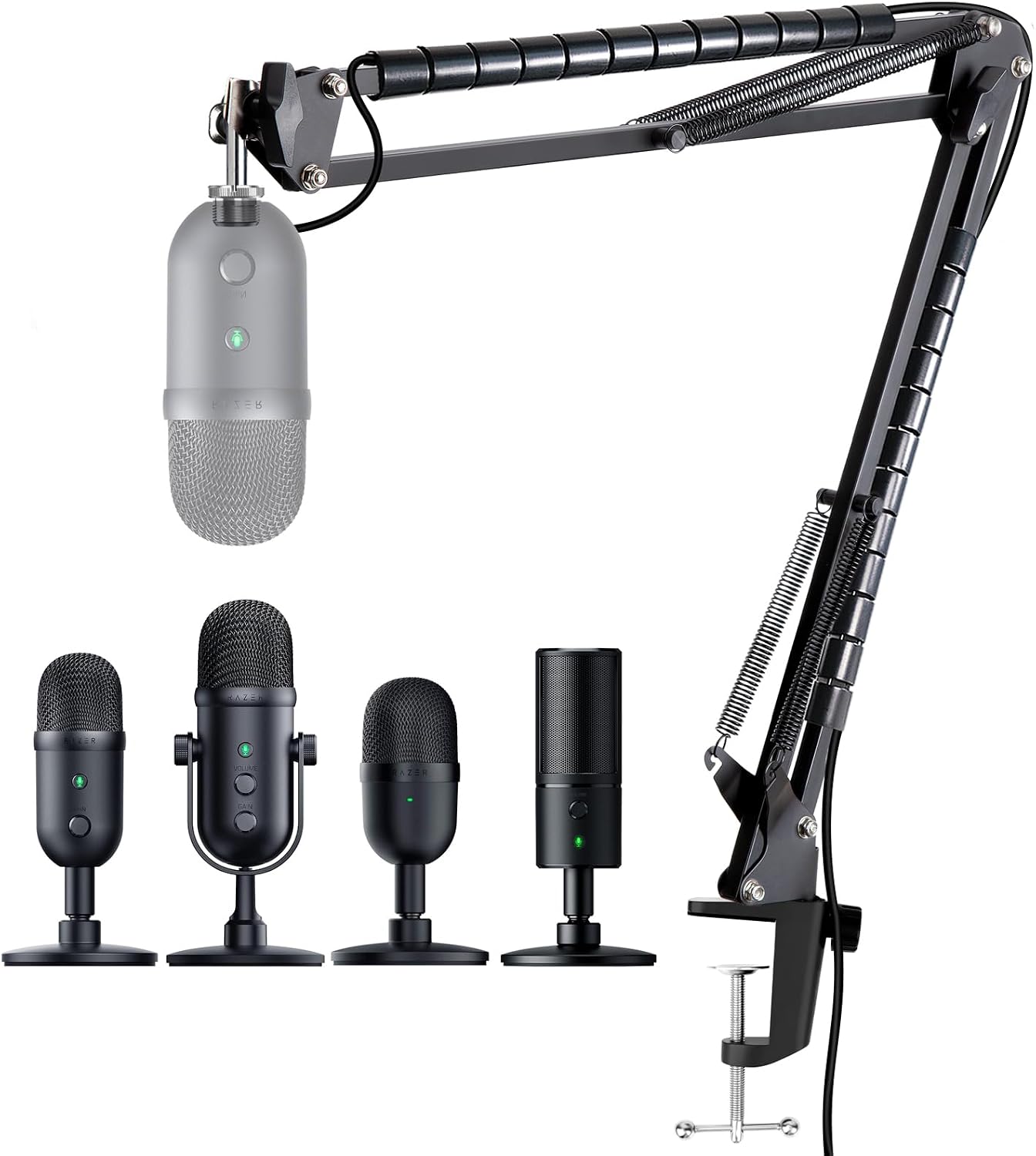
Mic Boom Arm for Razer Seiren V3 Mini by YOUSHARES
Gets the mic off the desk, which kills keyboard thumps and desk rumble, and it is made for the Seiren V3 Mini, V2 X, Seiren Mini, and Seiren X
It is a mount, not a microphone. If your mic already sits on a proper stand, this fixes placement, not tone
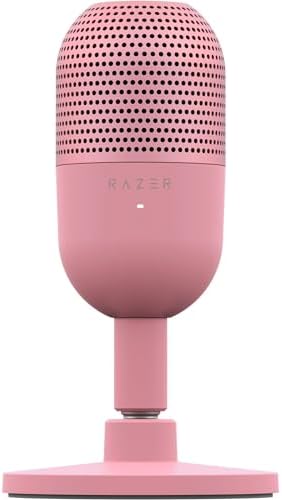
Razer Seiren V3 Mini USB Microphone, Black
USB, so no interface needed. A supercardioid condenser in a small body that is easy to aim, and the tighter pattern helps in a small untreated room
Still a condenser, so it hears the room. It wants to sit close, which means a boom arm and disciplined gain staging
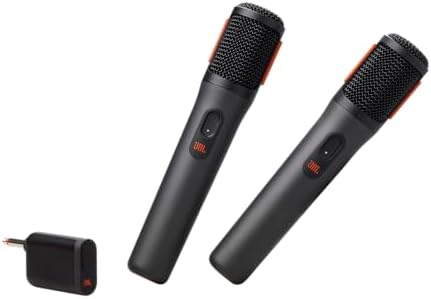
JBL PartyBox Wireless Mic, 2X Digital Wireless Microphones
Two rechargeable mics with a stated 20 hours of use, a stable 2.4GHz link, and a direct match for PartyBox speakers
It is a party system, not a recording chain. There is no podcast path here, and the room is still the room
Prices and availability were captured from Amazon Creators API and may change.
What I am comparing, and what I am not
This is not a shootout between four microphones. It is a map of four jobs.
The Razer Seiren V3 Mini is a USB condenser that lives on a desk and feeds a computer. The YOUSHARES boom arm is the thing that holds it. The pink wireless lavalier is a clip-on transmitter and receiver pair for phones, which is the fastest growing category in creator audio and also the one with the most junk in it. The JBL PartyBox wireless mic is a two-mic wireless set for a loudspeaker, which is a completely different discipline.
If you are a podcaster, a streamer, or a voiceover person, only two of these four are on your list. If you shoot vertical video on a phone, the ranking flips entirely. That is the honest framing, and it is why I get annoyed when a single number one pick gets handed to everybody.
How I judge cheap microphones
Four things decide whether a budget mic survives a real edit.
First, off-axis rejection. This matters more than frequency response for anyone recording in a normal apartment. A mic that hears everything behind and beside it will hear your neighbor, your refrigerator, and the laptop fan. A tighter pickup pattern is worth more than a flatter curve, and no spec sheet brags about it, because it is hard to turn into a marketing line.
Second, how the mic behaves when you sit close. Almost every voice recording problem is solved by getting the capsule nearer to the mouth, and almost every cheap setup fails because the mic is two feet away on a desk stand. That is the proximity effect working for you: closer means more low end and less room.
Third, plosives. P and B sounds are the giveaway of an amateur recording, and no amount of software repair beats a pop filter and a mic that is not aimed directly at the airflow.
Fourth, gain staging. A cheap mic that forces you to crank the input gain also amplifies the self-noise of the whole chain. If you hear a hiss under the silence, the problem is usually the amount of gain you needed, not the brand on the box.
Notice that none of those four criteria are about the microphone being expensive.
The Razer Seiren V3 Mini: a USB condenser for a desk
The Seiren V3 Mini is a supercardioid condenser in a small black body. That description does most of the work for you. USB means no interface, no XLR cable, and no phantom power, which is the entire reason the entry market has moved this direction. A creator can unbox it and be recording in five minutes, and five years ago that same quality cost several times as much plus a box with a gain knob.
The supercardioid pattern is the interesting part. A tighter pattern picks up less of the room around the back and sides of the mic, and in a small untreated room that is the difference between usable and unusable. It is not magic. It is just geometry, and geometry is free.
The catch is that it is a condenser. Condensers are more sensitive than dynamics, which is why I tell most home podcasters to buy a dynamic mic and treat their room instead. If you are set on this one, you have to accept its conditions: close placement, a quiet room, and a mount that keeps it off the desk.
The YOUSHARES boom arm: the cheapest thing that changes the most
Here is the part people skip. The boom arm in this comparison is made specifically for the Seiren V3 Mini, and it also fits the Seiren V2 X, Seiren Mini, and Seiren X. It is adjustable, it clamps to a desk, and it moves the capsule from a foot away to a few inches from your mouth.
That single change does more for a recording than most microphone upgrades. A mic on a desk stand transmits every keystroke through the desk surface into the capsule. It also sits too far from your face, so you turn up the gain, so you record more room tone. A boom arm solves both at once.
The failure mode to watch for is sag. I have thrown out arms that drooped within a month and slowly lowered the mic toward the desk while I was mid-session. Before you buy any arm, check the clamp against your actual desk thickness and confirm the joint tightens rather than relying on friction alone.
It is not a microphone, and it will not change the tone of your voice. It changes where the microphone is, and where the microphone is turns out to matter more than which one it is.
The pink wireless lavalier: phone-first and clip-on
This one is a clip-on wireless mic for iPhone and Android with USB-C and Lightning options, a stated 65ft range, 8 hours of battery, and a noise-cancellation mode. For someone shooting TikTok, YouTube, or live streams on a phone, it is the most practical thing in this article.
Wireless lavs solve a problem nothing else solves. The camera can be across the room, the subject can walk, and the audio stays on the collar where it belongs. The 65ft figure and the 8 hours of battery are the two numbers that matter for a shooting day.
The trade-offs are real and worth stating plainly. Wireless audio is compressed, and cheap wireless audio is compressed more. The 2.4GHz band is crowded, so expect the occasional dropout in a busy space. Noise cancellation in a budget lav often sounds like a voice that has been through a filter, so I would test it with the processing off first. And because the mic clips to fabric, every necklace, zipper, and jacket movement becomes part of the recording.
Most of all, a lav does not care that you have not treated your room, but it still lives in that room. Clip it high on the chest, not at the belt, and keep it out of the path of your breath.
The JBL PartyBox wireless mic: for the speaker, not the studio
The PartyBox wireless mic is a pair of digital wireless microphones with a rechargeable 700mAh battery rated at 20 hours, a 2.4GHz connection, and compatibility with all PartyBox speakers. As a product it is well aimed. Two mics, no cables, long battery, and a stable link for karaoke, backyard parties, and events where a speaker is already doing the amplification.
As a podcast tool it is the wrong shape. The signal path is built for a PartyBox speaker, not for your DAW, and nothing about that chain is designed for the quiet, close, dry recording that a podcast needs. If your goal is a two-person show, this is not the purchase.
I am not knocking it. I am separating categories. A wireless handheld for a loud room and a recording microphone for a quiet one are different tools, and buying the wrong one is how people end up with gear they are afraid to use.
The trade-offs, stated plainly
You are choosing between placement, mobility, and ecosystem.
The Seiren V3 Mini plus the YOUSHARES arm is the placement answer. It gives you the best possible recording quality of the four for a fixed desk position, provided the room is reasonably quiet and you keep the mic close. What you give up is mobility and the ability to record two people easily.
The pink lav is the mobility answer. It gives you freedom of movement and a phone-only workflow. What you give up is tonal quality and consistency, because compression, wireless interference, and fabric noise all take a cut.
The JBL pair is the ecosystem answer. It gives you two wireless mics that work with a speaker you may already own. What you give up is any meaningful path into an edit bay.
The room is still the microphone
I can make a cheap mic sound better than an expensive one in a bad room, and I can make an expensive one sound worse in a good room. That sentence is the whole reason I write these comparisons.
Before you spend anything else, do the free work. Hang a moving blanket behind the person speaking. Move the mic closer and turn the gain down. Turn off the air conditioner, the fan, and the notification sounds. Put the desk stand in a drawer. Those four moves beat a microphone upgrade every single time, and they cost nothing.
Acoustic foam panels will not fix a room either, not really, and I know they do not get clicks the way a mic review does. But a person recording into a treated corner with a modest USB mic will beat a person recording into a bare bedroom with a studio condenser, and I will keep saying that until the upgrade treadmill stops selling.
Which one should you buy?
If you are building a desk setup for podcasting, streaming, or voiceover, buy the Razer Seiren V3 Mini and the YOUSHARES boom arm together. The mic does the capture, the arm does the placement, and the pair covers the two most common mistakes in one order.
If you shoot video on a phone and you move while you talk, buy the pink wireless lavalier. Test the noise cancellation on and off before you commit to a sound, and clip it high.
If you already own a PartyBox speaker and you want karaoke or event mics, the JBL wireless pair is the obvious match. Just do not try to make it your podcast chain.
And in every case, spend an hour on the room before you spend another dollar on gear. The microphone is the last thing in the chain that decides how you sound.