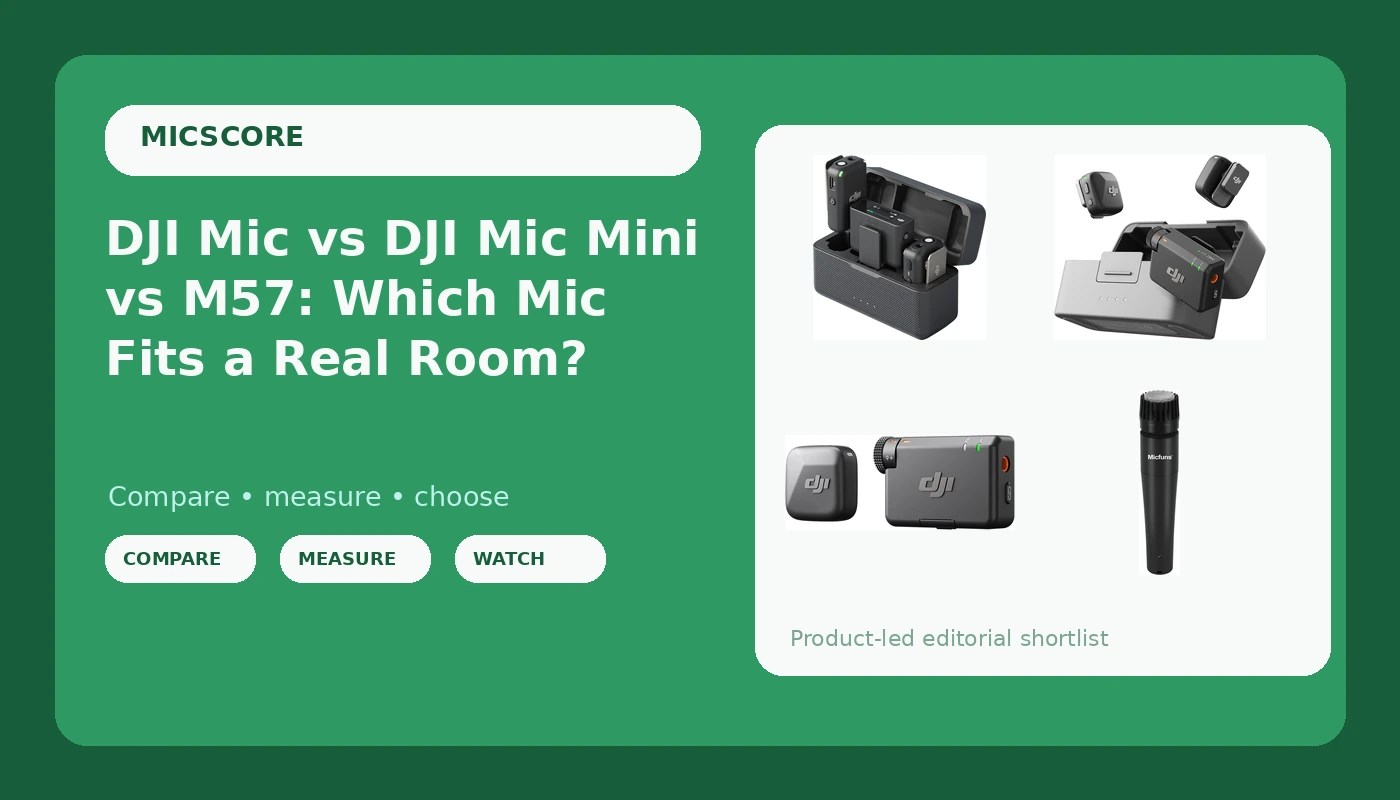
The first thing I do when a podcaster sends me an episode to fix is not listen to the microphone. It is listen to the room. Nine times out of ten the gear is fine and the ceiling is the problem, which is why I keep two recording spaces in Brooklyn: a treated studio where everything sounds better than it deserves to, and an untreated kitchen nine feet away where everything sounds like a kitchen. Every mic I write about has to survive both.
That is the lens for this comparison. Four products, three of them from the same family: a wireless lavalier microphone kit built for range and battery, the lighter and newer Mini in two different kits, and a classic-style dynamic that is not wireless and never will be. If you are shopping the DJI Mic line, half of this decision is already made for you. The other half is whether you need a wireless lavalier microphone at all, or whether a cheap wired dynamic is the honest answer for the room you actually record in.
For most creators, the DJI Mic Mini in the two-transmitter kit is the right first purchase, because two transmitters is the difference between a solo channel and an interview, and the Mini keeps the ultralight clip-on form factor that makes a lavalier worth wearing. The single-transmitter Mini is the right pick only if you are certain you will never book a guest. The full DJI Mic is for people who need the range and battery headroom. The M57 is the wildcard, and it is the one that cares least about your room.
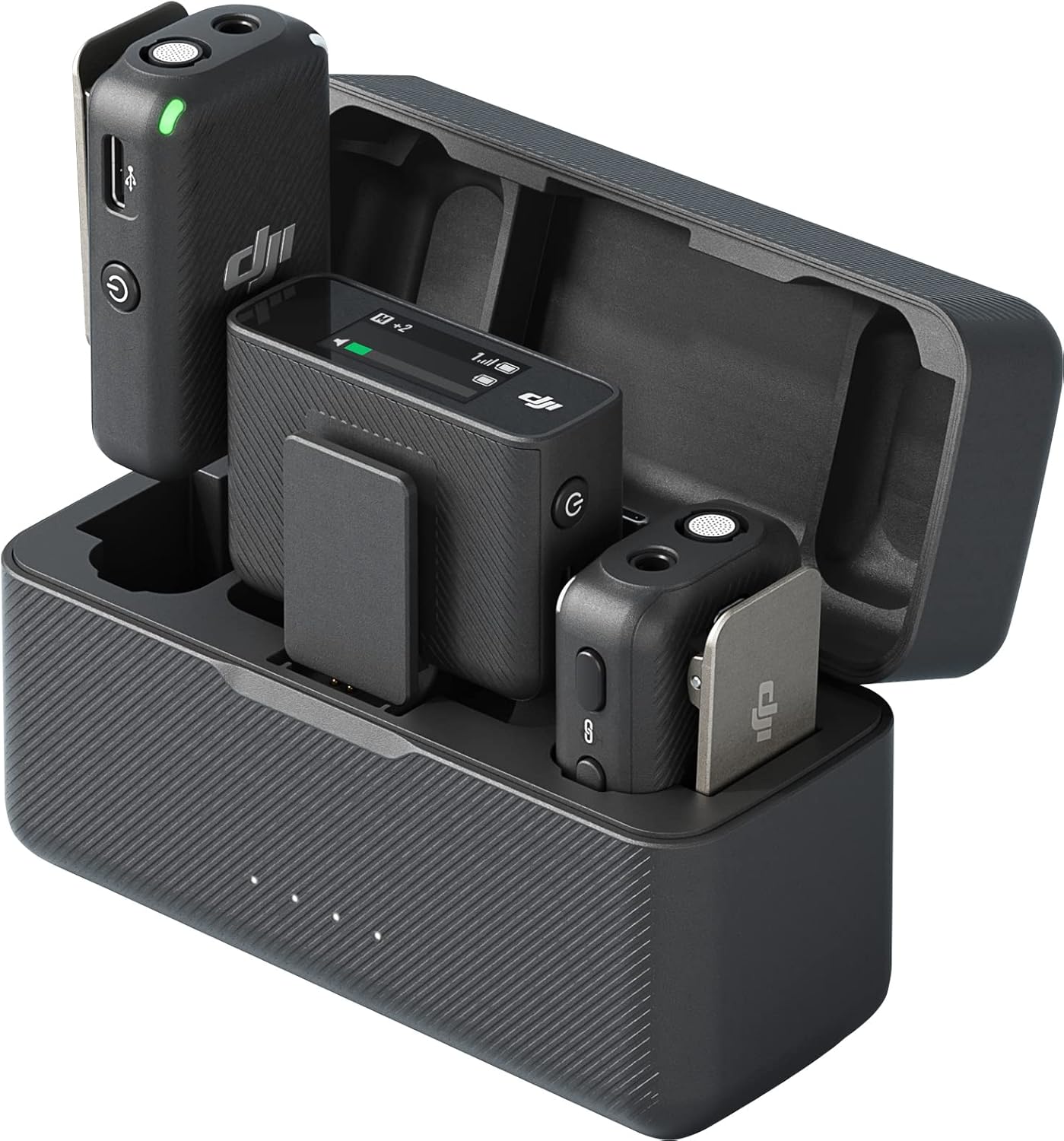
DJI Mic (2 TX + 1 RX + Charging Case), Wireless Lavalier Microphone
Two transmitters, the longest rated range and battery life in this group, and onboard noise cancellation for a noisy street
The heaviest and most expensive kit here, and more system than a solo creator will ever use

DJI Mic Mini (2 TX + 1 RX + Charging Case), Ultralight, Detail-Rich Audio
Two transmitters plus a charging case, in a package light enough that talent forgets it is clipped on
Fewer of the full DJI Mic's features, and the second transmitter is only worth it if you actually record two people
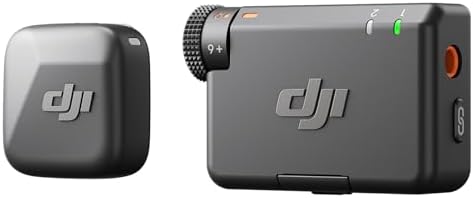
DJI Mic Mini (1 TX + 1 RX), Ultralight, Detail-Rich Audio
The least you can spend on a real wireless system, and one transmitter is plenty for solo voiceover
No second transmitter and no charging case, so you will outgrow it the first time you record an interview
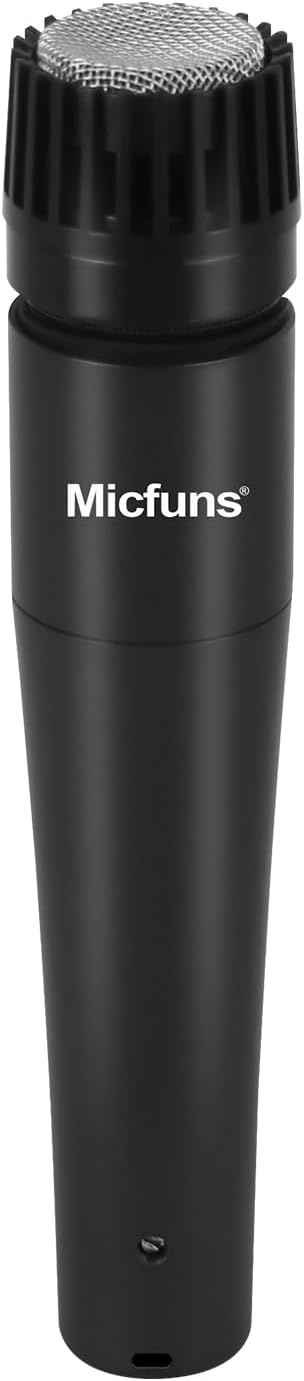
M57 Vocal Dynamic Classic Style Microphone
A dynamic capsule that mostly ignores room tone, at a cost that leaves budget for a boom arm and a pop filter
Wired, needs an interface or mixer to reach your computer, and it is not a wireless lavalier at all
Prices and availability were captured from Amazon Creators API and may change.
How I compare four mics that do different jobs
The mistake people make with a comparison like this is treating all four as interchangeable. They are not. Two of these are the same microphone sold in different kits, one is a heavier version of that microphone with more capability, and one is a completely different animal that happens to sit in the same shopping cart.
So I compare them on five things, in this order.
Who is on the recording. A wireless lavalier microphone solves one problem better than anything else: getting a microphone close to a person who is moving, on camera, without a cable. A wired dynamic solves a different problem: capturing one voice in one fixed position with minimal room pickup. If your answer to "how many people are on the recording" is "sometimes two," you need two transmitters, and that eliminates one of these kits immediately.
What the room is doing. A dynamic capsule with a tight pickup pattern is far less interested in your untreated walls than a small clip-on microphone sitting on a shirt collar. That is not a knock on the lavaliers. It is the reason I keep telling people that the room is the microphone, and that a wireless system in a bad room is still a bad room, just with better cable management.
How close the mic can get. Every one of these depends on proximity effect, which is the bass boost you get when a source is close to the capsule. A lavalier clipped to a collar is close by design. A dynamic on a stand is only close if you work the mic. Distance is the single biggest variable in how any of these sound, and it is free to fix.
What it plugs into. The three wireless kits hand you a receiver and expect a phone, a camera, or a computer. The M57 hands you a microphone and expects you to already own something with an XLR input. That is a real cost, and it is the reason a cheap dynamic is not automatically the cheap option.
Whether you will actually use it. A microphone you are afraid to clip on is worse than a lesser microphone you use every session. The Minis win this category on weight alone.
DJI Mic (2 TX + 1 RX + Charging Case): the one with headroom
The DJI Mic is the system that made the whole category boring in the best way. Two transmitters, one receiver, a charging case that tops everything up between sessions, a rated range of 250m (820 ft.), a rated 15-hour battery, and onboard noise cancellation.
Read that feature list against the way real creators work. The range figure is not about you walking 820 feet away from your camera. It is about the fact that a system with that much headroom does not drop out when you turn your back, walk into the next room, or leave the receiver in a bag on the floor. The battery figure is not about a 15-hour podcast. It is about the fact that you charge the case on Sunday and stop thinking about power for the rest of the week. That is the actual product: the removal of small anxieties.
The noise cancellation is the feature I would treat most carefully. Onboard noise reduction is a tool for a specific problem, like a fridge hum or a street you cannot close, and it is not a substitute for mic placement. Get the capsule close, keep the gain staging sane, and use the processing as a last resort rather than a first one.
Who it is for: two-person shoots, run-and-gun video, anyone who has been burned by a wireless system that quit at the wrong moment. Visit on Amazon →
DJI Mic Mini (2 TX + 1 RX + Charging Case): the pick I would make
This is the kit I would put in most people's hands. You get the same two-transmitter, one-receiver, charging-case configuration as the full DJI Mic, in a package DJI describes as ultralight, with the detail-rich audio character the Mini line is sold on.
Ultralight is not a marketing word when it comes to lavaliers. It is the whole game. A transmitter that disappears on a shirt collar means talent forgets it is there, which means they stop touching it, which means you stop hearing fabric rustle and finger taps in the edit. I have spent more hours than I want to admit removing handling noise from recordings where the mic was technically fine and the wearer would not leave it alone.
The charging case matters more than the spec sheet suggests, too. Two transmitters and a receiver that live in one box and charge in that box is the difference between a kit you grab and a kit you have to think about. Creators do not lose microphones because the microphones fail. They lose them because the kit is annoying to pack.
The honest downside: this is the Mini, not the full DJI Mic. If you need the longest rated range or the biggest battery number, you are buying the wrong one. For a two-person interview in a living room, a studio, or a coffee shop, that headroom is theoretical. Visit on Amazon →
DJI Mic Mini (1 TX + 1 RX): honest about who it is for
Same microphone, half the kit. One transmitter, one receiver, no charging case, and the lowest entry point into the Mini line.
I want to be careful here, because "buy the cheaper one now and the bigger one later" is the upgrade treadmill I complain about constantly. So let me be specific about who should buy the single-transmitter kit: people who record solo, on camera or off, and who know they will still be recording solo in a year. Solo YouTube voiceover. Course modules. A one-person podcast with no guest format. A TikTok or Reels workflow where you are the only person on screen.
If any part of you thinks you might interview someone, do not buy this one. The moment a second person sits down, you are either buying a second transmitter separately or buying a whole second kit, and the money you saved evaporates. Buying the two-transmitter kit up front is not upsell fear. It is the cheaper path for anyone with an interview in their future.
If you are genuinely solo, though, this is the least expensive way to get a real wireless system on your shirt, and it does the one job that matters. Visit on Amazon →
M57 Vocal Dynamic Classic Style Microphone: the anti-room microphone
Now the odd one out. The M57 is a wired dynamic microphone in a classic vocal style, and it does not care about your Wi-Fi, your receiver, or your charging case.
Here is why I insisted on including it. A dynamic capsule with a cardioid-style pickup is the most forgiving thing you can put in front of a voice in a room you cannot treat. It rejects more of what is behind and beside it, it does not flatter the room tone the way a wide-pattern condenser does, and it rewards good mic technique: get close, work the proximity effect on purpose, keep your plosives off the capsule with a pop filter.
That last part is not optional. A dynamic on a cheap desk stand will transmit every keystroke and every chair creak straight into your recording through the desk itself, which is why I keep saying that a boom arm and a pop filter matter more than the microphone upgrade. Budget for those, not for a more expensive capsule.
What it does not give you: wireless. No clipping it to a shirt and walking away. No second channel. No charging case. And you need an interface or a mixer to get it into your computer, which is a purchase the three DJI kits do not require. If you already own an interface and you record one voice in one spot, this is the most room-proof option in this comparison and it leaves money on the table for the accessories that actually improve your sound. If you do not own an interface, factor that in before you decide it is the bargain. Visit on Amazon →
The trade-offs the table cannot show
Wireless is a convenience purchase, not a quality purchase. You are paying for the cable not existing. That is worth a lot on camera and worth nothing if you record sitting still at a desk.
Two transmitters is a format decision. It is not a feature. It is the difference between a solo show and an interview show, and you should decide which one you are making before you decide which kit you are buying.
A dynamic does not fix a bad room, it just argues with it less. Off-axis rejection is the closest thing to a free upgrade in home audio, but it is not acoustic treatment. Nothing in this comparison makes a kitchen sound like a studio.
The accessories are where the money hides. A clip-on transmitter needs a shirt that does not rustle. A dynamic needs a boom arm, a pop filter, and an interface. Price the whole chain, not the box.
Every one of these rewards gain staging. Set your levels so your loudest moment peaks with headroom to spare, then leave it alone. Most "bad microphone" problems I hear in other people's files are actually bad level problems.
Which one fits your room
If you record two people and you want the fewest moving parts, the DJI Mic Mini two-transmitter kit is the one to buy, and I would not talk you out of it.
If you shoot in unpredictable places, need the longest rated range and battery, and want noise cancellation as an emergency tool, the full DJI Mic kit is the upgrade that is actually an upgrade.
If you are solo and certain about it, the single-transmitter DJI Mic Mini is the cheapest honest way into wireless.
And if you record one voice, in one chair, in a room with hard walls, and you already own an interface, buy the M57 and spend the difference on a boom arm, a pop filter, and a rug. Your spectrogram will thank you, and so will whoever edits your show.
Check the current price on any of these before you commit, because this segment moves fast and the right answer in September is not always the right answer in January.