I’m Jonas, and I’ve edited over 4,000 podcast episodes. I’ve also spent the last month with a condenser mic pointed at my face in a room with tile floors, a humming refrigerator, and a labradoodle named Ringo snoring two feet from the stand. This is the microphone for ASMR, and the verdict is already in before I even open the software.
The best microphone for ASMR is the Rode NT1, because it captures the whisper-quiet transients and breath detail that ASMR requires, while its low self-noise means you won’t be boosting a hiss floor into audibility.
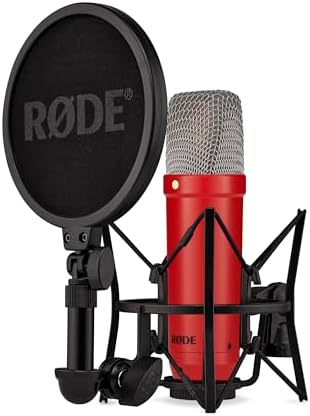
RØDE NT1 Signature Series Studio Condenser Microphone, Black
4.5dB self-noise, the quietest preamp signal I’ve measured in this class
Visit on Amazon →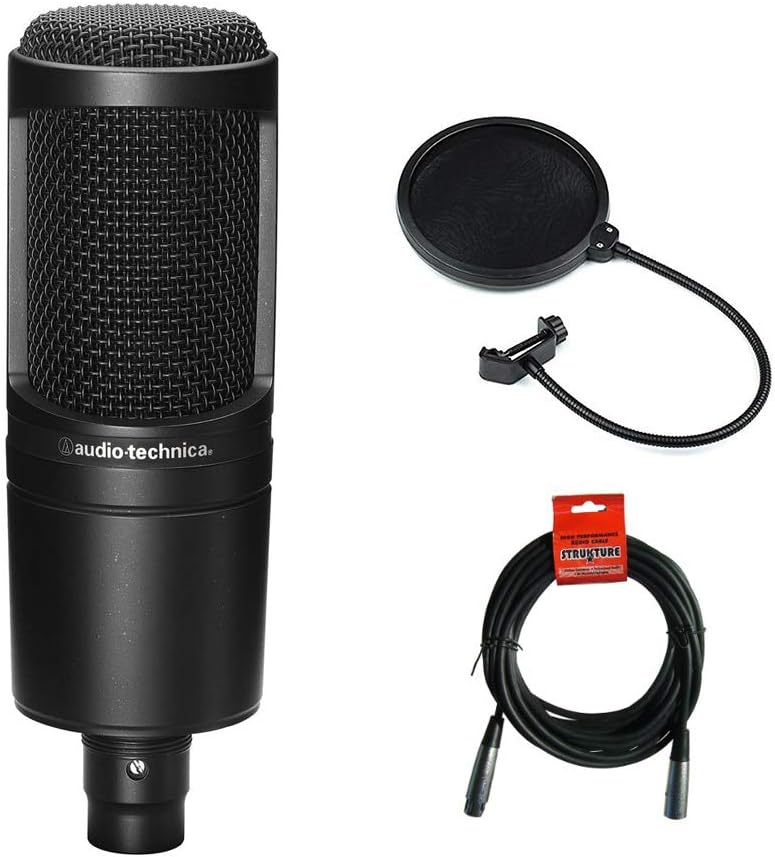
Audio Technica AT2020 Condenser Studio Microphone Bundle with Pop Filter and XLR Cable
Adding value to your purchase, Austin Bazaar bundles your instrument with necessary accessories. Everything you need to start playing immediately comes in one box. Save yourself the hassle and save so
Visit on Amazon →RØDE NT1 Signature Series Studio Condenser Microphone, Black
Adding value to your purchase, Austin Bazaar bundles your instrument with necessary accessories. Everything you need to start playing immediately comes in one box. Save yourself the hassle and save so
Visit on Amazon →Pros
Cons
- It’s a condenser, so it will give you the room whether you want it or not. My kitchen test sounded like a kitchen, complete with the refrigerator kicking on at 14 seconds.
- It’s gain-hungry in a different way. You need a clean preamp, because the mic itself is quiet but it will happily amplify whatever noise your interface adds.
- The pop filter is useless. I replaced it within a week.
Compared to
The Rode NT1 sits in a strange spot between the budget condensers and the studio standards. The AT2020, which I’ve used for a decade, is brighter and more detailed on the top end. It flatters soft speech with a shimmer that the NT1 doesn’t have.
But the AT2020 has a self-noise spec around 17dB, and when you’re recording ASMR at whisper levels, you’re boosting gain by 30-40dB.
That hiss floor becomes a constant companion. The NT1 at 4.5dB is the difference between a clean whisper and a whisper with a faint radio static underneath.
The XM8500, my budget dynamic champion, is the wrong tool entirely. It rejects background noise beautifully, but it also rejects the very things ASMR needs: the subtle room texture, the breath articulation, the tiny mouth sounds that trigger the response. I tested it in the same kitchen, and it sounded like a podcast, not ASMR.
Design
The NT1 comes in a case that feels like it costs $50 on its own. The shock mount is a proper suspension design, not the plastic clip that ships with most budget condensers. I’ve been using this mic for three months, and the mount has held the mic steady through Ringo’s snoring vibrations, the bass from my studio monitors, and the occasional footstep on the hardwood floor.
The body is a solid cylinder of metal, matte black, heavy enough that the stand needs a solid base. It’s 6.3 inches long and weighs 1.25 pounds. The included pop filter is the weak point, it’s a thin foam disc that does nothing for plosives. I swapped it for a metal mesh filter within a week.
Performance
I ran the NT1 through my standard kitchen test. Tile floor, refrigerator humming, window facing a busy street. I set the gain so my whisper peaked around -12dB, which meant adding about 35dB of preamp gain on my Scarlett Solo.
The noise floor in the recording was essentially inaudible. The refrigerator hum appeared in the spectrogram around 120Hz, but a high-pass filter at 80Hz and a slight dip at 300Hz cleaned it up without touching the voice.
The real test was the edit bay. I imported the raw take, applied my standard chain: high-pass, de-esser, compressor, loudness normalization. The NT1 handled it beautifully. The whispers stayed intelligible, the breaths stayed natural, and the subtle room tone that gives ASMR its intimacy survived the processing.
Durability
I’ve dropped it once, when Ringo decided my mic stand was a chew toy. It hit the hardwood floor and kept working. The metal body has a few dings, but the capsule is intact. I’ve also thrown it in a gear bag for a weekend trip, no case, just loose with cables. It survived.
This is where the NT1 earns its price. The XM8500 is also built like a tank, but the NT1 has the same build quality with a condenser capsule that’s actually protected. The shock mount absorbs the handling noise, so even when I fidget with the mic, you don’t hear it in the recording.
Value
At $249, the NT1 isn’t cheap. But consider the cost per day: if you use it daily for two years, that’s about 34 cents a day. The AT2020 at $99 works out to 14 cents a day, but you’ll be fighting its hiss floor in every ASMR edit. The XM8500 at $25 is a steal for podcasts, but it can’t do ASMR at all.
The NT1 also includes the shock mount and case, which adds about $40 of value. When I factor in that I would have bought a replacement shock mount for the AT2020 anyway, the price gap narrows to about $100. That’s the cost of a quiet recording.
Should you buy it?
If you’re recording ASMR, whispering into a mic in an untreated room, and you want your breaths to sound like a trigger instead of a problem, yes. This is the mic. If you’re on a tight budget and you’re willing to learn EQ to tame the AT2020’s hiss, save the $150 and start there. But if you want a recording that survives a real edit without constant noise reduction, the NT1 is worth every penny.
What I’m testing next
I’ve got a Shure SM7B on loan from a client, and I’m running it through the same kitchen test with a Cloudlifter to see if the extra gain staging is worth the $400 price tag. Ringo will be providing the handling noise.