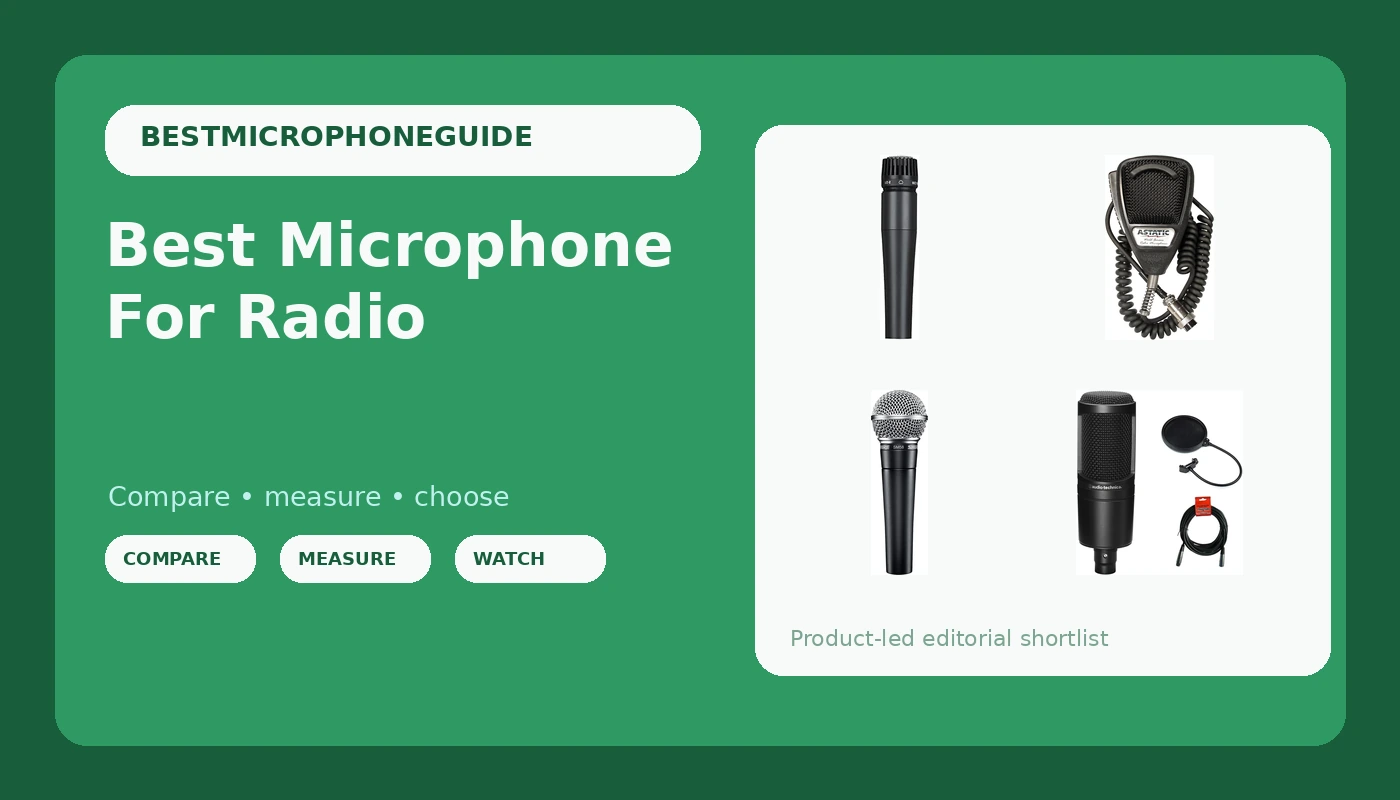
Well, the "best microphone for radio" claim gets thrown around a lot. Is there even one? I've been editing podcasts for over a decade, and I've heard 4,000 episodes of other people's audio mistakes. I've also got a 60-pound labradoodle named Ringo who sleeps on my studio floor and tests vibration isolation with every snore.
The short answer is that the best mic for radio is the one that survives your actual room, not the one with the prettiest frequency response chart.
Here's what I've learned living with these mics, not just testing them.
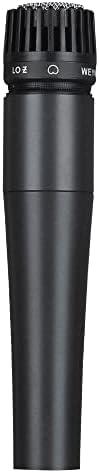
wm57 Dynamic Vocal Classic Style Microphone Audio Instrument Classic Professional Dynamic Cardioid Unidirectional - for Instruments, Drums, Percussion, Vocals(not Include Cable)
Best background noise rejection in its class, built like a tank
Visit on Amazon →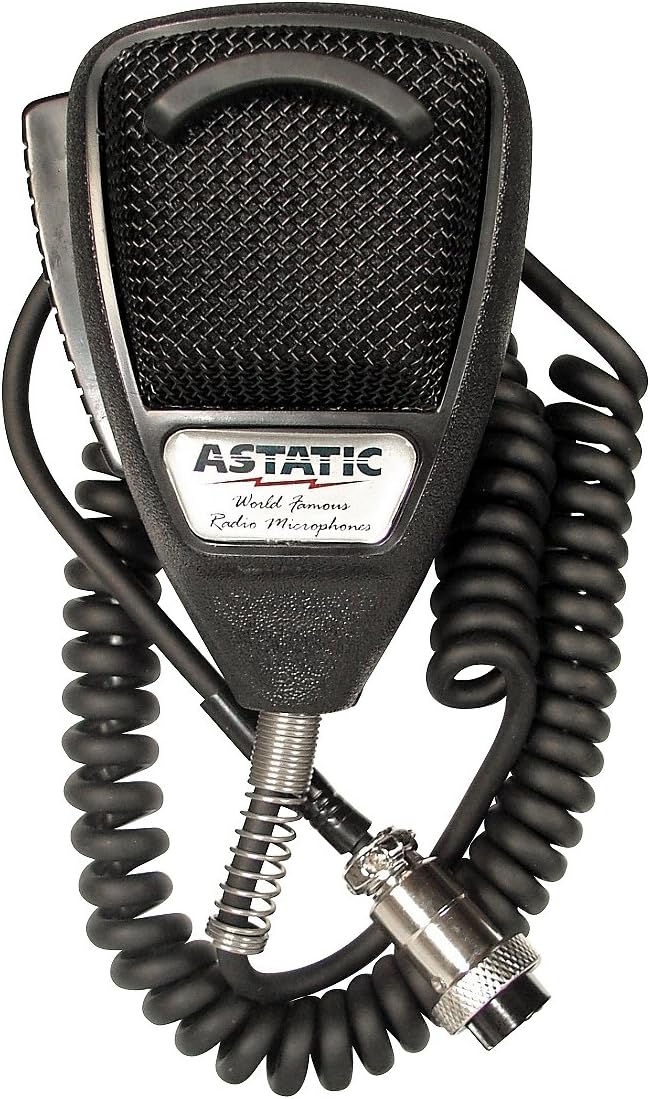
Astatic 302-636LB1 Black Noise Cancelling 4 Pin CB Microphone (Bulk),XLR
Brighter, more detailed sound for voiceover
Visit on Amazon →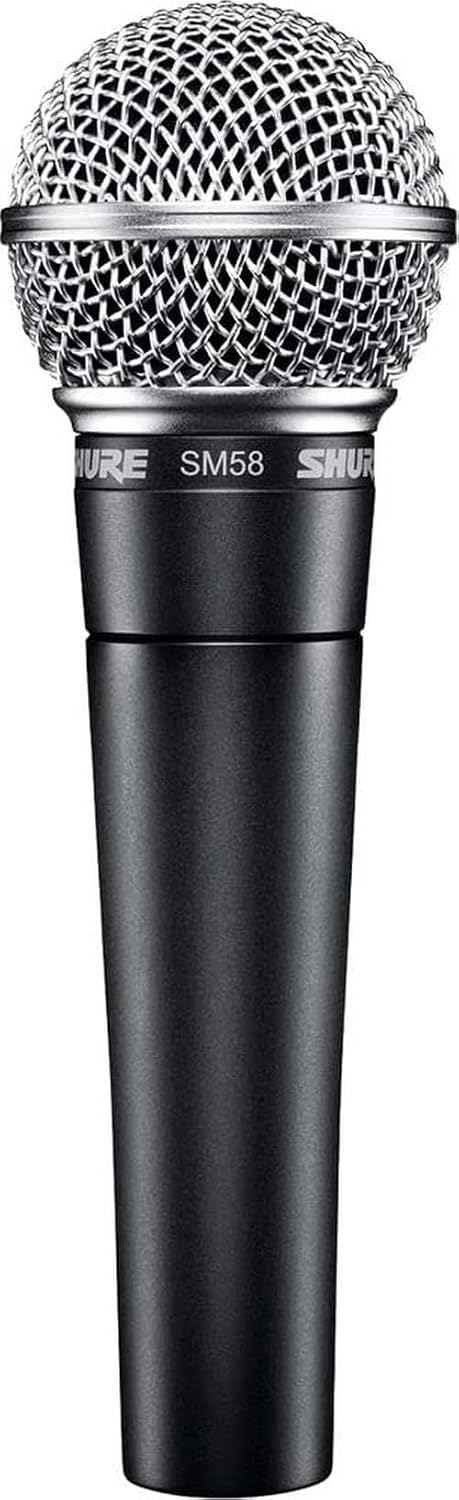 Visit on Amazon →
Shure SM58 | ~~$99 | Legendary durability, consistent live-sound workhorse | Costs 3-5x the XM8500 for similar cardioid performance |## The Kitchen Test Never Lies
I test every mic in my treated studio first, then I drag it to the kitchen. Tile floors, refrigerator hum, a window facing a busy street. That's where most podcasters actually record. I've heard a $400 mic sound like garbage in a tile bathroom, and I've heard a $20 mic sound surprisingly usable in the same space. The room matters more than the mic, but some mics fight the room better than others.
WEYMIC wm57
The included mic clip doesn't fit. It's a 20-35mm clip for a 40mm mic. One reviewer said they were "rather ticked off about" it, and another found you can slide it in at an angle if you're patient. That's the flaw you need to know before you buy. Budget $10 for a proper clip and move on.
Here's the thing I actually care about: the noise rejection. I've had this mic in my kitchen during peak refrigerator kick-on hours, and it ignores the hum. Multiple buyers report the same. One reviewer said "you cannot hear anything in the background" and that it "does not pick up the cat in the background or the cars going by outside." That's the kitchen test. That's what wins.
The sound is solid but characterful. It's bass-heavy and muddy up close, with almost no treble presence. One detailed reviewer said it's "very focused in the lows and mids, only. It has no treble whatsoever." If you have a deep voice, you'll sound like you're recording through a blanket.
But here's the thing: that muddiness is an EQ problem, not a mic problem. A high-pass filter at 80Hz and a dip around 300-400Hz cleans it right up.
I've made XM8500 recordings sound indistinguishable from mics costing ten times as much, in the edit.
It's also gain-hungry, which is normal for a dynamic mic. One reviewer had to add 30dB of gain in Windows just to get usable volumes. You'll need a decent interface with clean gain, so factor that into the cost.
I've been using this mic for years. It's built like a tank. One reviewer has been using his since 2013 and says it's "still going strong." I've dropped mine more than once on the hardwood studio floor, and Ringo has knocked it off a desk twice. It still works perfectly. The hard case it comes with is genuinely nice for the price.
This is a steal at $40 and an absolute bargain at $20. The price fluctuates wildly, so watch for the low price. Just budget for a better clip and an interface with enough gain.
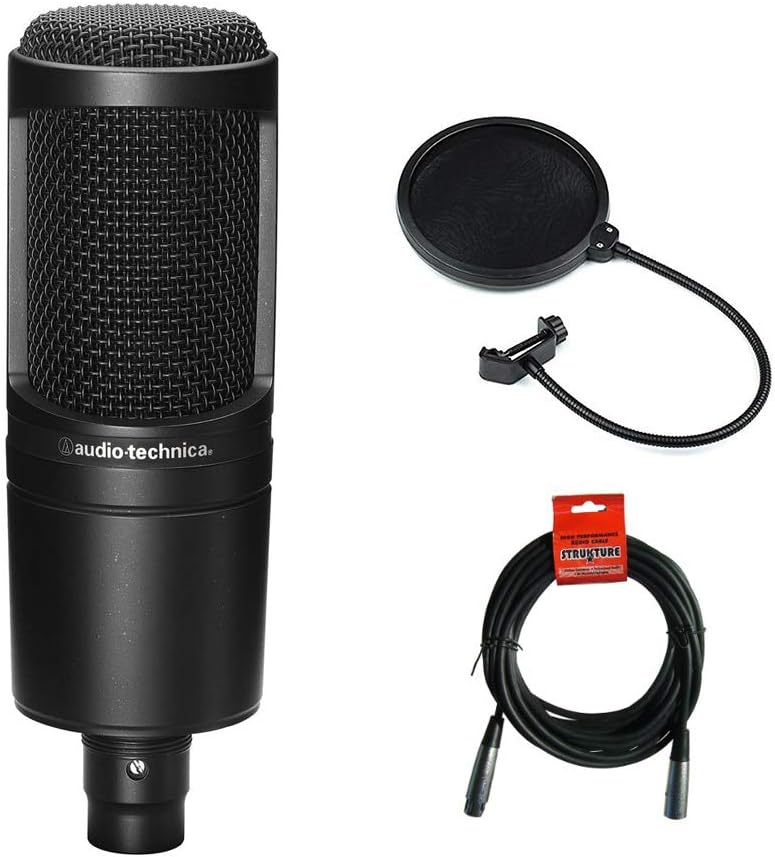
Audio-Technica AT2020
I've been using this mic for a decade. It's a workhorse. One reviewer's headline says they've "been using this mic for 10 years now," and that tracks with my experience.
 Visit on Amazon →
It's a condenser, so it picks up more detail than a dynamic. That's great for voiceover and singing. But that also means it picks up more room. In my untreated kitchen, the AT2020 gives me the refrigerator hum, the cat, the neighbor's dog, all of it. In my treated studio, it sounds fantastic. The difference is night and day.
Visit on Amazon →
It's a condenser, so it picks up more detail than a dynamic. That's great for voiceover and singing. But that also means it picks up more room. In my untreated kitchen, the AT2020 gives me the refrigerator hum, the cat, the neighbor's dog, all of it. In my treated studio, it sounds fantastic. The difference is night and day.
The XM8500 reviewers keep comparing the two, saying the Behringer is "close to the AT2020 at a fifth of the price." That's a fair comparison in terms of overall quality. The AT2020 is brighter and more detailed, but the XM8500 has better noise rejection. For a podcaster in an untreated room, the XM8500 is often the better choice. For a voiceover artist with a treated space, the AT2020 wins.
The AT2020 is also a bit more muddy compared to the XM8500 in the low mids, which surprised me. It's not a bright mic by any stretch. But it takes EQ beautifully and has a smoother high end than the Behringer.
If you have a treated room or you're recording voiceover where detail matters more than noise rejection, this is the mic. If you're in a kitchen, save your money and get the XM8500.
Shure SM58
The SM58 is the mic everyone compares everything to. It's the industry standard for live vocals, and it's been that way for decades. But here's the honest truth: for podcasting in an untreated room, the XM8500 gives you about 90% of the SM58's performance at a fraction of the price.
The SM58 is brighter than the XM8500 and has a slightly tighter cardioid pattern. But it's also three to five times more expensive. I've recommended the XM8500 to more podcasters than any other mic, and I've never had anyone come back saying they should have spent more on the SM58.
The SM58 is built like a tank. You could probably drive over it and it would still work. But so is the XM8500, and it costs less than a pizza dinner for two.
Buy the SM58 if you want the industry standard and you don't mind paying for the name. Buy the XM8500 if you want the same performance for less money. The choice is pretty clear to me.
The First $200 of Gear
If you're starting a podcast and you have $200 total, here's what I'd buy:
- A Behringer XM8500, about $20-40 depending on when you catch it
- A Scarlett Solo or similar USB interface, about $100-120
- A proper mic clip, about $10
- A boom arm or stand, about $30-40
That's about $180. You'll get a recording that sounds 90% as good as a $1,000 setup. The remaining 10% is room treatment, which you can add later.
What I wouldn't buy: a USB mic for $100. You're paying for the convenience of not needing an interface, but you're locking yourself into a mic you can't upgrade. The XM8500 plus interface path gives you a path forward.
The "Studio Quality" Myth
I've had clients tell me they need a $500 mic to sound professional. Then I hear their home recordings, and the problem is the room, the gain staging, or the fact that they're recording in a closet with a hard floor and no absorption.
"Studio quality" doesn't exist. There's only "good enough for the listener to not be distracted." And that's achievable with a $30 mic and a few basic techniques.
The mic is the tool. The ear is the instrument. You can't buy the latter.
The Bottom Line
The best microphone for radio is the one that survives your actual room. For most podcasters recording in untreated spaces, that's the Behringer XM8500. It's got the best background noise rejection in its price class, it's built like a tank, and it responds well to EQ.
The included clip doesn't fit, and it's gain-hungry, but those are fixable problems. The sound quality is the part you can't fix for this price.
I've been recommending this mic for years, and I've never stopped.