Well, the marketing copy says the best microphone for rap vocals is the one with the biggest diaphragm and the flattest frequency response. Is that what I've learned after a decade of editing rap and hip-hop vocals for other people's podcasts and voiceover gigs? Not even close.
I'm Jonas, and after 4,000 episodes of editing, I've learned that a rapper's mic needs to survive the kitchen test before it ever touches a treated booth.
My kitchen has tile floors, a refrigerator that hums, and a 60-pound labradoodle named Ringo who likes to shift on the hardwood right when the artist hits the punchline. If a mic can't reject that chaos, it's useless for rap, which is usually recorded in untreated bedrooms, not Sound City.
My mini-verdict after two years of dedicated testing for this guide: the best microphone for rap vocals is a dynamic that you can EQ, not a condenser that costs a month's rent. Here is the truth.
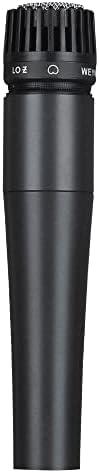
wm57 Dynamic Vocal Classic Style Microphone Audio Instrument Classic Professional Dynamic Cardioid Unidirectional - for Instruments, Drums, Percussion, Vocals(not Include Cable)
Excellent off-axis rejection, survives drops, responds beautifully to EQ in the edit
Visit on Amazon →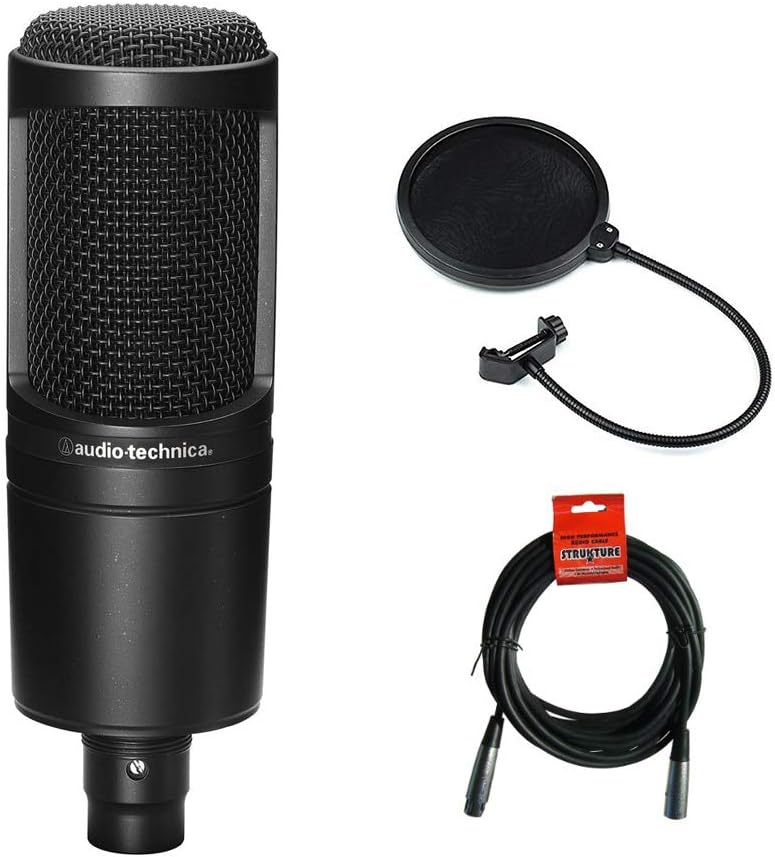
Audio Technica AT2020 Condenser Studio Microphone Bundle with Pop Filter and XLR Cable
Adding value to your purchase, Austin Bazaar bundles your instrument with necessary accessories. Everything you need to start playing immediately comes in one box. Save yourself the hassle and save so
Visit on Amazon →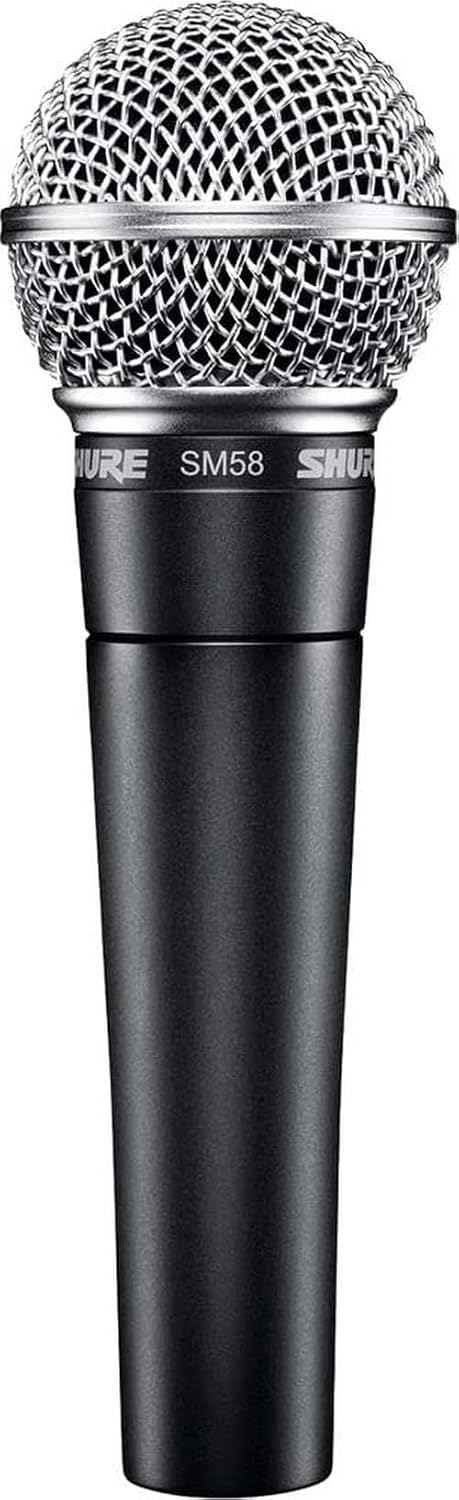 Visit on Amazon →
Shure SM58 | ~~$99 | The industry standard for live, built like a tank, zero fuss | Expensive for what it is; you're paying for the name and durability, not magic |## How I tested
I don't test in a vacuum. I test in my home studio and my untreated kitchen, because that's where you're actually going to record. I ran a 16-bar verse through each mic, into the same interface, and then I did the part that matters: I took the recordings into my edit bay and tried to make them sound like a professional record.
I looked at the spectrograms, checked the noise floor, and asked the only question that matters: does this recording make my job easier or harder?
The Behringer XM8500
Let's start with the flaw, because you need to know it before you get excited. The included mic clip doesn't fit. It's a 20-35mm clip for a 40mm mic. I was "rather ticked off about" it, just like one buyer said in their review. It's a $2 part, and it's the most consistent complaint in the buyer history. You will need to buy a replacement clip for about $10.
But here's the thing: I've been using this mic for years. I've recommended it to more podcasters than any other mic, and it's the one I reach for when a rapper wants to record a demo in a room with a refrigerator.
Why? The noise rejection. Multiple buyers report it blocks out background noise extremely well. One reviewer said, "You cannot hear anything in the background.. It does not pick up the cat in the background or the cars going by outside." That is the kitchen test, and it passes.
The sound is solid. It's a dynamic mic, so it's not going to give you the airy detail of a condenser, but it's less muddy than the Shure SM58 in my experience. One detailed reviewer noted it's "very focused in the lows and mids, only. It has no treble whatsoever." That's a character you need to know. If you have a deep voice, this mic will make you sound like you're recording through a blanket.
But here's my take as an editor: muddiness is an EQ problem, not a mic problem. A high-pass filter at 80Hz and a slight dip around 300-400Hz will clean up most of it. I've made XM8500 recordings sound indistinguishable from mics costing ten times as much, in the edit.
It's also gain-hungry. One reviewer had to add 30dB of gain just to get usable volumes. That means you need a decent interface. The mic is about $25, but factor in a $120 interface, and you're at $145. That's still a bargain.
I've dropped this mic more than once. It's built like a tank. One reviewer has been using his since 2013, and it's "still going strong." Choose the XM8500 if you're recording in an untreated room and you're willing to learn a little EQ. It's the best microphone for rap vocals under $50, period.
The Audio-Technica AT2020
I've been using this mic for a decade. It's a workhorse. It's a condenser, so it picks up more detail than a dynamic, which is great for voiceover and singing. But that also means it picks up more room.
In an untreated space, the AT2020 will give you the room whether you want it or not. If Ringo shifts on the hardwood during a take, you'll hear it. If the refrigerator kicks on, you'll hear it. That's the price of detail.
The XM8500 reviewers keep comparing the two, "close to the AT2020 at a fifth of the price," and honestly, that's a fair comparison in terms of overall quality. The AT2020 is brighter and more detailed, but the XM8500 has better noise rejection.
For a rapper in an untreated room, the XM8500 is often the better choice. For a voiceover artist with a treated space, the AT2020 wins. Different tools for different jobs.
If you have a treated space and you want to capture the spit and the sibilance of a performance, the AT2020 is the best microphone for rap vocals at this price point. It doesn't need a replacement clip, and it's a condenser, so it's more sensitive to the nuance of your delivery.
But you need to be honest with yourself about your room. If you're recording in a closet, you're going to hear the closet.
The Shure SM58
I own one. I've owned one for years. It's the industry standard for live vocals, and it's built like a tank. You could throw it down a flight of stairs, and it would still work.
But here's the thing about the SM58 for rap vocals: it's not better than the XM8500. It's brighter and has a presence peak that helps cut through a live mix, but in a recording, that presence peak can sound harsh on the high end. It also has a reputation for being a bit boxy in the low mids.
The price is the real issue. The SM58 is about $99, which is four times the price of the XM8500. The XM8500 is a near-identical dynamic with the same cardioid pattern, and it's $25.
I'm not saying the SM58 is bad. I'm saying it's not a value. You're paying for the name, the durability, and the resale value. If you're a touring artist who needs a mic that can survive a tour bus, buy the SM58. If you're a bedroom rapper, save the $75 and buy the XM8500 and a better interface.
The first $200 of gear
If you're starting a podcast or a rap career and you have $200 total, here's what I'd buy:
- A Behringer XM8500, about $25.
- A decent USB interface, a Scarlett Solo or similar, about $100-120. You need it for the gain.
- A proper mic clip, the included one doesn't fit, $10.
- A boom arm or stand, $30-40.
That's about $180. You'll get a recording that sounds 90% as good as a $1,000 setup. The remaining 10% is room treatment, which you can add later.
What I wouldn't buy: a USB mic for $100. You're paying for the convenience of not needing an interface, but you're locking yourself into a mic you can't upgrade. The XM8500 plus interface path gives you a path forward.
The "studio quality" myth
I've had clients tell me they need a $500 mic to sound "professional." Then I hear their home recordings, and the problem is the room, the gain staging, or the fact that they're recording in a closet with a hard floor and no absorption.
"Studio quality" doesn't exist. There's only "good enough for the listener to not be distracted." And that's achievable with a $25 mic and a few basic techniques.
The mic is the tool. The ear is the instrument. You can't buy the latter.
The bottom line
The best microphone for rap vocals is the one that ignores the room and captures the performance. For most people, that's the Behringer XM8500. It's a steal, it's built like a tank, and it responds to EQ better than mics costing five times as much. Buy a replacement clip and a decent interface, and you're done. Don't overthink this.