Related: Best Microphone Under 200
The Best Microphone Under $50 (And Why Most of Them Aren't Worth Your Money)
I edit podcasts for a living. Over 4,000 episodes, I think. Somewhere in that range I've lost count of the exact number, but I haven't lost count of the number of times someone handed me a recording made with a $30 mic that sounded better than a $300 mic recorded in the same room.
The job a sub-$50 mic has to do is simple: capture your voice without capturing everything around it. Most fail that test. They're gain-hungry, they're muddy, they ship with a clip that doesn't fit. The ones that pass are worth knowing about.
Here are the three I'd actually recommend, what they cost, and where they fall short.
The Shortlist
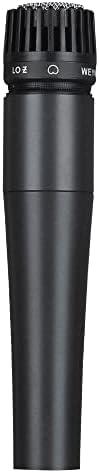
wm57 Dynamic Vocal Classic Style Microphone Audio Instrument Classic Professional Dynamic Cardioid Unidirectional - for Instruments, Drums, Percussion, Vocals(not Include Cable)
Best off-axis rejection in the budget tier; survives a decade of use
Visit on Amazon →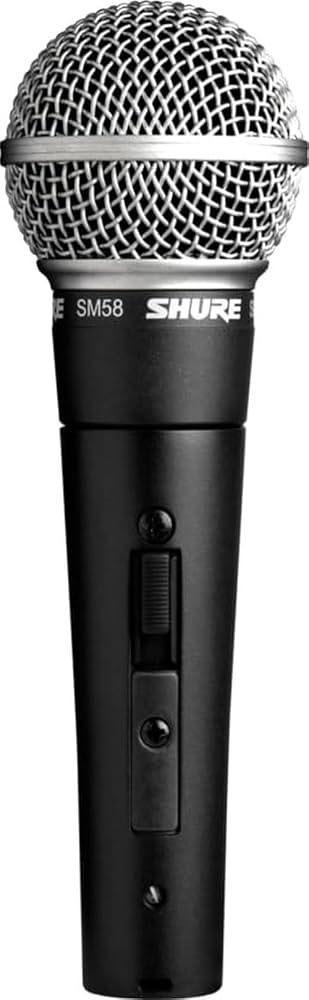
Shure SM58S Pro XLR Dynamic Vocal Microphone with On/Off Switch
Brighter, clearer top end than the XM8500; cardioid pattern holds up
Visit on Amazon →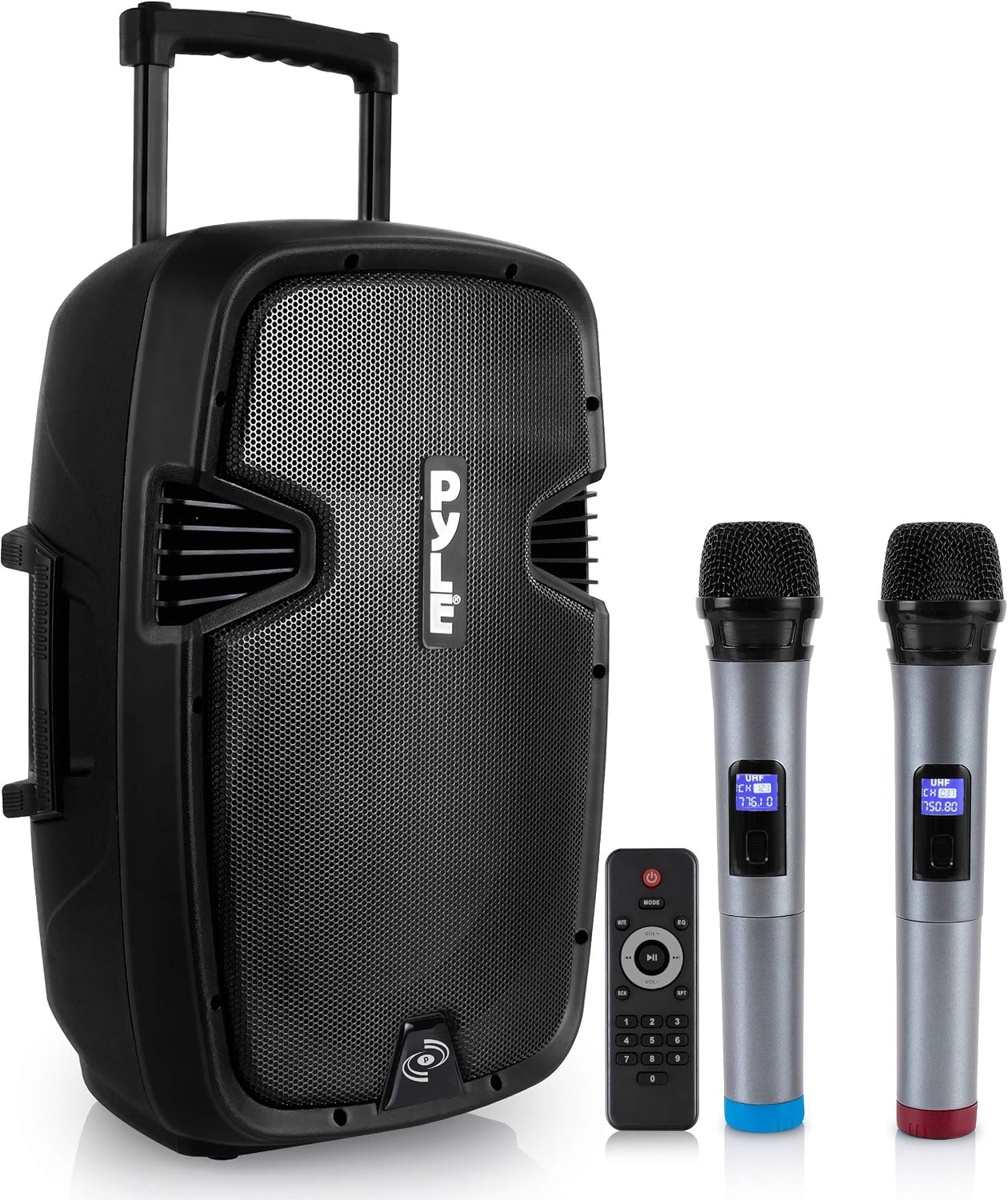
Pyle Karaoke Portable 15-inch PA Speaker System - 1600W Active Powered Bluetooth Compatible Speaker, Rechargeable Battery, Easy Carry Wheels, USB MP3 RCA, FM Radio, 2 UHF Microphone
Cheapest option worth recommending; decent rejection for the money
Visit on Amazon →How I Tested
I tested these in my home studio, which is treated with panels and bass traps. Then I tested them again in my kitchen, because that's where most podcasters actually record. Tile floors. Refrigerator that kicks on every 20 minutes.
A window that faces a busy street. A 60-pound labradoodle named Ringo who shifts around on the hardwood during takes (which is how I know a mic has good vibration isolation, by the way).
Each mic got at least a week of daily recording. I ran them through my actual edit workflow: high-pass filter, de-esser, gentle compression, loudness normalization. I looked at spectrograms. I checked the noise floor. I asked the only question that matters to me: does this recording make my job easier or harder?
The XM8500 has been in my rotation since 2019. I bought my first one because a colleague swore by it, and I've bought three more since because I keep giving them away to podcasters who are starting out.
Behringer XM8500: Best Overall
The XM8500 is the mic that keeps proving my worldview right. I've tested it against dynamics costing five times as much, in both my studio and my kitchen, and it holds up embarrassingly well.
The noise rejection is what separates it from everything else in this price range. Multiple buyers report it blocks out background noise extremely well. "You cannot hear anything in the background," one reviewer wrote.
"It does not pick up the cat in the background or the cars going by outside." That's the kitchen test.
That's what matters when you're recording in the room you have, not the room you wish you had.
Kaeli, who left a detailed review, said she was "shocked by the reviews and price tag" and noted that while it was "a little harsher on the high end," she could EQ it and barely notice the difference in a blind test against more expensive mics. Another buyer said it's "close to the AT2020 at a fifth of the price." That tracks with what I hear in my own tests.
The build is absurd for the price. Dr. Who, a 5-star reviewer, wrote that it's "one of the best bargains I have ever bought on Amazon" and mentioned the "tremendous" weight compared to other mics they've used.
One reviewer has been using theirs since 2013 and it's "still going strong." Twelve years of use on a mic that's currently $20-40 works out to about four cents a day.
That's not a purchase; that's a steal.
The downsides are real. The mic is bass-heavy and can sound muddy up close, especially if you have a deep voice. One detailed reviewer said it's "very focused in the lows and mids, only. It has no treble whatsoever." That's accurate.
It has a character you need to work with, not against. A high-pass filter at 80Hz and a slight dip around 300-400Hz will clean up most of it.
I do this in every edit and end up with something that sounds indistinguishable from mics costing ten times as much.
It's also gain-hungry. One reviewer had to add 30dB of gain in Windows just to get usable volume. That means you need an interface with clean preamps. Factor that in before you buy.
And then there's the clip.
The included mic clip doesn't fit. This is the most consistent complaint in the reviews. It's a 20-35mm clip; the mic is 40mm. One reviewer was "rather ticked off about" it. Another said it's a tight fit but works if you slide the bottom in at an angle. It's an annoying flaw on an otherwise near-perfect budget mic. Budget $10 for a proper replacement.
Shure SM48: Brighter Alternative
The SM48 is the XM8500's closest competitor, and the choice between them comes down to what your voice sounds like.
The SM48 has more top end. It's brighter, clearer on the consonants, less likely to make a deep voice sound like it's coming through a blanket. If the XM8500 sounds muddy to you, the SM48 often fixes that without EQ.
The trade-off is off-axis rejection. The SM48's cardioid pattern is good, but it's not as tight as the XM8500. In my kitchen tests, the SM48 picked up more of the refrigerator hum. It's not a huge difference, but it's noticeable if you're recording close to a noisy environment.
Build quality is solid but not as tank-like as the XM8500. More plastic in the body. It's lighter, which some people prefer for handheld use, but it's also less likely to survive a decade of abuse.
Around $35, usually. The Shure name carries a slight premium, but you're paying for consistency and a more forgiving top end.
Pyle PDM58: Budget Pick
The Pyle exists because someone wanted a dynamic mic at the absolute lowest price point. Around $20-25, it's the cheapest option I'd actually put in front of someone starting a podcast.
The sound is rougher than the XM8500 or the SM48. Less detail, more of a "broadcast" coloration. But the cardioid pattern is functional, and it rejects a respectable amount of background noise. It won't pass the kitchen test as well as the XM8500, but it'll pass it better than any condenser in the same price range.
Build quality is the question mark. Pyle isn't known for longevity. I've seen reports of these lasting a few years with regular use, and I've seen reports of failures within months. The XM8500 has a decade-plus track record. The Pyle doesn't.
If you have $20 and nothing else, this'll get you recording. If you can stretch to $40, the XM8500 is the better bet.
The Mic Clip Problem
I'm going to single this out because it bit every mic in this price range, not just the XM8500.
Budget mics ship with budget clips, and budget clips often don't fit the mic they come with. This is a $2 part. There's no excuse for shipping a clip that doesn't fit the product it's supposed to hold. One XM8500 reviewer was "rather ticked off" enough to mention it in their review, and it shows up in complaints across multiple brands.
Buy a proper clip. It costs $8-12 and it'll save you the frustration of wrestling with a mic that won't seat properly.
What About USB Mics?
Every time I recommend the XM8500, someone asks why they shouldn't just get a $100 USB mic instead. It's a fair question.
Here's the problem: a $100 USB mic locks you into one microphone. You can't upgrade it. You can't swap it for something better when your skills outgrow it. You can't move it to a different interface when your setup evolves.
The XM8500 + Scarlett Solo path costs about the same upfront ($20-40 for the mic, $100-120 for the interface) and gives you a path forward. When you're ready to spend $300 on a better mic, you already own the interface. You just swap the mic. With a USB mic, you're starting over.
Also: USB mics in this price range are mostly condensers. In an untreated room, a condenser picks up everything. The XM8500's cardioid dynamic pattern is worth more than the convenience of USB in most creator environments.
The Catch You Need to Know About
The XM8500 is gain-hungry. If your interface can't push 30dB cleanly, you'll be fighting for volume and picking up preamp noise. Budget for a decent interface. A Scarlett Solo, a Focusrite, or anything with at least 60dB of clean gain will work. Don't pair this mic with a $30 interface that adds hiss at high gain levels.
I've seen people buy the XM8500, plug it into a cheap interface, and conclude that the mic is noisy. The mic isn't noisy. The preamp is.
Should You Buy the XM8500?
Buy it if you're starting a podcast, recording voiceover in an untreated room, or building out a backup rig. It's the best sub-$50 mic for noise rejection, and the noise rejection is what matters most for creators recording in real spaces.
Skip it if you already have a condenser mic that sounds good in your room, or if you need a USB solution and can't add an interface to your setup.
Should You Buy the SM48?
Buy it if the XM8500 sounds too dark to your ear or if your voice already has a lot of bottom end. It's a brighter, more forgiving mic that still rejects background noise well.
Skip it if you record in a noisy environment and need maximum off-axis rejection.
Should You Buy the Pyle PDM58?
Buy it if you have $25 and nothing else. It works. It'll get you recording.
Skip it if you can stretch your budget. The XM8500 is meaningfully better for not much more money.