Most people shopping for microphones for creators start with the same question: which one sounds best? That is the wrong first question. The room you record in shapes the result more than the capsule does, and the connection type decides how much gear sits between your voice and a finished file. A large-diaphragm condenser in a bright, untreated bedroom will happily capture the street, the refrigerator, and the reflection off the bare wall behind you. A modest dynamic microphone aimed away from the noise will often survive an edit with far less work.
That is why this guide is organized around jobs rather than specs. The six products here cover a broadcast dynamic bundle, two USB condensers, a wearable lavalier, a wireless kit for phones, and a broadcast mixer. They are not interchangeable, and that is the point. Instead of ranking them by frequency-response bragging rights, this comparison looks at what each one asks of you, what actually ships in the box, and which recording situation it suits. Every card below points to the exact product it describes, so you can confirm details and availability before you commit.
Related: USB vs XLR microphones for a home studio
Quick answer
The Shure SM7B Vocal Microphone with Cloud Microphones Cloudlifter CL-1 Mic Activator and Extra 10' XLR Cable Bundle is the strongest fit for a home studio that already runs an audio interface, because it is a broadcast-style dynamic microphone and the bundle adds an in-line Cloudlifter CL-1 activator plus a 10-foot XLR cable, which addresses the two things that trip people up with low-output dynamic mics: enough clean gain and a cable long enough to reach the interface without dragging the mic stand. Choose the RØDE NT-USB Mini Studio-Quality USB Condenser Microphone instead when you want one cable to a computer and no interface, preamp, or gain staging homework.
Microphones for creators worth comparing
The cards below cover the six formats that come up most often for podcasting, voiceover, streaming, and phone-based interviews: a dynamic XLR bundle, two USB condensers, a wearable lavalier, a two-transmitter wireless kit, and a broadcast mixer that turns an XLR microphone into a usable stream signal.
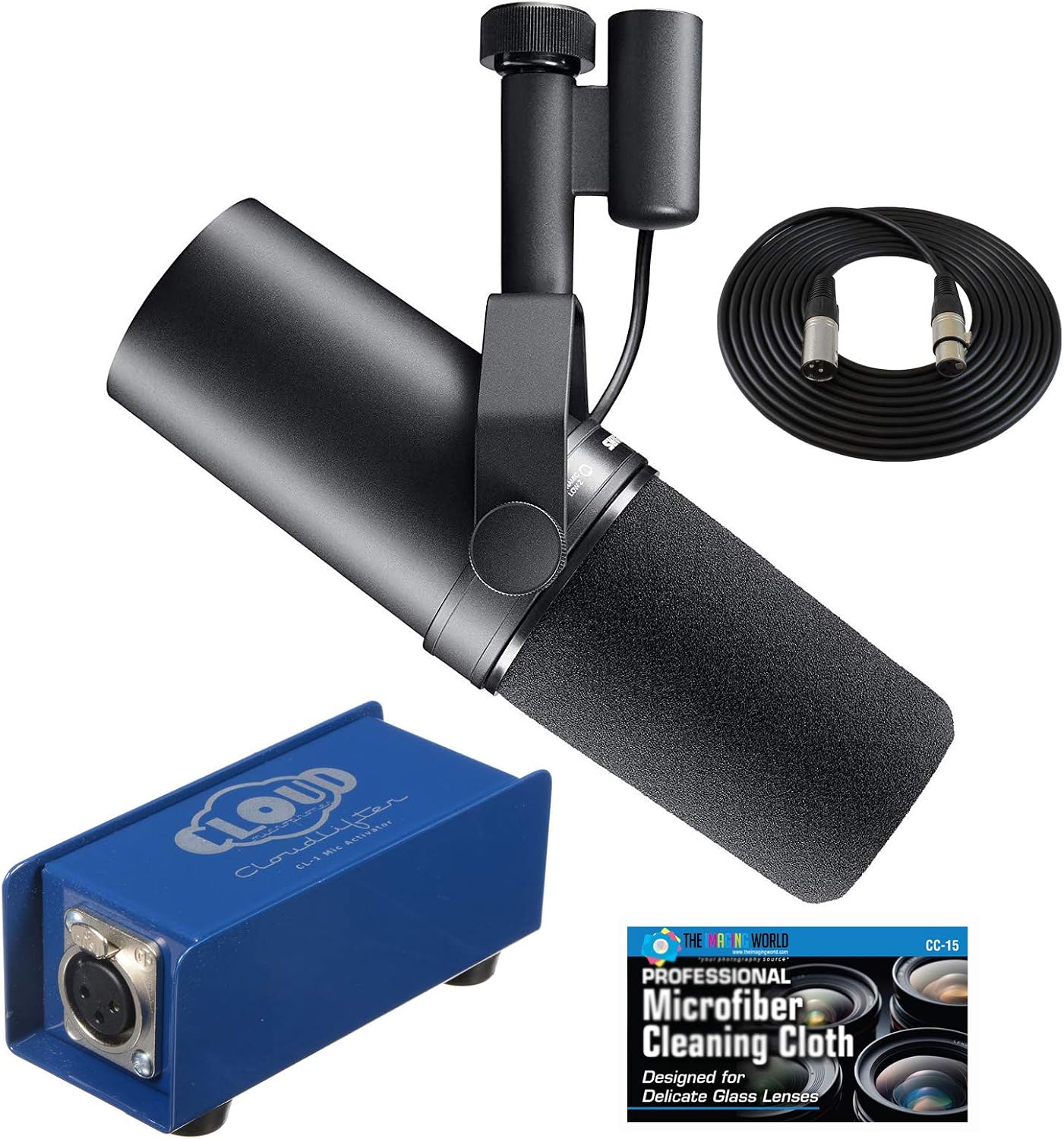
Shure SM7B Vocal Microphone with Cloud Microphones Cloudlifter CL-1 Mic Activator and Extra 10' XLR Cable Bundle
A broadcast-style dynamic vocal microphone bundled with a Cloud Microphones Cloudlifter CL-1 in-line mic activator and a 10-foot XLR cable. The bundle is aimed at interface-based setups that need a clean gain path and a long cable run.
Visit on Amazon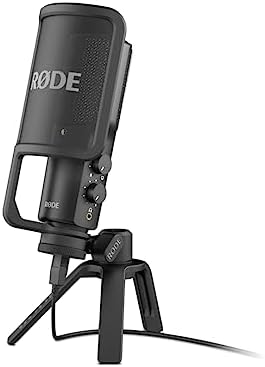
RØDE NT-USB Mini Studio-Quality USB Condenser Microphone
A USB condenser microphone built for direct computer recording. With no interface or preamp in the path, it is the simplest way to get a single voice into a recording app.
Visit on Amazon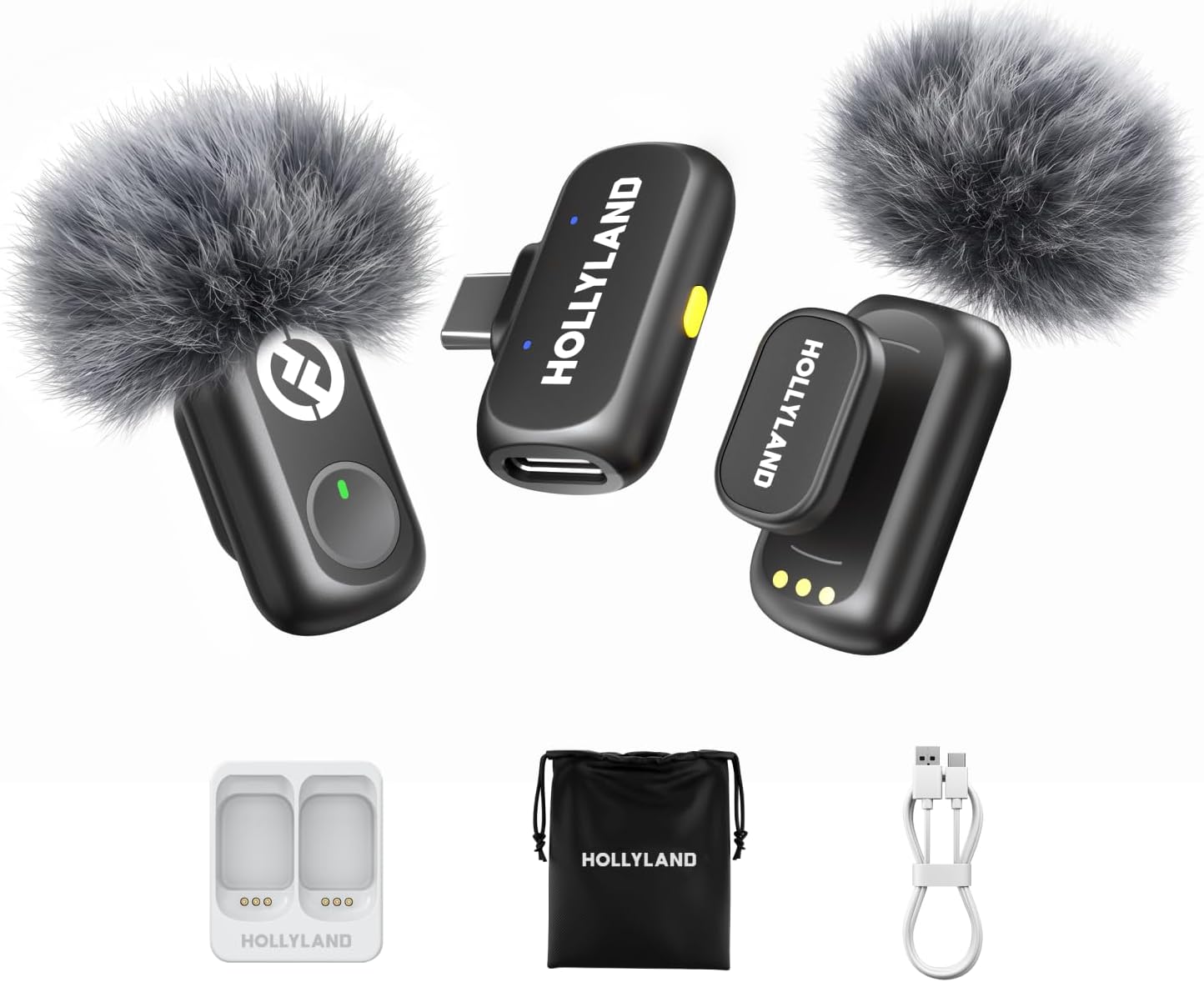
Hollyland Lark A1(2TX + USB-C RX), Wireless Microphone for iPhone & Android
A wireless kit that ships with two transmitters and a USB-C receiver for iPhone and Android. It is the mobile option here, designed for phone-based recording and two-person conversations away from a desk.
Visit on Amazon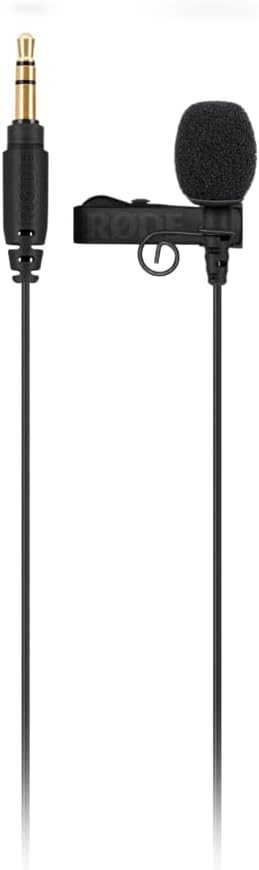
Rode Lavalier GO Professional Wearable Microphone,Black
A wearable lavalier microphone that clips to clothing. It is the pick for interviews, on-camera presenting, and any setup where a mic on a stand would be in the frame.
Visit on Amazon
TC Helicon GoXLR MINI Online Broadcast Mixer with USB/Audio Interface and Midas Preamp, Officially Supported on Windows
A broadcast mixer that combines a USB audio interface with a Midas preamp, officially supported on Windows. It is the piece that makes an XLR microphone usable for streaming with faders and level control.
Visit on Amazon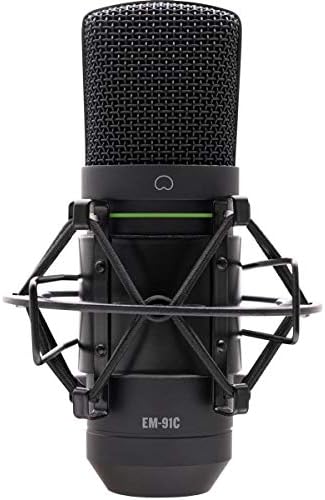
Mackie EM-Series, Large-Diaphragm Condenser Microphone (EM-91C)
A large-diaphragm condenser microphone from the Mackie EM series. It belongs to the studio-recording family rather than the plug-and-play one, which makes it a fit for a controlled room and an interface-based chain.
Visit on AmazonPrices and availability may change. Check the retailer for current details.
How these products were compared
This guide compares connection type and what it demands of your setup, capsule and format family, what ships in the box versus what you still need to buy, platform compatibility, and how much of the sound depends on your room. Product names, images, and retailer links are matched by ASIN so that every card points to the product shown.
That last criterion is the one people skip. A USB condenser and an XLR dynamic can sit at similar positions on a spec sheet and behave nothing alike in a real room. The USB side moves the preamp inside the microphone, which removes a decision and also removes your ability to change it. The XLR side hands you a gain path you control, and the price of that control is a cable, an interface, and enough knowledge to set levels before the take rather than after.
Nothing here is presented as a lab measurement or a bench test. The distinctions are drawn from product names, packaging, included accessories, and stated platform support. Every card links to the listing so you can confirm current price, availability, and return terms yourself.
How to choose the right microphone
Start with the room, not the microphone. If you record in a space with hard floors, bare walls, and a window facing a busy street, a wide-pattern condenser will collect all of it, and you will spend your editing time on noise reduction instead of content. In that situation, a dynamic microphone with strong off-axis rejection does more for your final file than an upgrade in capsule quality ever will. Off-axis rejection is the spec that matters most to a home podcaster, because most of the problems in a home recording arrive from the side, not from the front.
Next, decide how many boxes you want in the chain. USB microphones fold the interface into the mic, which is why they have closed most of the quality gap for a single person at a single computer. The XLR path still earns its place when you want to change preamps later, when you need a mixer with faders, or when you record more than one source at a time. If you are unsure which side of that line you sit on, read this before you buy an interface you do not need. Then think about accessories before you think about upgrades. A boom arm, a pop filter, and a shock mount change the result more than most capsule swaps, because they remove the desk thumps, plosives, and typing noise that no microphone can fix after the fact.
Finally, match the format to the shot. A stand-mounted mic is wrong for a two-person interview on a phone, and a wireless clip-on is wrong for a scripted voiceover where you want the mic in the same spot for every take. Proximity effect, the bass lift you get when you close in on a directional mic, is a tool you can use on a stand mic and mostly cannot control on a lavalier buried under a shirt collar.
Shure SM7B Vocal Microphone with Cloud Microphones Cloudlifter CL-1 Mic Activator and Extra 10' XLR Cable Bundle
The top pick is a bundle rather than a single microphone, and that matters. The Shure SM7B is a broadcast-style dynamic vocal microphone, the format that handles imperfect rooms best, and the bundle pairs it with a Cloud Microphones Cloudlifter CL-1 in-line mic activator and a 10-foot XLR cable. The Cloudlifter exists to give low-output dynamic microphones more usable clean gain before the interface, which is the exact complaint that follows dynamics around: they reject the room beautifully and then ask for a preamp you may not own yet.
The trade-off is real. This is an interface-based path, so you need an audio interface or a mixer, and you need to learn gain staging before your first session. There is no software suite and no auto-EQ button. What you get in exchange is a microphone that sounds consistent take after take and rarely picks up the neighbor's dog. If your recording space is a treated room or a closet full of clothes, the extra money here buys you less than it would in a hard, echoing room.
Alternatives to consider
The RØDE NT-USB Mini Studio-Quality USB Condenser Microphone is better suited to a solo creator who wants one cable into a laptop and no other hardware, while the Hollyland Lark A1(2TX + USB-C RX), Wireless Microphone for iPhone & Android is a stronger fit when your recording happens on a phone and you need two transmitters for a two-person conversation.
The Rode Lavalier GO Professional Wearable Microphone,Black, the TC Helicon GoXLR MINI Online Broadcast Mixer with USB/Audio Interface and Midas Preamp, Officially Supported on Windows, and the Mackie EM-Series, Large-Diaphragm Condenser Microphone (EM-91C) cover the remaining jobs: clip-on interviews where a stand mic would be visible, a Windows-based broadcast setup that needs faders and an XLR input, and a large-diaphragm condenser for a controlled room where you want the wider, more detailed capture that condensers are known for. Note that the mixer is not a microphone at all. It is the accessory decision that determines whether an XLR microphone works for your stream, and it is listed here because too many people buy the mic first and discover the interface problem second.
Day-to-day use and maintenance
Keep the parts that touch your voice clean. Foam windscreens and mesh grilles collect breath moisture and dust, and most manufacturers publish specific cleaning guidance you should follow rather than improvising with household cleaners. Wipe lavalier clips and cable strain reliefs, and store the wearable mic loosely rather than coiled tight around a finger.
For the wireless kit, charge the transmitters and the receiver before a session and check the receiver's connection to the phone at the start, not halfway through an interview. For the mixer, confirm your operating system matches what the manufacturer officially supports before you build your routing around it, since software support is where broadcast gear ages fastest. Leave headroom in your levels. Recording quietly and raising gain later is a habit that survives edits; recording at the edge of clipping does not. If you use a dynamic microphone on a boom arm, check the arm's tension every few weeks, because a mount that sags overnight will change your distance and your tone along with it.
Buying checklist
- Measure the distance between your mouth and where the microphone can realistically sit, and confirm the mount you choose holds that position.
- Choose a connection type based on your normal workflow rather than an occasional edge case.
- Confirm that the exact model includes the accessories you need, since bundles and single-unit listings are separate products.
- Check platform compatibility for any mixer or software-dependent device before you buy.
- Read the cleaning and maintenance instructions for windscreens, grilles, and clips.
- Verify the current retailer price, availability, and return terms using the card links above.
Final recommendation
Choose the Shure SM7B Vocal Microphone with Cloud Microphones Cloudlifter CL-1 Mic Activator and Extra 10' XLR Cable Bundle when you record in a real room, you already own or plan to own an interface, and you want a dynamic microphone plus the gain help and cable it needs in one purchase. Choose the RØDE NT-USB Mini Studio-Quality USB Condenser Microphone when simplicity beats flexibility and a single USB connection is the whole point. The remaining four cover their own jobs well, and picking between them is a question of format and platform rather than quality. Fix the room, then buy the microphone that fits the way you actually work.