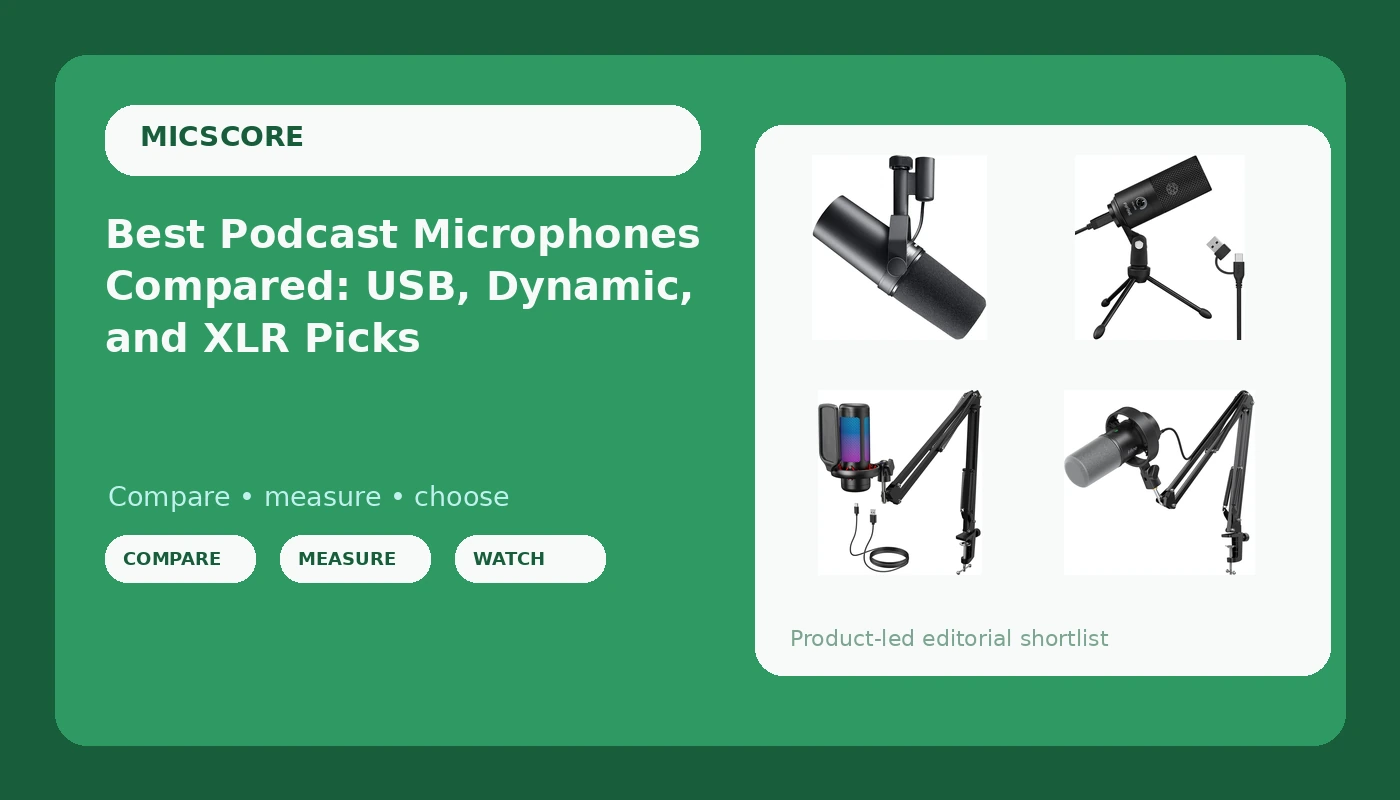
I have edited more than 4,000 episodes for other people, which means I have heard every microphone mistake there is: plosives that clip, keyboard noise under a whole interview, a refrigerator humming beneath an otherwise good conversation, and hosts who spent real money on a mic that made their untreated living room sound worse than the laptop they started with. So when I compare the best podcast microphones for creators, I am not comparing spec sheets. I am comparing what survives an edit, and what you will still be willing to turn on in month six.
The room is the microphone. That is the first thing I tell anyone who asks me what to buy. A cheap dynamic mic in a quiet corner beats an expensive condenser next to a window almost every time, and a mic you are afraid to use is worse than a worse mic you use every day. With that in mind, here is how four mics that creators actually ask me about stack up: two budget USB condensers, one USB/XLR dynamic, and the broadcast standard that has sat on more podcast desks than any other microphone ever made.
For most home creators in 2026, the FIFINE AmpliTank K688CT is the one to buy, because it is a dynamic capsule with both USB and XLR output, which means it rejects more of your room than a condenser does and it does not force you into an audio interface on day one. The Shure SM7B is the better microphone, and I will not pretend otherwise, but it is the better microphone only after you have solved the room and the gain staging. The two budget condensers are honest starter mics, and I will tell you exactly where each one gets you into trouble.
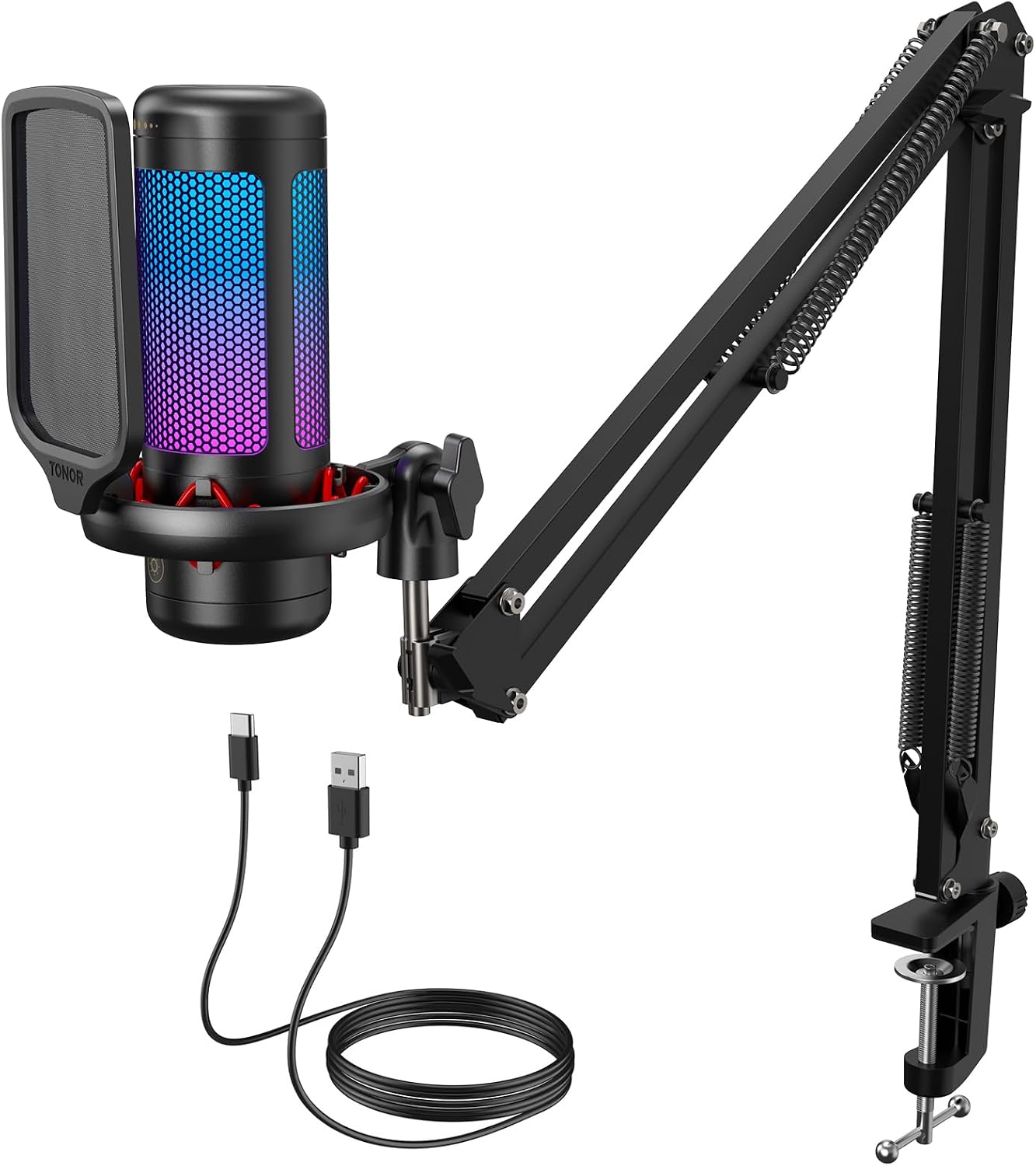
TONOR Gaming Microphone Set with Boom Arm (TC310+)
Everything in one box: boom arm, stand, RGB, tap mute, and gain control, so a first stream works tonight
A condenser capsule that hears the room, and the arm is the part that will disappoint you first
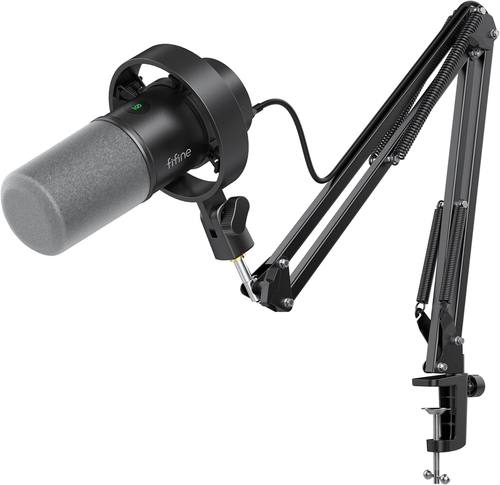
FIFINE AmpliTank K688CT Podcast Microphone Kit, USB/XLR Dynamic
A dynamic capsule, two output paths, and a kit that gets you recording without extra shopping
The onboard processing and software are the weak link, and it is not a set-and-forget studio chain
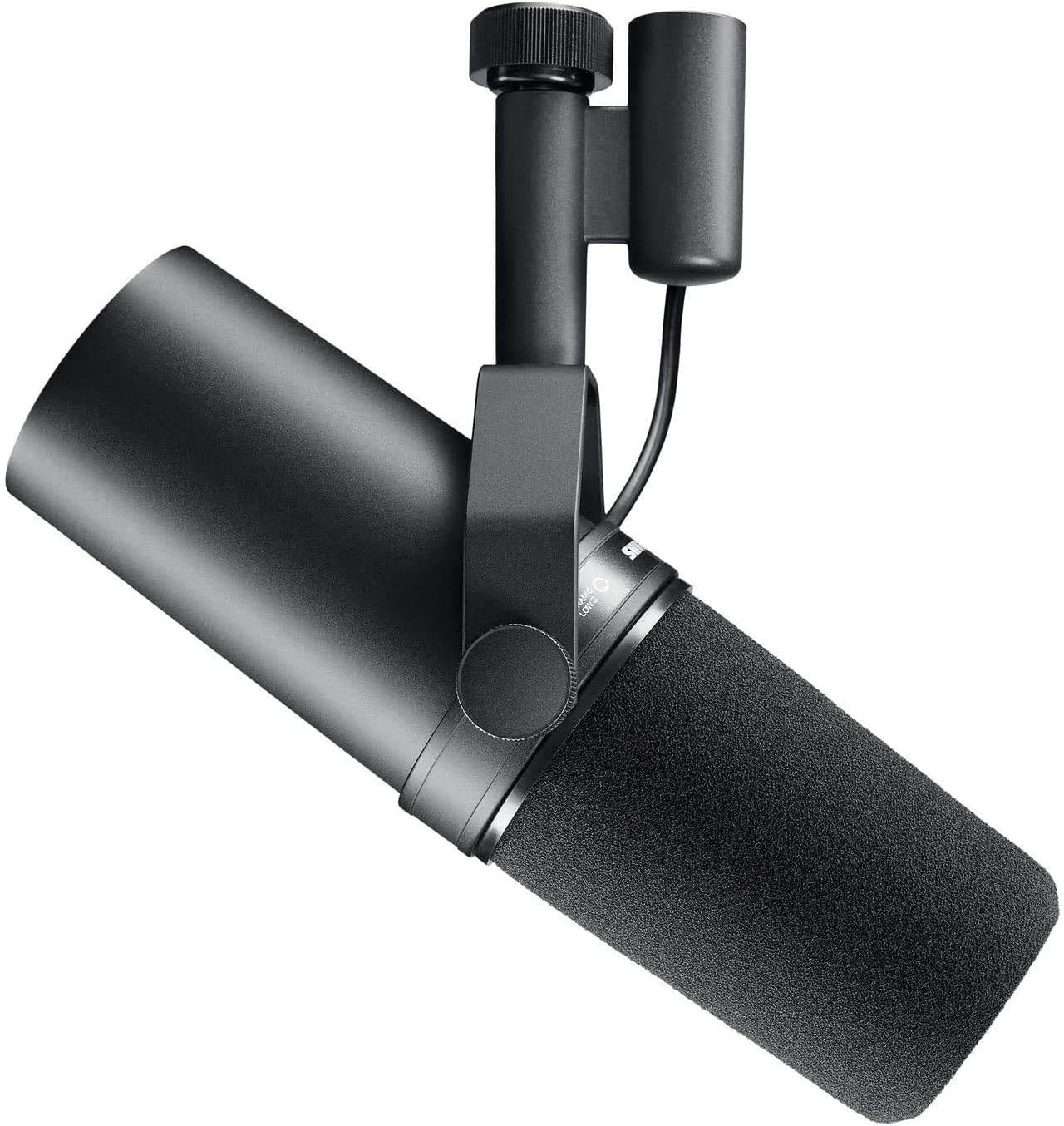
Shure SM7B Dynamic Vocal Microphone for Podcasting & Streaming
The most forgiving broadcast dynamic there is: strong off-axis rejection, built like a brick, sounds like the shows you already trust
Gain hungry enough that it drags an interface purchase along with it, which doubles the real cost
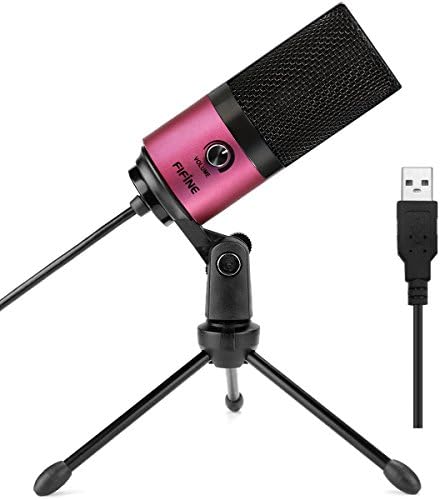
FIFINE K669B USB Microphone, Condenser Recording Mic
The simplest path to a usable voice track: plug in, select it, record, no interface and no learning curve
A condenser in an untreated room, which means room tone, fans, and street noise come along for free
Prices and availability were captured from Amazon Creators API and may change.
How I judge a creator mic
Four things decide whether a microphone earns a spot on my desk, and none of them are frequency response graphs.
Off-axis rejection. This is how much of everything that is not your mouth the mic refuses to hear. For a home podcaster with a noisy street, a neighbor, or a window unit, this single characteristic matters more than how pretty the top end sounds. Dynamics generally win here. Condensers generally lose.
Clean gain. Some mics turn a whisper into a usable level on a cheap interface. Others need a preamp with serious headroom before they stop sounding thin. This is where a cheap mic quietly becomes an expensive purchase, and it is the trap I see most often.
The mount and the accessories. A mic is only as good as the thing holding it. A $15 desk stand transmits every keystroke and every mouse click straight into your recording. I have heard a good microphone ruined by a bad mount far more often than I have heard a bad microphone rescued by a good one.
The software layer. USB mics now ship with companion apps, onboard EQ, compression, and noise reduction. When it works, it is genuinely great. When it does not, you are troubleshooting a driver instead of recording an episode.
Dynamic versus condenser, without the physics lecture
A condenser is more sensitive and captures more detail, including the detail you did not want: the room, the fan, the neighbor's dog. A dynamic is less sensitive, and that insensitivity is a feature. It ignores more of what is behind and beside it, which is why broadcast studios have used dynamics for decades.
Condensers belong in treated rooms. Dynamics belong in real life. That is the whole argument, and it is why I push most first-time podcasters toward a dynamic and tell them to stop watching gear videos.
The budget USB condensers: TONOR TC310+ and FIFINE K669B
These two sit in the same price neighborhood and they are aimed at different people.
The TONOR TC310+ is the all-in-one answer. You get the mic, a boom arm, a stand, RGB lighting, a tap mute, and gain control in a single box. If your goal is to be live on a stream tonight with a mic that looks the part and mounts to your desk, this kit removes every shopping decision from your path. That is real value, and I mean it: the accessories are usually what new creators forget, and forgetting them is what makes a first recording sound bad.
Where it loses is the same place every condenser kit loses. The capsule hears your room. In a bedroom with a bare wall behind you and a computer fan under the desk, you will hear all of it. And the boom arm in a kit at this level is the component that fails first, usually with a slow sag that you notice three weeks in when the mic is no longer pointed at your face. My advice if you buy it: point it across your mouth rather than straight at it, keep your gain conservative, and put something soft behind your head.
The FIFINE K669B is the opposite approach. It is a single USB condenser for vocals and meetings, no arm, no lighting, no ceremony. Plug it in, select it in your software, record. For a weekly team call, a class, or scratch voiceover you intend to replace later, that simplicity is the point, and it is genuinely hard to beat for the money. It is also the mic I would hand someone who wants to find out whether they enjoy recording before they spend anything serious.
The honest criticism of both: they are condensers, and condensers are the wrong tool for an untreated room. If your recording space has hard floors, bare walls, and a window, a dynamic will flatter you more. These two mics reward a quiet, soft room and punish everything else, and no software noise reduction fully fixes that after the fact.
You can Visit on Amazon → on the TONOR kit, and Visit on Amazon → on the FIFINE K669B.
The USB/XLR dynamic: FIFINE AmpliTank K688CT
This is the mic I recommend most often right now, and the reason is structural rather than sonic.
It is a dynamic capsule, so it rejects more of your room than either condenser above. It also offers both USB and XLR output, which means you can start recording today with a plain USB cable and no interface, then move to an XLR path later when you understand why you want one. That upgrade path is the thing budget mics usually lack. Most cheap USB mics are a dead end; this one is a starting point that survives your first gear upgrade.
As a kit, it also solves the accessory problem. You are not hunting a separate arm and mount before your first episode, which is where I see new podcasters stall out.
The trade-offs are real. The onboard processing and the companion software are the hit-or-miss part of every modern USB mic, and this one is no exception. If you rely on auto-EQ and noise reduction to fix a bad room, you are building your show on the least reliable layer of the chain. Use the DSP as a convenience, not as your acoustics. And a USB/XLR hybrid is not a set-and-forget studio chain; it is a flexible compromise, which is exactly what most home creators need and exactly what a professional studio would skip.
For the person who records at a desk, in an apartment, with a laptop, and wants one purchase that covers both the beginner and intermediate phase, this is the pick. Visit on Amazon →.
The reference: Shure SM7B
The SM7B is the mic you have already heard thousands of times, whether or not you knew it. It is the safe buy among safe buys, and its strengths are the ones that matter for voice: it ignores a lot of what is off to the side, it smooths over a harsh room instead of amplifying it, and it is built to be knocked around a studio for a decade.
If your room is imperfect and you cannot fix it, this mic is the closest thing to a shortcut. It makes an ordinary untreated space sound more controlled than it has any right to, and it makes plosives and sibilance less of a fight.
Here is the catch, and it is the reason I do not recommend it as a first purchase. The SM7B is a low-output dynamic, which means it demands a lot of clean gain. Plug it into a cheap interface and you will be cranking the preamp, hearing the noise floor rise with it, and wondering why the most famous podcast mic in the world sounds thin in your apartment. The mic is not the problem. The chain is. By the time you add an interface with enough clean gain, you have spent well past what the microphone costs, and you still have not treated the room.
That is the pet peeve I keep coming back to: a mic that needs a serious preamp to sound like itself. If you already own an interface with strong gain and you know why you own it, the SM7B is a lifetime purchase and you should stop reading. If you do not, this is the wrong first step, and the K688CT above is the honest one. Visit on Amazon →.
The trade-offs, stated plainly
Cheap USB condensers buy you convenience and cost you room rejection. You will spend your first month learning that your space is noisy.
The USB/XLR dynamic buys you flexibility and costs you polish. The onboard processing is a shortcut, not a solution, and the mic will not flatter a room the way a broadcast dynamic does.
The broadcast dynamic buys you forgiveness and costs you the rest of the chain. The mic is the cheap part of owning it.
Which one should you buy
If you need a complete streaming setup in one order and you record in a small, soft room, take the TONOR kit and spend your next upgrade dollar on a better arm.
If you mostly need to be heard clearly on calls and you want zero setup, take the FIFINE K669B.
If you are starting a podcast in a normal apartment with normal noise and you want one purchase that carries you for a couple of years, take the FIFINE AmpliTank K688CT.
If you already have a clean-gain interface and a treated corner, buy the Shure SM7B and be done for a decade.
What I am watching next
USB dynamics keep eating the entry market, and the next round will be decided by software, not capsules. The brand with the best auto-EQ and the least intrusive noise reduction wins the beginner, and beginners are where the volume is. I am also watching room treatment kits, because the more people hear their own untreated recording, the more they realize the microphone was never the problem.
None of these four mics is a mistake. Buying the wrong one for your room is. Fix the room first, buy the mic that matches it, and then stop shopping and start recording.