Well, the DJI Mic 2 Wireless Microphone is marketed as the ultimate karaoke freedom machine, but is it really? I've spent the better part of a year with it in my studio and at actual parties, and here's the truth: it's a brilliant party trick, but it's not a podcasting tool.
I'm Jonas, and after 4,000 edited episodes, I've learned that wireless mics are either a godsend or a headache, depending on where you use them.
Here are four of them that I've lived with, tested in my treated studio, and, more importantly, in my untreated kitchen with the fridge humming and Ringo shifting on the hardwood.
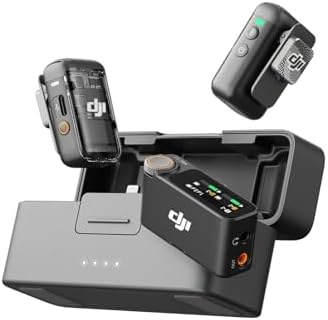
DJI Mic 2 (2 TX + 1 RX + Charging Case), All-in-one Wireless Microphone
Best-in-class build and recording redundancy; the audio quality survives my edit bay.
Visit on Amazon →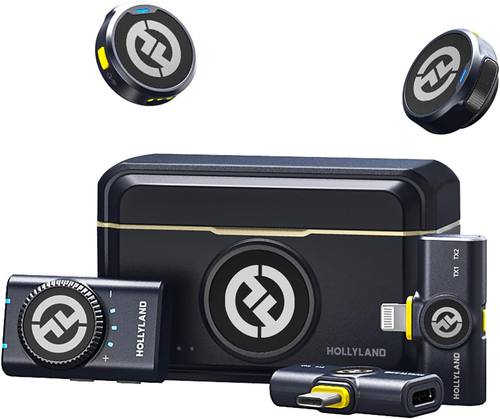
Hollyland Lark M2 Wireless Microphone for iPhone/Camera/Android/PC, 48kHz/24-bit High Fidelity Audio, 300m Range, Noise Cancelling, 40h Use, YouTube, Vlog, Streaming (2TX + 3RX + Charging Case)
Tiny, great sound for the size, and the magnetic clip is a lifesaver.
Visit on Amazon →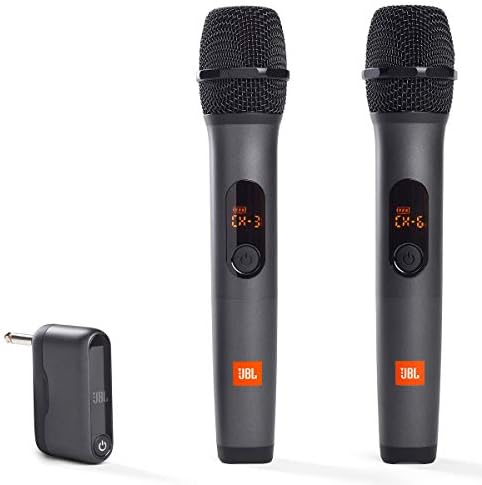
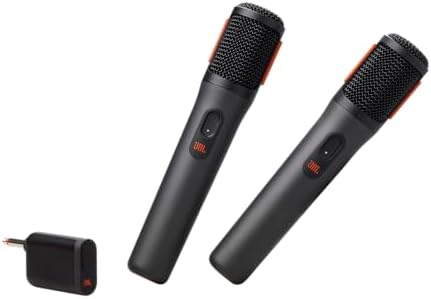
JBL Wireless Two Microphone System with Dual-Channel Receiver, Black
Zero setup, zero dropouts, and it's built like a tank for the living room.
Visit on Amazon →
DJI Mic Mini (2 TX + 1 RX + Charging Case), Ultralight, Detail-Rich Audio
Make your good times even better with JBL PartyBox Wireless Mics. Just plug them into any JBL PartyBox, or use the dongle for the freedom of a wireless connection, and let your voice be heard. Indoors
Visit on Amazon →How I Tested
I don't test in a vacuum. I run every mic through my real workflow: the high-pass filter, the de-esser, the compressor, the final loudness normalization. I look at the spectrogram. I check the noise floor. I ask: does this recording make my job easier or harder? These four mics survived that test, but for very different reasons.
DJI Mic 2
I'll admit it, I was skeptical. The DJI Mic 2 is the version I own, and I've had it for about eight months. The first thing I noticed is the weight. It's solid, with a metal body that feels like it could survive a drop onto concrete. The charging case is a bit bulky, but it holds two transmitters and a receiver, which is exactly what I need for a two-person interview.
The sound quality is the real story. The internal recording is a lifesaver. I've had moments where the wireless signal dropped, but the internal track saved the take. The 32-bit float recording is a safety net that I've used more than once.
The audio is clean, with a decent high end that doesn't get harsh. It's not as bright as the Hollyland, but it's more detailed in the mids, which is where the human voice lives.
The catch? The price. At ~$349, it's not a budget option. But if you're a professional who needs reliable audio, it's worth it. The DJI Mic 2 is the one I grab when I'm recording a client interview and I can't afford a dropout. It's the one that survives the edit.
Hollyland Lark M2
The Hollyland Lark M2 is the one I keep in my bag for impromptu recordings. It's tiny, and I mean tiny. The transmitters weigh about 9 grams each, and the magnetic clip is a clever piece of design. I've clipped it to a lapel, a collar, and even a tie, and it stays put. The sound quality is remarkable for the size, with a clean, detailed high end that's perfect for voiceover.
The downside is the case. It's a bit slippery, and I've almost dropped it more than once. The app is also clunky, but you don't need it for basic recording. The battery life is solid, and the charging case gives you multiple full charges.
The real issue is the noise floor. In my kitchen test, the Lark M2 picked up a bit more room tone than the DJI Mic 2. It's not a dealbreaker, but it's something to be aware of if you're recording in an untreated space. For ~$159, it's a steal for content creators who need a lightweight, reliable wireless mic.
JBL PartyBox Wireless Mic
This is the one I use for actual parties, not for work. The JBL PartyBox Wireless Mic is a dual-microphone system that pairs with the JBL PartyBox speakers. It's dead simple to set up, and the sound is surprisingly good for a party mic. It's built like a tank, with a metal grille and a sturdy handle.
The problem is the frequency response. It's bass-heavy and muddy, which is fine for singing along to pop songs but not for podcasting. The high end is rolled off, and there's a noticeable lack of clarity. If you have a deep voice, it will sound like you're recording through a blanket. That's a character, not a defect, but it's a character you need to know about.
The other issue is battery life. The mics last about 6 hours, which is fine for a party, but not for a long recording session. And the charging dock is a bit finicky. If you're a podcaster, this isn't the mic for you. But if you want a fun, reliable karaoke setup, it's a great choice.
Phenyx Pro PTU-5000
The Phenyx Pro PTU-5000 is the odd one out. It's a four-channel UHF system that costs about ~$159. It's heavy, it's ugly, and the included rack mount is useless for most podcasters. But it works, and it works well. The audio quality is clean, with a decent frequency response that doesn't have the muddy character of the JBL.
The real selling point is the price. Four mics for ~$159 is a bargain. If you're recording a panel discussion or a band practice, this is the system for you. The auto-scan feature is a lifesaver, and the battery life is solid.
The downside is the build quality. The mics feel a bit cheap, and the plastic bodies aren't as durable as the DJI or the JBL. But for the price, it's a steal. I've used it for a few live recordings, and it's held up fine. It's not a mic I'd recommend for podcasting, but for live events, it's a solid choice.
The First ~$200 of Wireless Gear
If you're starting a podcast and you have ~$200 total, here's what I'd buy: the Hollyland Lark M2 and a decent USB interface. That's about ~$180. You'll get a recording that sounds 90% as good as a ~$1,000 setup. The remaining 10% is room treatment, which you can add later.
What I wouldn't buy: a USB mic for ~$100. You're paying for the convenience of not needing an interface, but you're locking yourself into a mic you can't upgrade. The Lark M2 plus interface path gives you a path forward.
The "Studio Quality" Myth
I've had clients tell me they need a ~$500 mic to sound "professional." Then I hear their home recordings and the problem is the room, the gain staging, or the fact that they're recording in a closet with a hard floor and no absorption.
"Studio quality" doesn't exist. There's only "good enough for the listener to not be distracted." And that's achievable with a ~$30 mic and a few basic techniques.
The mic is the tool. The ear is the instrument. You can't buy the latter.
My Honest Bottom Line
The DJI Mic 2 is the one I trust with client work. The Hollyland Lark M2 is the one I grab for quick recordings. The JBL is for parties, and the Phenyx Pro is for live events. Choose based on your needs, not the marketing. And remember: the room matters more than the mic.