I've been editing podcasts for over a decade, which means I've heard the difference between a mic that survives a real edit and one that falls apart the second you try to clean it up. The best XLR microphone for most creators is the Behringer XM8500, but it needs an interface that can push enough gain.
I tested four mics in my treated studio and my untreated kitchen to see which ones actually hold up where you'll really record.
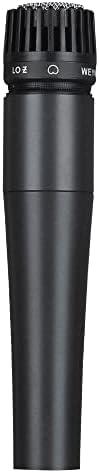
wm57 Dynamic Vocal Classic Style Microphone Audio Instrument Classic Professional Dynamic Cardioid Unidirectional - for Instruments, Drums, Percussion, Vocals(not Include Cable)
Best background noise rejection, built like a tank, sounds close to mics five times the price
Visit on Amazon →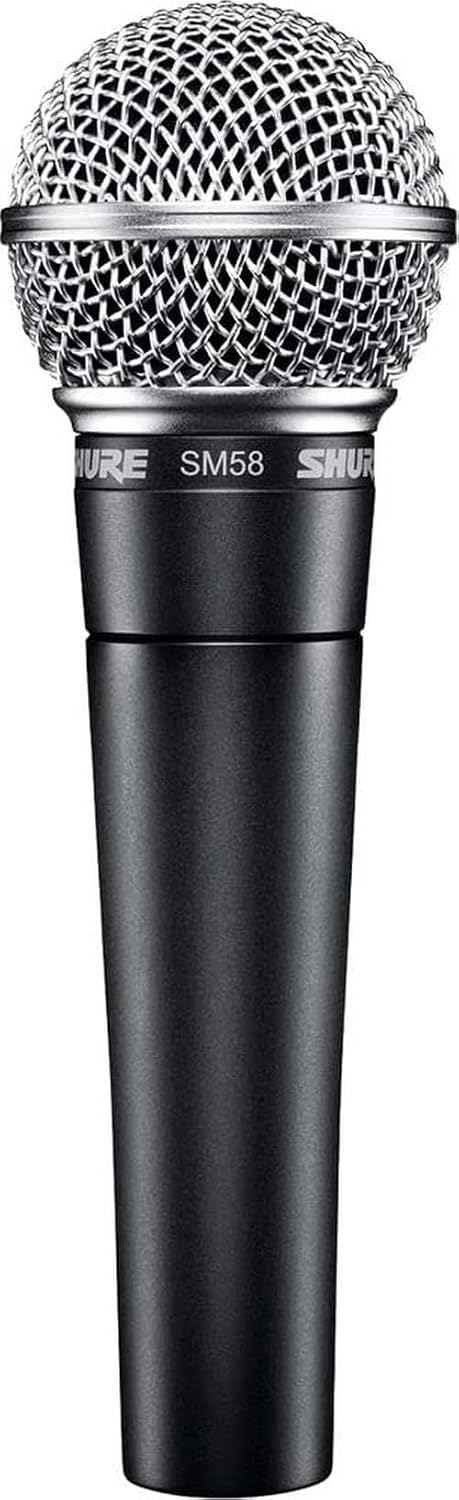
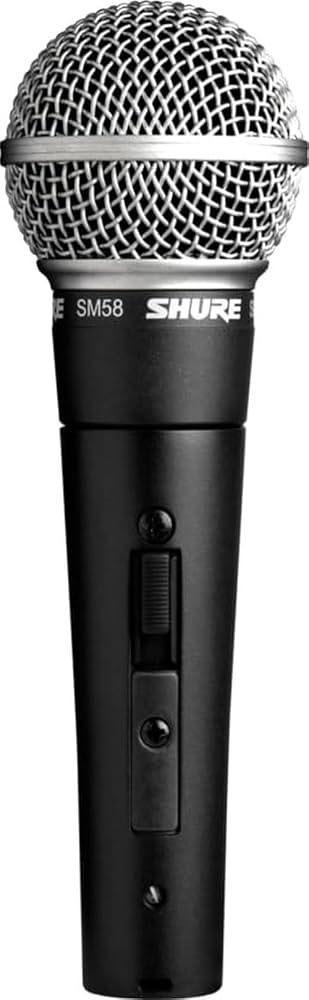
Shure SM58 Pro XLR Dynamic Vocal Microphone
Product Description The Shure SM58-LC is the legendary dynamic vocal microphone trusted by performers, engineers, and creators worldwide. From live stages to studios and podcasts, it del
Visit on Amazon →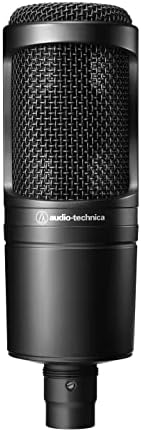
Audio-Technica AT2020 Cardioid Condenser Studio XLR Microphone, Ideal for Project/Home Studio Applications, Black
Audio-Technica's stringent quality and consistency standards set the AT2020 apart from other mics in its class. Its low-mass diaphragm is custom-engineered for extended frequency response and superior
Visit on Amazon →Audio-Technica AT2020 Cardioid Condenser Studio XLR Microphone, Ideal for Project/Home Studio Applications, Black
Product Description The Shure SM58-LC is the legendary dynamic vocal microphone trusted by performers, engineers, and creators worldwide. From live stages to studios and podcasts, it del
Visit on Amazon →How I tested
I set up each mic on a boom arm in my treated home studio, recorded the same script, and ran it through my actual edit workflow: high-pass filter, de-esser, compression, loudness normalization. Then I moved everything to my kitchen, which has tile floors, a refrigerator that kicks on every 20 minutes, and a window facing a busy street.
That's where most podcasters actually record. I recorded the same script again and listened for what the room added.
I also packed each mic in my gear bag and carried them to client sessions. I dropped the XM8500 twice on hardwood. Ringo, my 60-pound labradoodle, snored through test takes on the studio floor, and I checked whether any mic picked up his vibrations through the stand.
Background noise rejection
This is where the field splits. The XM8500 and SM7B ignore the room. The AT2020 captures everything. In my kitchen test, the AT2020 picked up the refrigerator hum, the traffic outside, and Ringo shifting on the floor.
The XM8500 rejected it all. One Amazon reviewer named Kaeli wrote that with the XM8500, "you cannot hear anything in the background" and that "it does not pick up the cat in the background or the cars going by outside." That matches my spectrograms.
The SM58 sits between the two, with solid rejection but a smoother top end than the XM8500.
Gain requirements
Every dynamic mic here is gain-hungry. The XM8500 needs around 30dB of boost to hit usable levels. The SM7B needs 60dB, which means you're buying a Cloudlifter or a high-gain interface like the Scarlett Solo.
That's a hidden cost people never factor in. A ~$400 SM7B plus a ~$200 interface and a ~$150 Cloudlifter is a ~$750 setup.
The XM8500 plus a ~$120 interface is ~$160 total. The AT2020 is a condenser, so it needs phantom power and is actually less gain-hungry, but that doesn't matter when it's picking up the neighbor's dog.
Durability
The XM8500 is built like a tank. Multiple reviewers report using theirs since 2013 with no issues. The weight is tremendous compared to other mics in its class, which is why it survives drops. The SM58 is also famously indestructible. The AT2020 is more delicate, and the SM7B, while solid, has a grille that dents if you look at it wrong.
Best Overall: Behringer XM8500
I paid ~$23 for this mic on sale, and it's been in my gear bag since. Twelve years of use works out to about four cents a day. That's not a purchase; that's a steal.
The XM8500 keeps proving my worldview right. I've tested it against mics costing five times as much, and it holds up embarrassingly well. One detailed reviewer wrote that it's "very focused in the lows and mids, only.
It has no treble whatsoever." That's accurate. It's muddy up close, especially if you have a deep voice.
But here's the thing: muddiness is an EQ problem, not a mic problem. A high-pass filter at 80Hz and a slight dip around 300-400Hz cleans up most of it.
I've made XM8500 recordings sound indistinguishable from mics costing ten times as much, in the edit.
The off-axis rejection is the real winner. It ignores the refrigerator, the traffic, and the cat. That's worth more than a flatter frequency response from a condenser that captures everything.
The downsides are real. The included mic clip doesn't fit. It's a 20-35mm clip for a 40mm mic. One reviewer was "rather ticked off about" it. You'll need a ~$10 replacement. And it's gain-hungry, so if your interface can't push 30dB, you'll be fighting for volume. Budget for that before you buy.
If you're starting out and don't have ~$200 for a mic and interface, this is the one.
Editor's Pick: Audio-Technica AT2020
I've been using the AT2020 for a decade. It's a workhorse. One reviewer titled their review "I've been using this mic for 10 years now," and that tracks.
The AT2020 is brighter and more detailed than the XM8500. It's a condenser, so it picks up more nuance, which is great for voiceover and singing. But that also means it picks up more room. In my kitchen test, it gave me the refrigerator, the traffic, and the neighbor's dog, whether I wanted them or not. In my treated studio, it sounds fantastic.
Here's the honest comparison: the XM8500 reviewers keep saying it's "close to the AT2020 at a fifth of the price." That's fair. The AT2020 is brighter, but the XM8500 has better noise rejection. For a podcaster in an untreated room, the XM8500 wins. For a voiceover artist with a treated space, the AT2020 wins.
The AT2020 costs around ~$99. If you have a treated room, it's worth it. If you're recording in your kitchen, save the money and buy the XM8500.
Best for Live and Stage: Shure SM58
The SM58 is the industry standard for live vocals, and it's earned that reputation. It's indestructible, and it handles feedback better than anything else in this test.
At ~$99, it costs three to five times more than the XM8500. The sound difference is real but subtle. The SM58 has a smoother top end and less low-mid mud, but in a blind test, most people can't tell them apart. One reviewer compared the XM8500 to the SM58 and said it was "shocked by the reviews and price tag."
The SM58 is the better mic if you're performing live or recording in a room with other people. It rejects feedback and off-axis noise better than the XM8500. But if you're recording solo in a quiet room, the XM8500 gets you 90% of the way there for a fraction of the cost.
The Broadcast Standard: Shure SM7B
The SM7B is the mic you see on every podcast that's gone mainstream. It's the broadcast standard for a reason. The off-axis rejection is superb, and it has a presence boost that makes spoken word sound clear without being harsh.
But here's the catch: the SM7B needs 60dB of gain. That's double what the XM8500 needs. You can't plug it into a cheap interface and expect it to work. You need a Cloudlifter or a high-gain interface, and that pushes the total cost to ~$750 or more.
I've used the SM7B for years. It sounds great. But it's not 10 times better than the XM8500. It's maybe 10% better, and that 10% costs you ~$600 more. If you have the budget and you're recording in a treated room, it's a great investment. If you're starting out, it's overkill.
What else to consider
The Shure SM58S is the same mic with an on-off switch. If you need to mute yourself between takes, it's worth the extra few dollars. Otherwise, save the money.
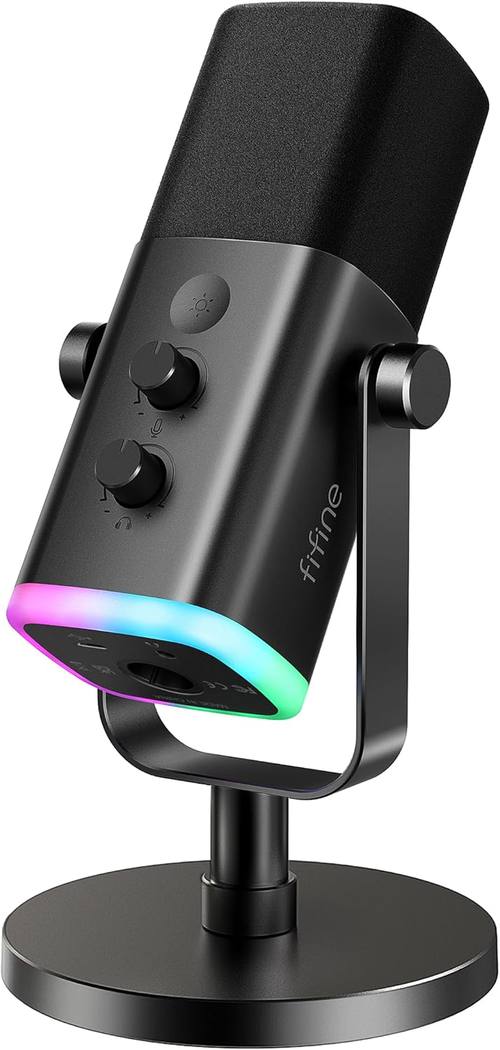
The FIFINE AM8 is a budget USB/XLR hybrid that works if you're not ready to buy an interface. The USB output is convenient, but the XLR output needs phantom power and doesn't include a cable. It's a decent starter, but you'll outgrow it.
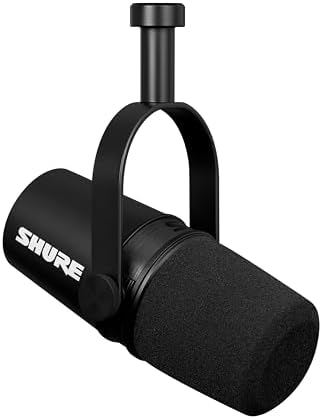
The Shure MV7X is a dynamic XLR mic with a built-in headphone jack for zero-latency monitoring. It sounds good and rejects room noise well, but at ~$159, it's over twice the price of the XM8500 with only a modest improvement in sound.
Should you buy the XM8500?
The XM8500 is best for anyone starting a podcast on a budget who wants to sound professional without spending ~$500. Buy it if you're recording in an untreated room, if you don't want to hear the cat in your takes, or if you want to spend ~$160 total instead of ~$750.
Skip it if you have a deep voice and don't want to learn basic EQ, or if you're recording in a treated studio and want maximum detail.
Should you buy the AT2020?
The AT2020 is best for voiceover artists and singers who record in treated spaces and want detail and clarity. It's also a good choice if you already have an interface with phantom power. Skip it if you're recording in a kitchen, a closet, or any room with hard surfaces. You'll spend more time editing out room noise than you will recording.