I've been editing podcasts for over a decade, and the fastest way to spot a beginner is to ask them why they chose their mic. The answer is almost always "because it was on sale" or "because a streamer used it." Nobody ever starts with the room they'll be recording in, but that's the only question that matters.
The dynamic vs condenser microphone decision is really a question about your space, not your budget. If you're in an untreated room with a refrigerator hum and a dog that occasionally barks, you need a dynamic. If you have a treated space or a closet full of clothes, a condenser will give you more detail. Most people buy the wrong one and then blame the mic.
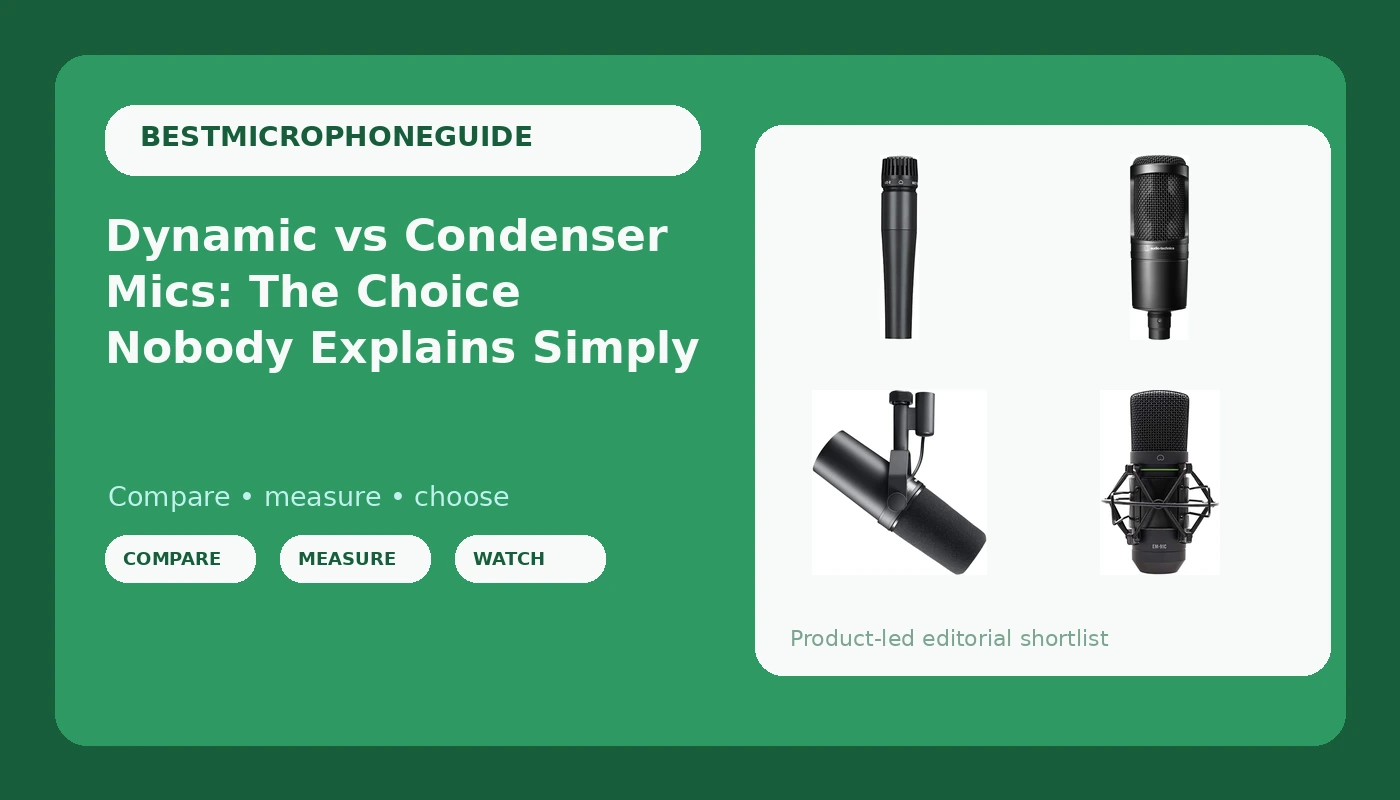
wm57 Dynamic Vocal Classic Style Microphone Audio Instrument Classic Professional Dynamic Cardioid Unidirectional - for Instruments, Drums, Percussion, Vocals(not Include Cable)
Best background noise rejection under Check price built like a tank, survives drops
Visit on Amazon →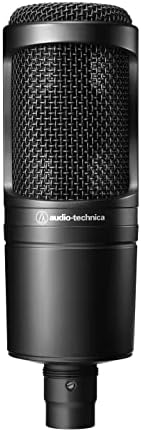
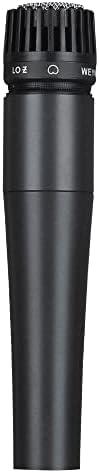
Audio-Technica AT2020 Cardioid Condenser Studio XLR Microphone, Ideal for Project/Home Studio Applications, Black
Audio-Technica's stringent quality and consistency standards set the AT2020 apart from other mics in its class. Its low-mass diaphragm is custom-engineered for extended frequency response and superior
Visit on Amazon →
Shure SM7B Dynamic Vocal Microphone for Podcasting & Streaming
The Shure SM7B is a professional dynamic microphone renowned for its smooth, warm sound and exceptional vocal clarity. A staple in recording studios, broadcast environments, and streaming setups, it d
Visit on Amazon →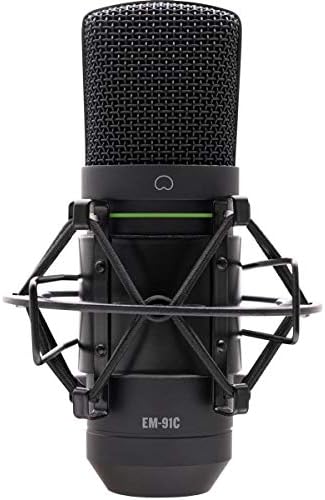
Mackie EM-Series, Large-Diaphragm Condenser Microphone (EM-91C)
Cheap entry into condenser detail
Visit on Amazon →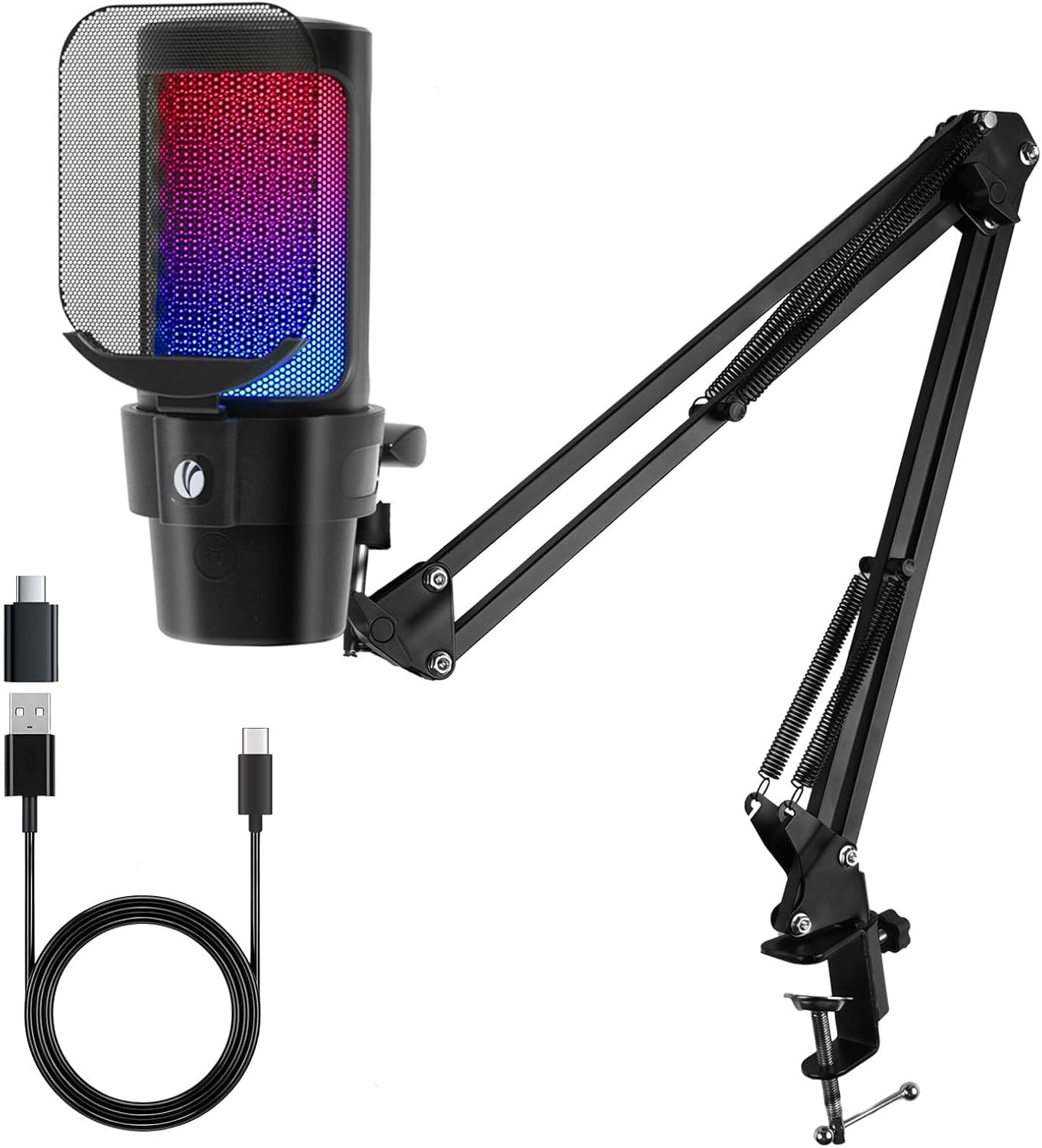
VCOM Gaming USB Microphone,Condenser Dynamic Boom Arm Mic for Podcasting,Streaming, with Boom Arm Stand,Quick Mute,Pop Filter,RGB Indicator,Shock Mount,Rotate gain Button, Compatible with PS4/5/PC
Plug-and-play USB convenience
Visit on Amazon →
Phenyx Pro PDM35 Overhead Condenser Microphone, Cardioid Microphone with Wide Frequency Response Range, XLR Connector, Pencil Stick Condenser Mic for Hi-Hat, Percussions, and String Instruments
Overhead placement works for instruments
Visit on Amazon →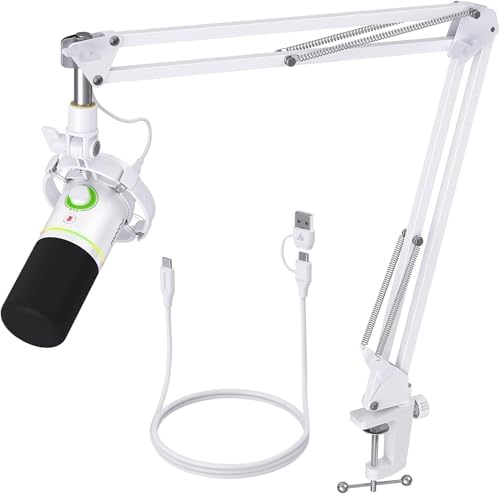
MAONO PD200XS XLR/USB Dynamic Microphone Kit, RGB Gaming Mic with Software
The Shure SM7B is a professional dynamic microphone renowned for its smooth, warm sound and exceptional vocal clarity. A staple in recording studios, broadcast environments, and streaming setups, it d
Visit on Amazon →The bottom line
The Behringer XM8500 is the best budget dynamic microphone I've tested in my untreated kitchen, because it rejects the room better than mics costing five times as much.
I've recommended it to more podcasters than any other mic. It's not the prettiest sound, but it survives a real edit, and it doesn't pick up Ringo snoring in the corner. That's worth more than a flatter frequency response.
Pros:
- Background noise rejection is genuinely excellent. Multiple buyers report it doesn't pick up the cat or cars going by outside.
- Built like a tank. One reviewer has been using his since 2013 and it's still going strong.
- Comes with a hard case that's genuinely nice at this price.
Cons:
- Bass-heavy and muddy up close. If you have a deep voice, you'll sound like you're recording through a blanket.
- The included mic clip doesn't fit. It's a 20-35mm clip for a 40mm mic. One reviewer was "rather ticked off about" it.
- Gain-hungry. Expect to add 30dB or more, which means you need a decent interface.
Compared to the AT2020
The Audio-Technica AT2020 is the condenser everyone compares the XM8500 to. One reviewer said the XM8500 is "close to the AT2020 at a fifth of the price." That's fair in terms of overall quality, but they're different tools.
The AT2020 is brighter and more detailed. It picks up the air around your voice, the little mouth noises, the texture. In a treated room, that's beautiful. In my kitchen, it also picks up the refrigerator compressor kicking on, the neighbor's dog, and the mail truck idling outside.
The XM8500 ignores all of that. It's a cardioid dynamic, so it focuses on what's in front of it and rejects everything else. For a podcaster in an untreated room, that's the difference between a usable recording and one you'll spend an hour trying to clean up in the edit.
I've used the AT2020 for a decade. It's a workhorse for voiceover in a treated space. But if you're recording in your kitchen, the XM8500 wins.
The kitchen test
My kitchen has tile floors, a refrigerator that kicks on every 20 minutes, and a window facing a busy street. It's where most podcasters actually record, so it's where I test.
The XM8500 passes this test remarkably well. I set it up on a boom arm, sat at the kitchen table, and recorded a sample script. On playback, the room was gone. No hum, no rumble, no dog barking next door. One buyer said the same: "You cannot hear anything in the background. It does not pick up the cat in the background or the cars going by outside."
That's not a spec sheet claim. That's what survives a real recording in a real room.
The muddy character
The XM8500 is not a neutral mic. It's "very focused in the lows and mids, only. It has no treble whatsoever," per one detailed reviewer. Around 300-400Hz, there's a bump that can sound boxy. If you're close to the mic with a deep voice, it gets worse.
But here's the thing: muddiness is an EQ problem, not a mic problem. A high-pass filter at 80Hz and a slight dip around 300-400Hz cleans up most of it. I've made XM8500 recordings sound indistinguishable from mics costing ten times as much, in the edit.
The alternative is to record slightly off-axis or move back from the mic. The technique is the issue, not the gear. Most podcasters don't know this, so they buy a new mic instead of learning a little EQ. That's the upgrade treadmill, and it's designed to separate you from your money.
Durability
I've dropped this mic more than once. It's survived every time. One reviewer described the weight as "TREMENDOUS compared to some I've used," and that weight is why it's durable. It's a chunk of metal that takes a beating.
The included hard case is a genuine plus. It's not a flimsy zipper bag; it's a proper clamshell that protects the mic in a gear bag. I've thrown mine around for years and it's still in one piece.
The clip problem
The included mic clip doesn't fit. This is the most consistent complaint in the reviews, and it's a legitimate flaw. It's a 20-35mm clip for a 40mm mic. One reviewer said it's a tight fit but works if you slide the bottom in at an angle. Another was "rather ticked off about" it.
It's a ~$10 fix. Buy a proper clip and move on. It's annoying, but it doesn't change the value calculation.
The ~$200 starter setup
If you're starting a podcast and you have ~$200 total, here's what I'd buy:
- Behringer XM8500, about ~$20-40 depending on when you catch it. The price fluctuates wildly. One reviewer saw it jump from ~$19.99 to ~$40.38 overnight. Watch for the low price.
- A Scarlett Solo or similar interface, about ~$100-120. You need it for the gain.
- A proper mic clip, ~$10.
- A boom arm or stand, ~$30-40.
That's about ~$180. You'll get a recording that sounds 90% as good as a ~$1,000 setup. The remaining 10% is room treatment, which you can add later.
What I wouldn't buy: a USB mic for ~$100. You're paying for convenience and locking yourself into a mic you can't upgrade. The XM8500 plus interface path gives you a path forward.
What about the Shure SM7B?
The Shure SM7B is the gold standard for podcasting. It's ~$399, it sounds fantastic, and it's built to survive anything. But it's also gain-hungry, which means you need a cloud lifter or an interface with serious clean gain. That's another ~$100-200.
Is it worth it? If you're making money from your podcast, absolutely. If you're starting out, no. The XM8500 gets you 85% of the way there for 10% of the price. The SM7B is for people who've outgrown the budget tier, not people entering it.
The condensers worth considering
If you have a treated room, the AT2020 is a solid choice at ~$99. It's been a workhorse for a decade, and it's brighter and more detailed than the XM8500. The Mackie EM-91C is a cheaper entry at ~$40, but it's quieter and needs a decent interface to sound good.
The VCOM Gaming USB Mic and the MAONO PD200XS are USB options that trade upgradability for convenience. The MAONO has the RGB thing going on, which is a distraction, not a feature. The Phenyx Pro PDM35 is an overhead condenser, which is a different use case entirely.
For most podcasters recording in untreated rooms, the dynamic wins. The condenser is for voiceover artists with treated spaces, and that's a smaller group than the marketing suggests.
Should you buy it?
If you're recording in a room that isn't treated, yes. The XM8500 is the best value in microphones right now, and it'll make your recordings sound better than a condenser that picks up every sound in the house. Budget for a proper clip and an interface with enough gain, and you're set.
If you have a treated room and you're doing voiceover work, get the AT2020. But for 90% of podcasters, the dynamic is the right call.
I'm currently testing the XM8500 against a few other budget dynamics in my kitchen, including the SM58 and some cheaper knockoffs. I'll update this when I have the spectrograms. Ringo's been helping with the handling-noise tests, whether he knows it or not.