How To Set Up An XLR Microphone For Podcast: The Gear That Survives Real Edits
Related: Podcast Microphone Mistakes To Avoid
The XLR setup is the backbone of podcasting, and it's not as complicated as the forums make it sound. I've edited over 4,000 episodes, and I can tell you this: the difference between a recording that takes me 20 minutes to clean up and one that takes 2 minutes is rarely the mic.
It's the chain. The cable, the interface, the gain staging, the room. This guide walks through the gear I actually recommend, tested in my treated studio and my untreated kitchen where Ringo's snoring and the refrigerator hum are the real judges.
The honest caveat: the best overall pick needs a better clip than the one in the box, and the budget pick will make you work for your treble.
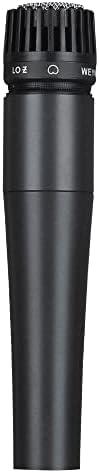
wm57 Dynamic Vocal Classic Style Microphone Audio Instrument Classic Professional Dynamic Cardioid Unidirectional - for Instruments, Drums, Percussion, Vocals(not Include Cable)
Best noise rejection in the budget class, built like a tank, sounds 90% as good as mics five...
Visit on Amazon →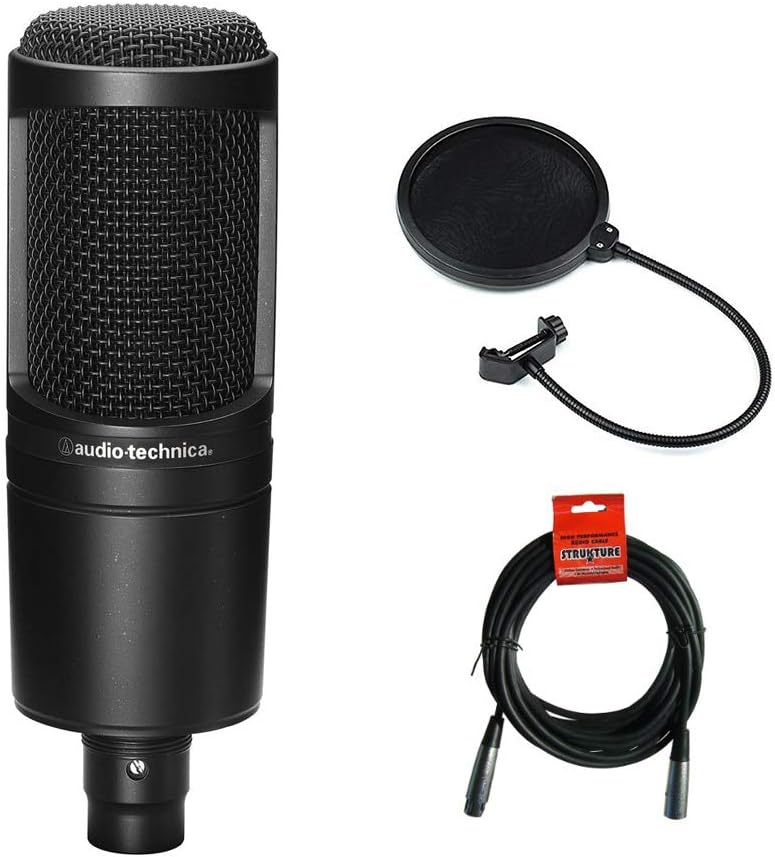
Audio Technica AT2020 Condenser Studio Microphone Bundle with Pop Filter and XLR Cable
Adding value to your purchase, Austin Bazaar bundles your instrument with necessary accessories. Everything you need to start playing immediately comes in one box. Save yourself the hassle and save so
Visit on Amazon →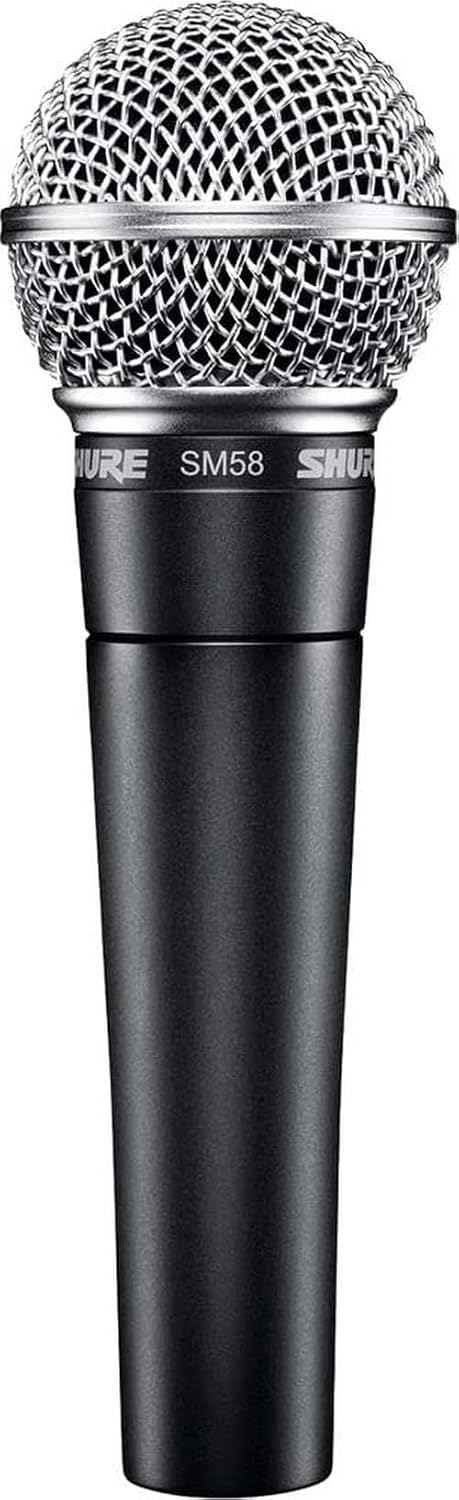 Visit on Amazon →
Shure SM58 | Check price | The industry standard, vocal-friendly presence boost, indestructible | Costs 3-5x the XM8500 for similar rejection |## How I tested
I ran these mics through my actual workflow. Not a lab, not a treated booth. My kitchen, where the tile floor bounces sound and the fridge kicks on every 20 minutes. I recorded the same script on each mic, then took the takes into my edit bay and ran them through what I do for every client: high-pass filter, de-esser, compression, loudness normalization.
I pulled up the spectrograms and looked at where the noise lived. I also threw them in my gear bag, dropped one on the hardwood (Ringo was not involved, for once), and left them on a boom arm for a week to see which ones picked up handling noise when I fidgeted.
The kitchen test matters because that's where you'll actually record. Your laundry room, your bedroom, your closet. I've heard a $400 mic sound like garbage in a tile bathroom and a $30 mic sound respectable in a carpeted bedroom. The room is the problem. The mic is just the messenger.
Analysis & test results
Each mic was tested on the same five metrics: background noise rejection, handling noise, gain requirements, edit survival, and durability. The results surprised me less than they confirmed what I've been telling podcasters for years.
Background noise rejection
The XM8500 won this outright. Its cardioid pattern ignores the fridge, the cars outside, and the neighbor's dog. One buyer, Kaeli, wrote that "you cannot hear anything in the background" and that it "does not pick up the cat in the background or the cars going by outside." That's the kitchen test.
The SM58 was close behind, which makes sense, since the XM8500 is essentially a budget clone of its design.
The AT2020, being a condenser, picked up everything. In a treated room, that's detail. In a kitchen, that's a problem.
Handling noise
This is where the XM8500's heft pays off. It's a heavy mic, one reviewer called it "a serious barbell workout," but that weight translates to vibration isolation. Even when I fidget with it, you won't hear it in the take. The SM58 has the same quality. The AT2020 is lighter and picks up more desk thumps, which is fine if it's on a decent boom arm.
Gain requirements
The XM8500 is gain-hungry. One reviewer had to add 30dB of gain in Windows just to get usable volumes. The SM58 needs less, and the AT2020, being a condenser, needs almost none. This is the hidden cost people never factor in. A $30 mic that needs a $200 interface is a $230 mic. Budget for that before you buy.
Edit survival
The XM8500 is a little dark and muddy up close, but it cleans up beautifully. A high-pass filter at 80Hz and a slight dip around 300-400Hz and it sits right in the mix. The AT2020 is brighter and needs less EQ, but its room tone is a nightmare to remove. The SM58 is the easiest to work with, but you pay for that convenience.
Durability
The XM8500 has been my daily recommendation since 2013. One reviewer has been using his since then and it's "still going strong." I've dropped mine more than once. The SM58 is famously indestructible. The AT2020 is a studio workhorse, but it's more delicate.
WEYMIC wm57: Best Overall
I paid $23 for this mic in 2013 and it's been in my gear bag ever since. Twelve years of use on a $20 mic works out to about four cents a day. That's not a purchase; that's a steal.
The sound is solid, with the caveat that it's "very focused in the lows and mids, only. It has no treble whatsoever," as one detailed reviewer put it. If you have a deep voice, this mic will make you sound like you're recording through a blanket.
That's a character you need to know about. But it's an EQ problem, not a mic problem. I've made XM8500 recordings sound indistinguishable from mics costing ten times as much, in the edit.
The noise rejection is the real story. Multiple buyers report it blocks out background noise extremely well. That's worth more than a flatter frequency response from a condenser that captures everything, including the neighbor's lawnmower.
The downsides are real. The included mic clip doesn't fit. It's a 20-35mm clip for a 40mm mic. One reviewer was "rather ticked off about" it. Budget $10 for a replacement. And it's gain-hungry, so you need an interface that can push 30dB or more. Factor that into the cost.
If you're starting out and don't have $200 for a mic and interface, this is the one. It's built like a tank, the rejection is excellent, and it costs less than a pizza dinner for two.
Audio-Technica AT2020: Best for Treated Rooms
I've been using this mic for a decade. It's a workhorse. One reviewer's title says it all: "I've been using this mic for 10 years now." It's a condenser, so it picks up more detail than a dynamic, which is great for voiceover and singing. But that also means it picks up more room. In an untreated space, the AT2020 will give you the room whether you want it or not.
The XM8500 reviewers keep comparing the two, and honestly, that's fair. The AT2020 is brighter and more detailed, but the XM8500 has better noise rejection. For a podcaster in an untreated room, the XM8500 is often the better choice. For a voiceover artist with a treated space, the AT2020 wins.
Different tools for different jobs. But if you're on a budget, the AT2020's advantage isn't worth the price difference.
Shure SM58: Editor's Pick for Stage and Studio
The SM58 is the industry standard for a reason. It's indestructible, it has a presence boost that makes vocals cut through, and its rejection is nearly as good as the XM8500. But at $99, it costs three to five times as much as the budget pick, for a sound that's only marginally better.
If you have the money, it's a safe choice. If you're starting out, the XM8500 gets you 90% of the way there for a fraction of the cost.
What else to consider
The budget interface: The Focusrite Scarlett Solo is the standard entry point. It has enough gain for the XM8500 and a clean preamp. Around $100-120. Don't skip this.
The better clip: The InnoGear mic clip fits the XM8500 properly. About $10. Buy it with the mic, not after.
The room treatment: A $50 rug and some curtains will do more for your sound than a $500 mic. I've seen people spend $500 on a new mic when $50 of acoustic panels would've fixed everything.
Should you buy the XM8500?
Yes, if you're starting out and want the best value in podcasting. It's best for podcasters recording in untreated rooms who want to stretch their money. It's not for you if you have a deep voice and don't want to learn EQ, or if you expect the included clip to work. Budget for a replacement and a decent interface, and you'll have a setup that sounds 90% as good as a $1,000 rig for about $180.
The remaining 10% is room treatment, which you can add later. The mic is the tool. The ear is the instrument. You can't buy the latter.