
Related: How To Set Up Xlr Microphone For Podcast
The job is simple: get your voice to the mic capsule clean and keep the room out of the take. I've edited 4,000 episodes where that didn't happen, and I've fixed more muddy, boomy, distant-sounding recordings than I can count.
The fix is rarely a new mic. It's where you put the one you have, and how you aim it. This guide covers the placements that survive a real edit, tested in my treated studio and my untreated kitchen, with Ringo snoring on the floor as my handling-noise canary.
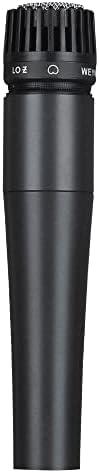
wm57 Dynamic Vocal Classic Style Microphone Audio Instrument Classic Professional Dynamic Cardioid Unidirectional - for Instruments, Drums, Percussion, Vocals(not Include Cable)
Best off-axis rejection, built like a tank, survives drops
Visit on Amazon →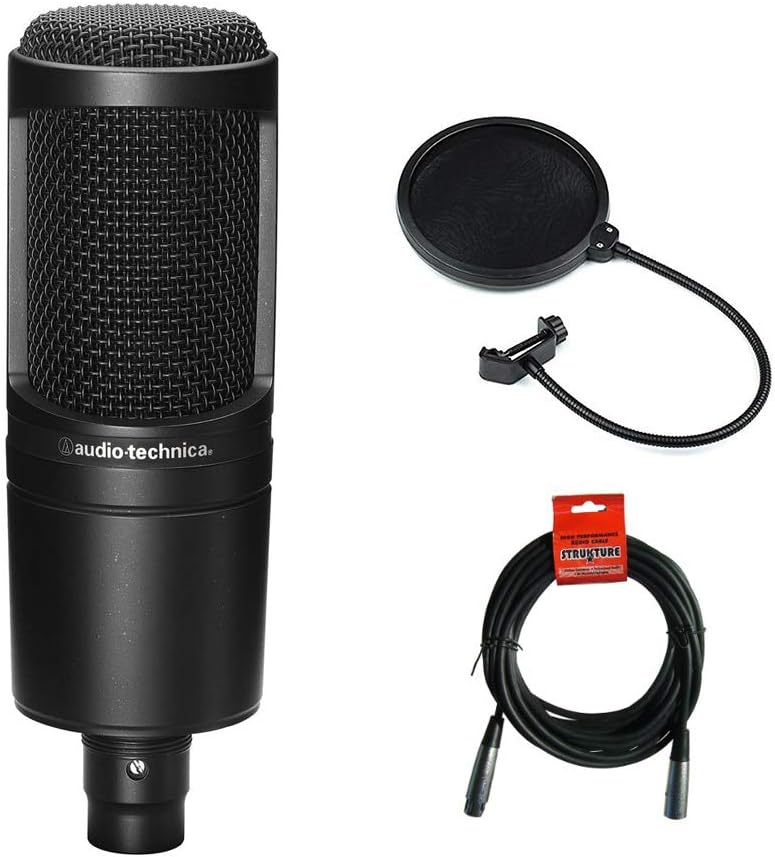
Audio Technica AT2020 Condenser Studio Microphone Bundle with Pop Filter and XLR Cable
Adding value to your purchase, Austin Bazaar bundles your instrument with necessary accessories. Everything you need to start playing immediately comes in one box. Save yourself the hassle and save so
Visit on Amazon →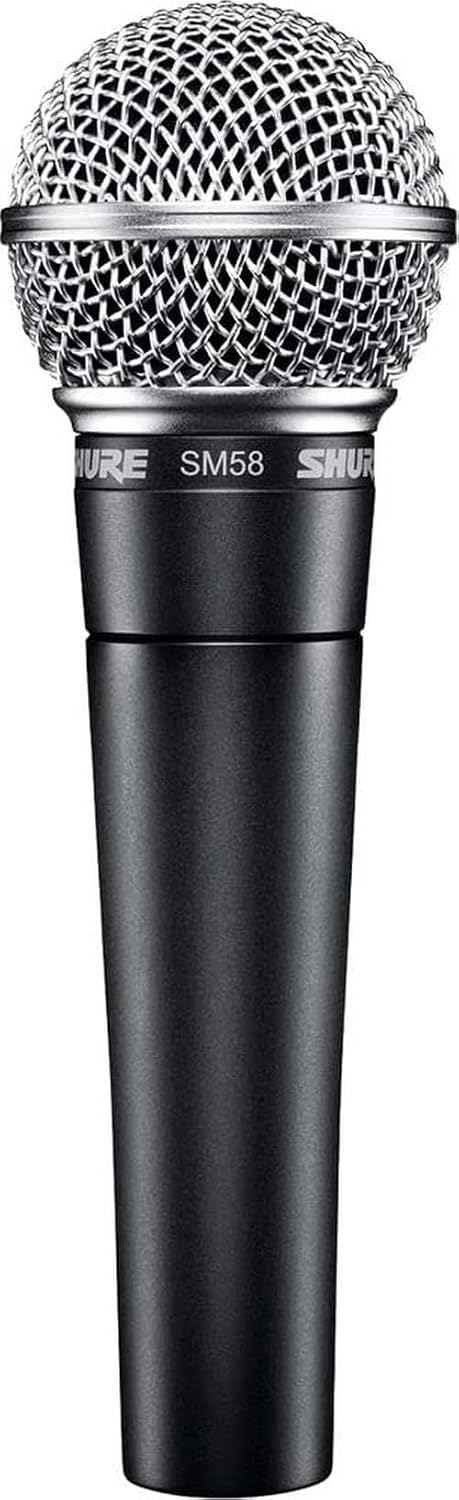
Shure SM58 Pro XLR Dynamic Vocal Microphone
Product Description The Shure SM58-LC is the legendary dynamic vocal microphone trusted by performers, engineers, and creators worldwide. From live stages to studios and podcasts, it del
Visit on Amazon →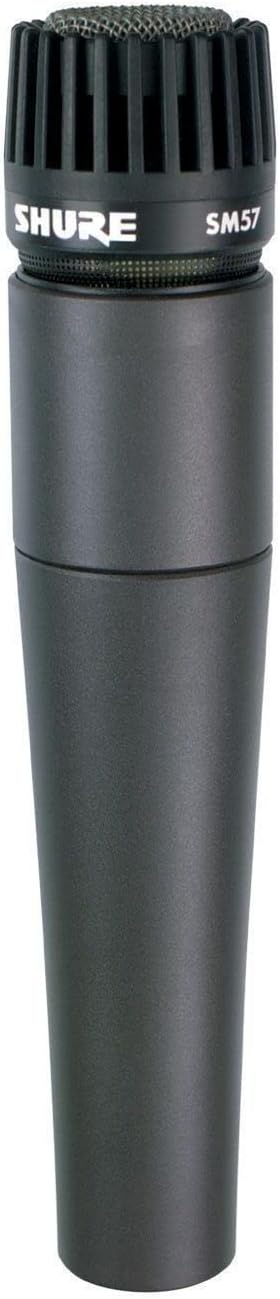 Visit on Amazon →
Shure SM57 | Check price | Instrument workhorse, tight cardioid | Not voiced for spoken word, thinner low end |## How I tested
I packed these mics into my gear bag and ran them through two rooms. The studio is treated: 2-inch panels on the walls, carpet over hardwood, a reflection filter behind the mic. The kitchen is the real test: tile floor, a refrigerator that kicks on every 20 minutes, a window facing a street with actual traffic.
I recorded the same 60-second script in both rooms, at three distances (2 inches, 6 inches, 12 inches) and two angles (dead-on and 45 degrees off-axis).
Then I ran every take through my edit bay workflow: high-pass filter at 80Hz, a de-esser, compression, loudness normalization.
I looked at the spectrograms. I listened for what survived. A mic that sounds fine raw but falls apart in the edit is not a good mic.
Best Overall: WEYMIC wm57
I paid $23 for this mic in 2013. It's been in my bag since, and it's still going strong. One buyer, who's used his since 2013, says the same. That's twelve years of use on a $20 mic, which works out to about four cents a day. That's not a purchase; that's a steal.
The reason it wins is the rejection. Multiple buyers report it blocks out background noise extremely well. One said, "You cannot hear anything in the background. It does not pick up the cat in the background or the cars going by outside." That's the kitchen test, and it passes.
The cardioid pattern is tight, and the vibration isolation means Ringo shifting on the hardwood doesn't make it into the take.
Even when I fidget with the mic, you won't hear it.
The downsides are real. It's bass-heavy and muddy up close. One detailed reviewer said it's "very focused in the lows and mids, only. It has no treble whatsoever." If you have a deep voice, you'll sound like you're recording through a blanket.
That's an EQ problem, not a mic problem. A high-pass filter and a dip around 300-400Hz cleans it up. And it's gain-hungry, so you need an interface that can push 30dB or more.
Should you buy the XM8500? If you're recording in an untreated room and you don't have $200 for a mic and interface, this is the one. Budget for a better clip and a decent interface.
Best for Treated Rooms: Audio-Technica AT2020
I've been using this mic for a decade. It's a workhorse. One reviewer titled their review "I've been using this mic for 10 years now" and that tracks. It's a condenser, so it picks up more detail than a dynamic, which is great for voiceover and singing.
But that detail comes with a cost: it picks up the room. In my kitchen, the AT2020 gave me the refrigerator hum, the traffic, and the neighbor's dog.
In my treated studio, it sounds fantastic.
The XM8500 reviewers keep comparing the two, and one said it's "close to the AT2020 at a fifth of the price." That's fair in terms of overall quality. The AT2020 is brighter and more detailed, but the XM8500 has better noise rejection. For a podcaster in an untreated room, the XM8500 wins. For a voiceover artist with a treated space, the AT2020 wins. Different tools for different jobs.
Should you buy the AT2020? If you've treated your room and you want more detail in your voice, yes. If you're recording in a tile bathroom, save your money and get the dynamic.
The Placement Rules That Matter More Than Gear
Here's what I've learned from 4,000 episodes. The mic is the messenger, not the problem.
Distance. Get within 2 to 6 inches of the capsule. Any farther and you're recording the room, not your voice. The closer you get, the more bass you get, which is the proximity effect. Use it if your voice is thin, back off if you're boomy.
Off-axis. If you're getting too much bass, turn the mic 45 degrees off from your mouth. This reduces the proximity effect and can clean up muddiness without EQ.
The wall. Stay at least 2 feet away from any wall behind the mic. Reflections from a nearby wall create comb filtering, which makes your voice sound hollow.
The room. A rug on a hard floor makes more difference than a $200 mic upgrade. Curtains on a window kill reflections. Move 2 feet away from the wall and put something soft behind you.
What else to consider
The budget pick: Pyle PDMIC78. It's a knockoff of a classic broadcast mic. It's cheap, it's heavy, and it sounds surprisingly good for the price. But the build quality is hit or miss, and it's not as durable as the XM8500.
The storage king: Shure SM58. You can throw it in a bag, drop it, and it'll still work. It's the industry standard for live vocals, and it's a fine podcast mic. But it's pricier than the XM8500 and slightly duller for spoken word.
The instrument specialist: Shure SM57. This is the mic for guitar amps and snare drums. It's a tight cardioid, but it's not voiced for voiceover. If you're a musician who also podcasts, it's a good second mic, not a first.
The $200 Setup
If you're starting a podcast and you have $200 total, here's what I'd buy. The XM8500 at $20-40, a Scarlett Solo interface at about $100-120, a proper mic clip for $10 (the included one is 20-35mm and the mic is 40mm, it doesn't fit), and a used boom arm for $30-40. That's about $180, and it'll get you a recording that sounds 90% as good as a $1,000 setup. The remaining 10% is room treatment.
Don't buy a USB mic for $100. You're paying for convenience and locking yourself into a mic you can't upgrade. The XM8500 and interface path gives you a path forward.
The Edit Bay Test
Every mic I test goes through my actual workflow. The high-pass filter, the de-esser, the compressor, the final loudness normalization. A mic that sounds fine raw but falls apart in the edit is not a good mic. The XM8500 is the latter. It's not the cleanest mic I've ever heard, but it responds well to EQ, and its noise rejection means I'm not fighting the room in every edit.
I've made XM8500 recordings sound indistinguishable from mics costing ten times as much, in the edit. The problem is that most podcasters don't know how to EQ. They record, they listen back, they think the mic is bad, and they buy a new one. The upgrade treadmill. I've seen it a thousand times.
The mic is the tool. The ear is the instrument. You can't buy the latter. But you can learn where to put the mic, and that's 90% of the battle.