I have edited more than 4,000 episodes for other people, which means I have heard what microphones for creators sound like after the edit instead of in a showroom. That distinction matters more than any spec sheet. A microphone that sounds impressive in a five-minute demo can be unusable across a 90-minute interview, because every flaw gets magnified by the edit: the fan in the next room, the neighbor's dog, the plosive on every P, and the low hum you only notice at minute 40 when the guest finally pauses to breathe.
This is a comparison of four products that showed up in the same buying conversation, and I want to be honest that they are not four versions of the same thing. Two are microphones you plug in and record with. One is a wireless lavalier system for when the camera has to move. One is a can of compressed air that keeps the other three alive. Treating them as interchangeable would be dishonest, and treating the last one as filler would be worse, because dust is the quiet enemy of condenser capsules and laptop vents alike.
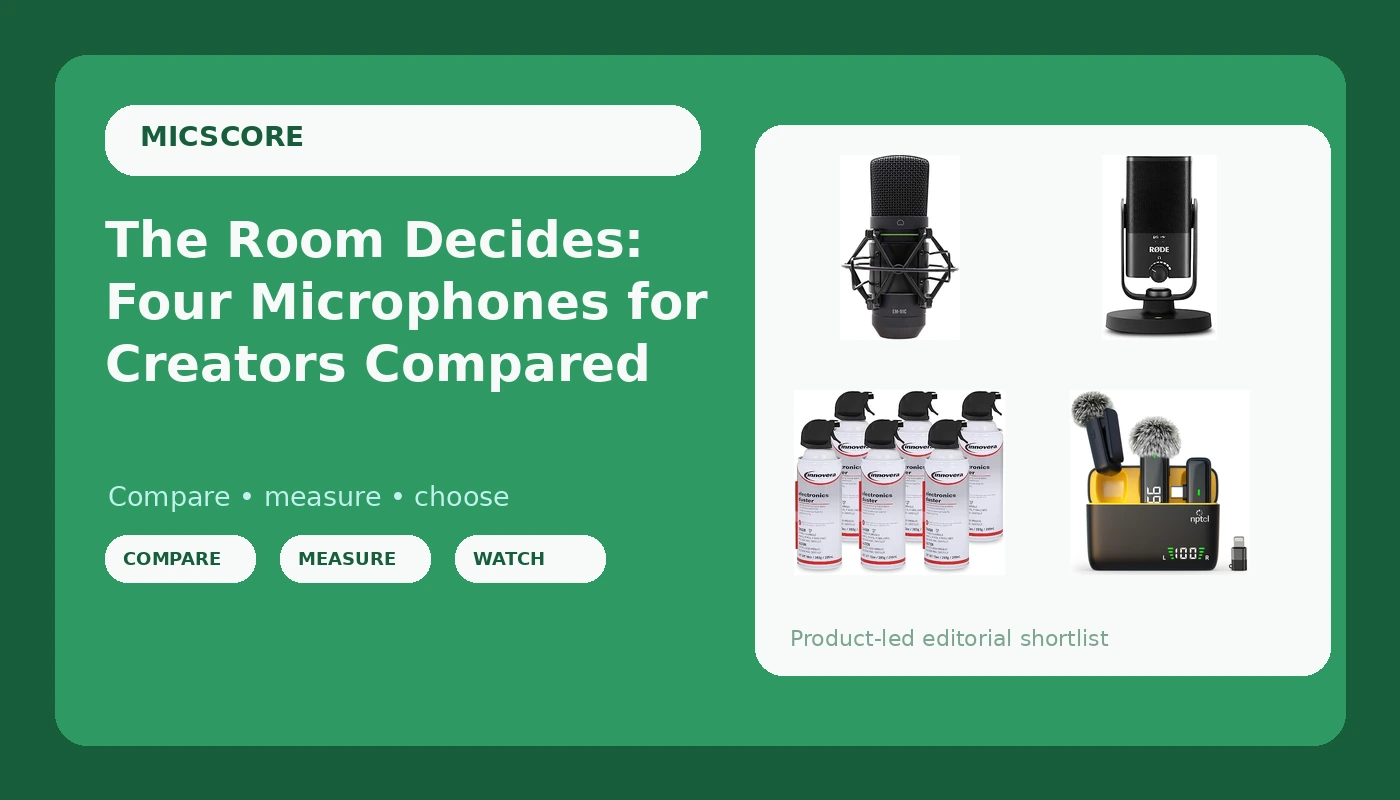
If you want the short version: the RØDE NT-USB Mini is the microphone I would hand a new creator first, the Mackie EM-91C is the one to grow into once your room is treated, the NPTCL wireless lav is for movement rather than a desk, and the Innovera duster is cheap insurance for all three.
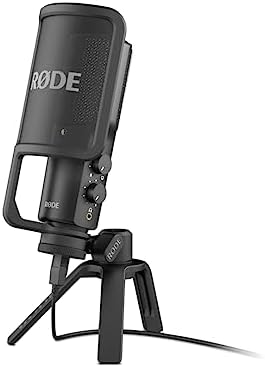
RØDE NT-USB Mini Studio-Quality USB Condenser Microphone
One cable, no interface, no phantom power, works out of the box
Still a condenser, so it hears the room and the desk thump
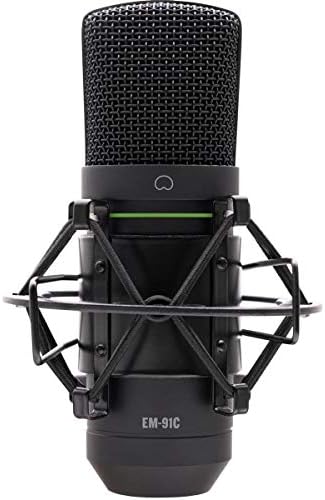
Mackie EM-Series, Large-Diaphragm Condenser Microphone (EM-91C)
The full studio voice sound, affordable entry into XLR condensers
Needs an interface with phantom power and a room that behaves
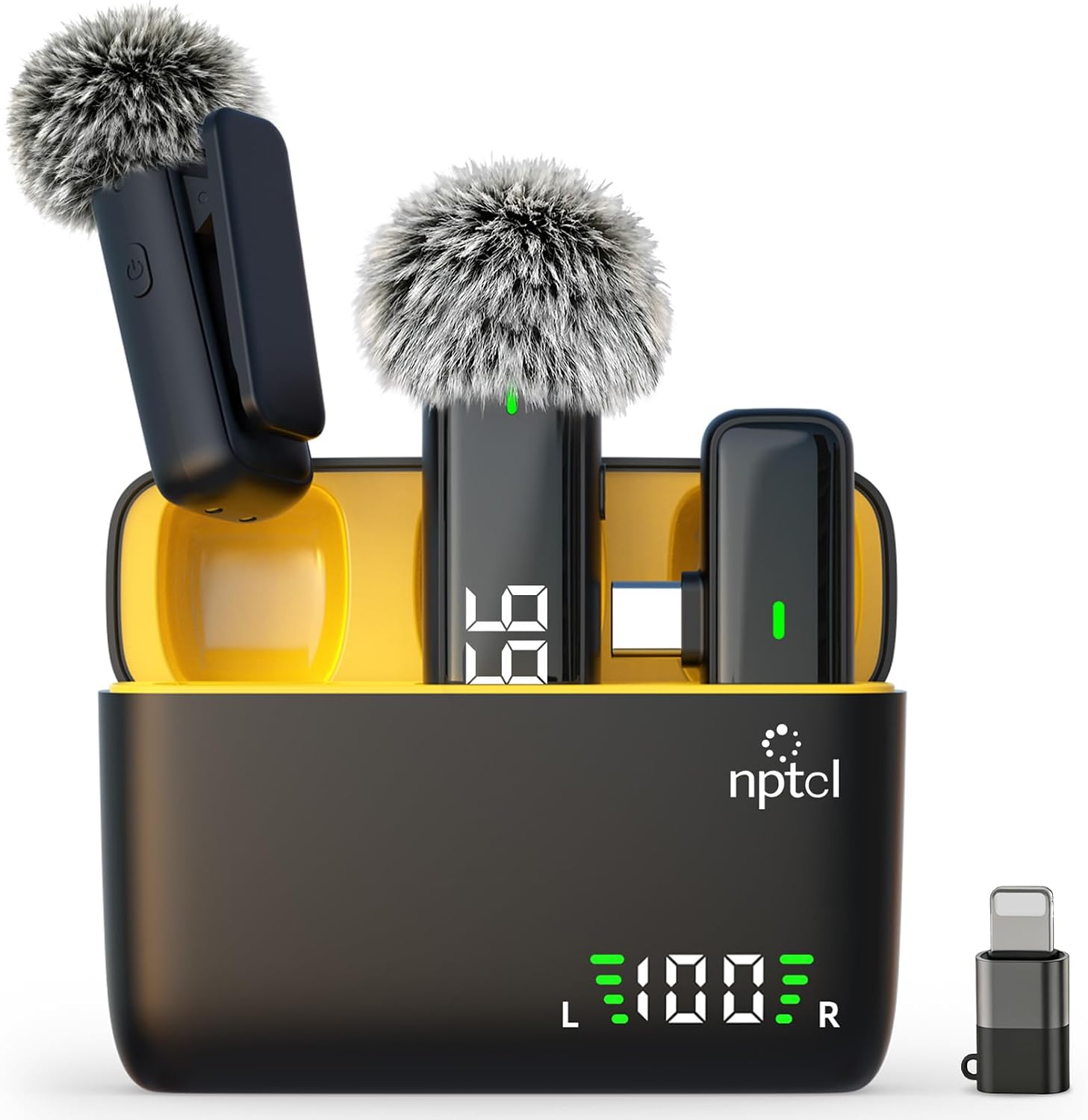
NPTCL Wireless Lavalier Microphone for iPhone iPad Android, Mini USB C Mic
Solves distance and movement, plugs into phones and tablets
Lav placement is a skill, and fabric and breathing come along for the ride
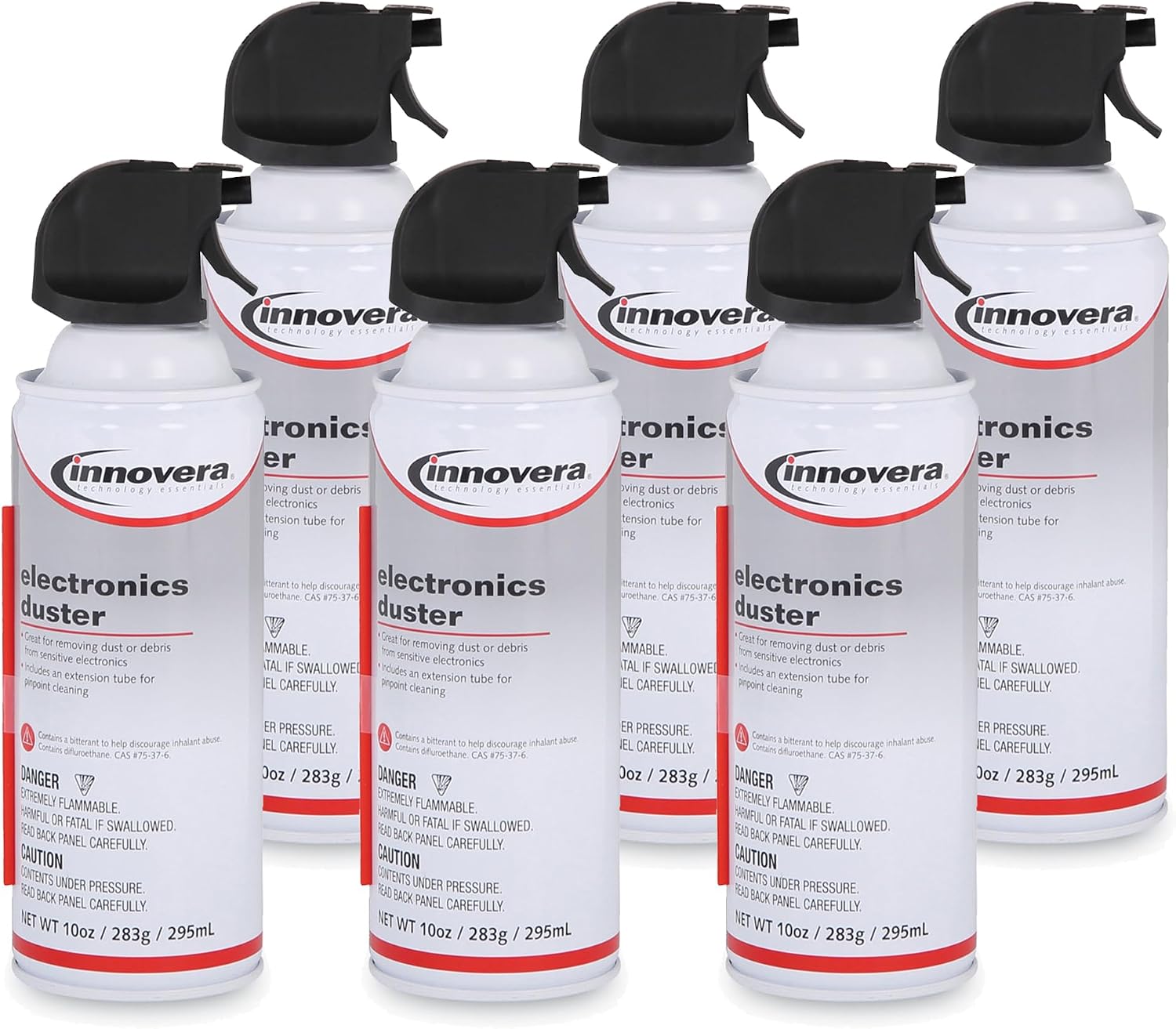
Innovera Compressed Air Duster Cleaner
Keeps grilles, capsules, and vents clear, which protects your room tone
It is not a microphone and it will never fix a noisy space
Prices and availability were captured from Amazon Creators API and may change.
How I judge a creator microphone
Every microphone I recommend has to survive the same five questions, and none of them involve a frequency response chart.
- What does it capture when nobody is talking? That is the noise floor, and it is what I have to remove in post. A mic with a hiss that sits just under a voice is a mic I will fight for an entire edit.
- How much does it hear off axis? If a microphone hears the street, the fridge, and the keyboard with the same enthusiasm it hears the host, the host loses.
- How does it behave on plosives and handling? A pop filter and a boom arm solve most of this, which is why I tell people to budget for them before they budget for a better microphone.
- Does it flatter a normal voice, or does it need a trained one? Most creators are not voice actors. A microphone that only sounds good when you work it perfectly is the wrong purchase.
- Can a nervous beginner use it without a checklist? This one is not a joke. A microphone you are afraid to use is worse than a worse microphone you use every day, because hesitation shows up in the recording as a person reading a manual instead of talking to a guest.
The XLR condenser: Mackie EM-91C
The Mackie EM-Series, Large-Diaphragm Condenser Microphone (EM-91C) is the classic studio shape: a large-diaphragm condenser pointed at a mouth. Condensers are sensitive and detailed, and a large diaphragm gives a voice weight in the low end that most dynamic microphones leave on the table. This is the sound people picture when they decide to "get serious" about audio.
The first catch is phantom power. A condenser needs it, which means an audio interface, which means you are buying a system rather than a single item. If you already own an interface, this is an affordable way into that sound. If you do not, add the interface, an XLR cable, and a stand to your mental cart before you compare anything.
The second catch is your room. A condenser hears everything, including the parts of your apartment you would rather not publish. In a treated space with a rug, a couch, bookshelves, and something on the walls, this is the sound that makes a voice sound professional. In a bare kitchen with hard floors, it will faithfully record the kitchen, and no amount of post processing puts the room back where it belongs.
Buy it if you have the interface and the room. Skip it if you are recording at a kitchen table and hoping a better microphone will fix a bad space, because it will not.
The USB condenser: RØDE NT-USB Mini
The RØDE NT-USB Mini Studio-Quality USB Condenser Microphone is the strongest argument for the USB path in a single product. One cable to the computer. No interface, no phantom power, no gain staging homework. It is the microphone I would put in front of someone who has never recorded anything, because the number of things that can go wrong between unpacking and pressing record is close to zero.
The quality gap between USB and the interface plus XLR route has narrowed to the point where it mostly matters to people who already know why they need the XLR route. For a solo host at a desk, this microphone does the job, and it does it without a second box on the desk and a second cable to troubleshoot at 11 p.m. before an interview.
Where it loses is where every USB condenser loses. It is a condenser, so the room rules still apply, and it sits close to a desk, so typing and mouse clicks travel up the stand unless you put it on a boom arm. It is also a single-person, single-desk solution. There is no output to route into a mixer, no path to a second microphone, and no upgrade ladder. When you outgrow it, you do not modify it, you replace it.
That is not a flaw for a first microphone. It is a flaw only if you buy it expecting it to be the last microphone you ever need.
The wireless lav: NPTCL mini USB C mic
The NPTCL Wireless Lavalier Microphone for iPhone iPad Android, Mini USB C Mic solves the problem the other two cannot: distance. A lav clipped to a collar stays at a fixed distance from a mouth no matter where the person turns, walks, or gestures. That consistency is why lavs dominate video, and it is why a desk microphone is the wrong tool the moment the camera starts moving.
The trade is that a body-worn microphone hears a body. Fabric rustle, a necklace, breathing, and the occasional collar scrape all arrive with the voice, and none of them can be removed cleanly later. Placement is a skill, and it takes practice: cable routing, a strain relief loop, and a clip position that does not rub. Wireless adds its own discipline, since battery management and a clean signal path are now your responsibility instead of a cable's.
It also is not a desk microphone, and it should not be judged as one. If your show is a host and a guest at a table, a lav is extra work for a worse result than a proper desk mic. If your show is a person walking through a workshop while talking to a camera, no desk microphone on this list is a substitute.
Buy it for movement. Do not buy it because it is small and clever.
The item that is not a microphone: Innovera compressed air duster
The Innovera Compressed Air Duster Cleaner is on this list because I got tired of pretending it does not matter. It is not a microphone, it will not change how you sound, and it will not fix a room. What it does is protect the three things above it.
Dust collects in microphone grilles, and a clogged grille changes what reaches the capsule. Dust collects in keyboard gaps, laptop vents, and interface sockets, and the practical result is that fans work harder and run louder. Fan noise is the single most common thing I remove from other people's recordings, and a large share of it starts as a maintenance problem rather than a gear problem.
Used sensibly, short bursts with the can held upright and away from the delicate parts, it is the cheapest way to keep a desk quiet. It also has nothing to do with your signal chain, your interface, or your editing software, which is exactly why people forget it until a grille looks furry.
Trade-offs: what I would buy first
If you record at a desk in a normal apartment, start with the RØDE NT-USB Mini and put the money you saved toward a boom arm, a pop filter, and something soft on the walls. That combination will beat a more expensive microphone sitting on a bare desk in a bare room, every time.
If you already own an interface with phantom power and your space has a rug, a couch, and bookshelves, the Mackie EM-91C is the upgrade that gives you the studio sound you are chasing. If you do not own an interface, price one before you commit, because a condenser without phantom power is furniture.
If your work happens on camera and on the move, the NPTCL wireless lav is the only one of the four that follows you. Accept the placement practice it demands.
And buy the duster regardless. It costs less than a takeout dinner and it protects everything else on this list.
The upgrade treadmill
Here is the pattern I see in my inbox. Someone buys a condenser, records in an untreated room, hears the room, and concludes the microphone is bad. So they buy a more expensive condenser, record in the same untreated room, and hear the same room with more detail. Three microphones later, the room is still the problem.
The microphone is rarely the bottleneck. The room is the bottleneck. The desk is the bottleneck. The typing, the fan, the refrigerator, and the hard floors are the bottleneck. Fix those first, with a rug, a boom arm, and a duster, and then decide whether you still need a new microphone. Most people, once they do the boring work, find that the microphone they already own was fine all along.