I have edited more than 4,000 podcast episodes for other people, which means I have heard every possible way a recording can go wrong. The microphone is almost never the first thing that went wrong. It is usually the desk, the room, or the fact that the person is leaning sideways toward a mic clipped to a stand while their chair squeaks. That is why I think about a microphone and boom arm setup as one decision instead of two, and it is why this comparison looks strange at first glance: a low profile boom arm, a USB streaming bundle, a wireless lavalier, and an XLR overhead condenser have almost nothing in common except that all four are sold as fixes for bad audio.
Related: Dynamic Vs Condenser Mics For Home Podcasters
The best first purchase for most creators reading this is not a microphone at all. It is the boom arm. Get the capsule off the desk, out of the keyboard path, and pointed at your mouth from a consistent distance, and a mic you already own will sound noticeably better. The FIFINE BM88W is the cheapest way to make that change. But if you are starting from nothing and streaming to an audience, the FIFINE A6T+H9 bundle covers the mic, the arm, and the headset in one order. If your audience watches you on a phone, the wireless lav is the one that matters. And the Phenyx Pro PDM35 is a specialist tool for instruments, not a voice mic, and I want to be honest about that up front.
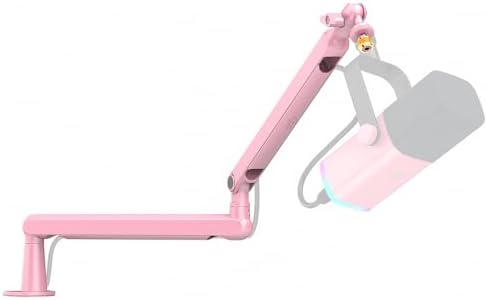
FIFINE BM88W Low Profile Mic Boom Arm for Podcast Recording Streaming
Gets the mic off the desk and out of the typing path, which fixes more bad recordings than a capsule swap ever will
It is an accessory, so it cannot rescue a microphone you already dislike
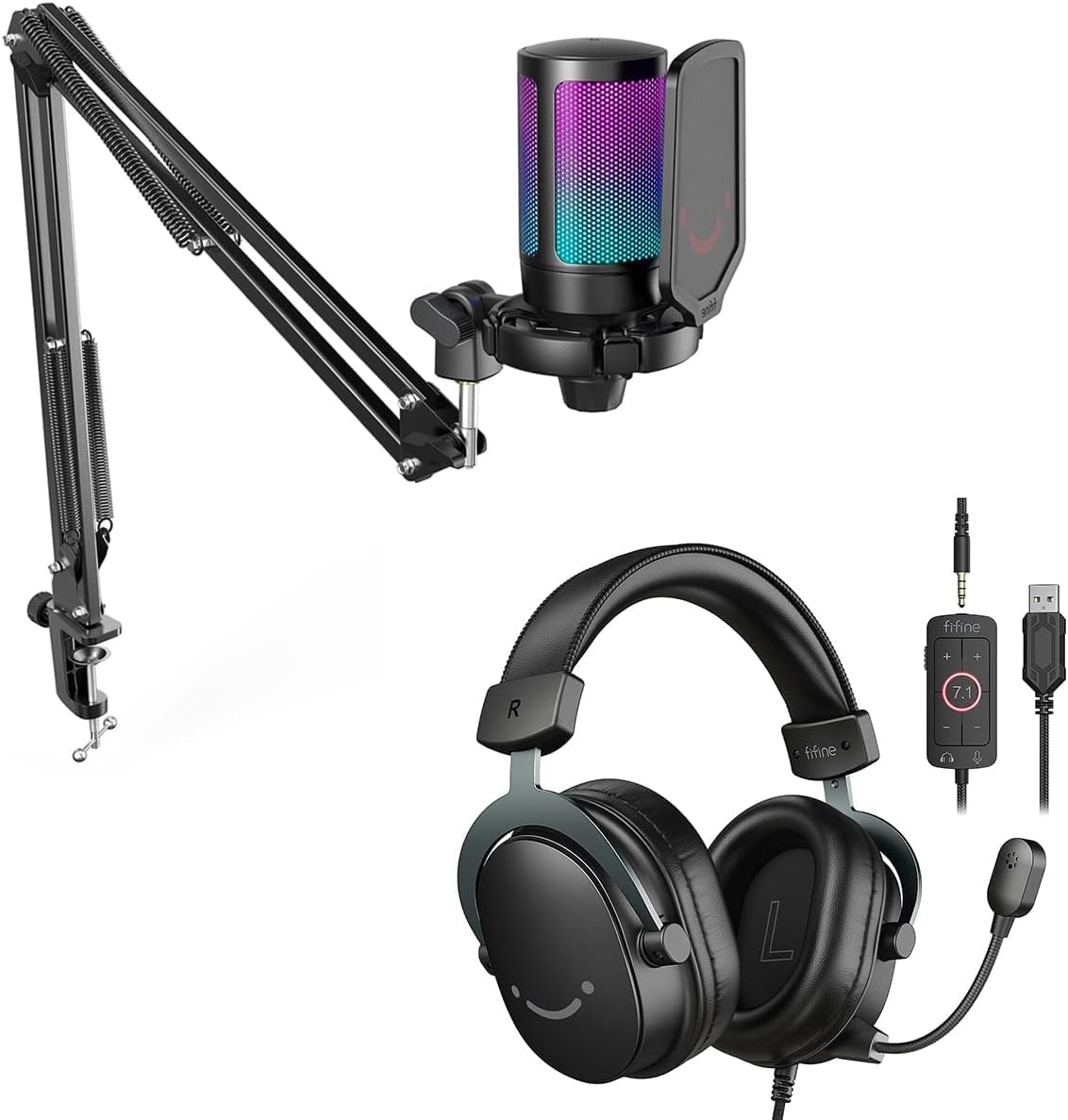
FIFINE Gaming Microphone & Headset Bundle: Computer Condenser RGB Mic with Arm Boom, PC Headset with 7.1 Surround Sound, Control Box, 3.5mm Jack for Streaming/Twitch/PS4/5 - A6T+H9
One order covers the mic, the boom arm, and a headset with a control box, so a new streamer has nothing left to buy
It is a bundle, so you pay for the headset even if you already own one, and a condenser in an untreated room hears the room
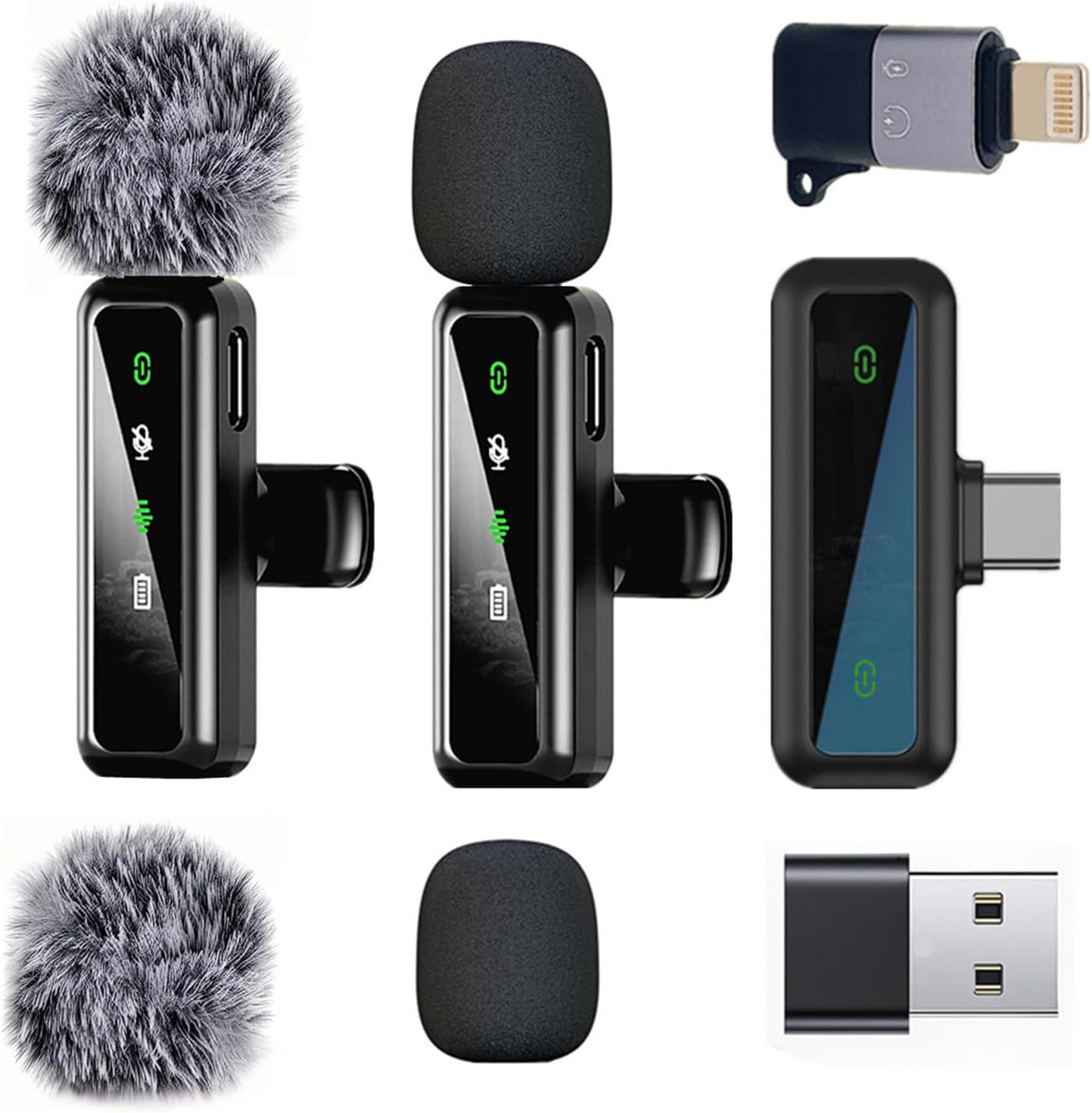
Wireless Lavalier Microphone for iPhone - iPad, Android Phone Computer, Mini Microphone for Live Streaming, Video Recording, Outdoor or Indoor Interviews, YouTube, TikTok, Vlog (Black)
The cheapest route to intentional sounding phone video, with no interface and no cable to your camera
A capsule clipped to your chest is not a treated booth, and placement plus clothing noise is the entire job

Phenyx Pro PDM35 Overhead Condenser Microphone, Cardioid Microphone with Wide Frequency Response Range, XLR Connector, Pencil Stick Condenser Mic for Hi-Hat, Percussions, and String Instruments
A proper pencil condenser for overhead and instrument capture, with the cardioid pattern and XLR connection that job needs
XLR means an interface or recorder with phantom power, and it is the wrong first microphone for a talking head
Prices and availability were captured from Amazon Creators API and may change.
What these four products actually are
Four products, four completely different jobs, and the mistake almost everyone makes is buying the one with the best story instead of the one that solves the problem in front of them.
Two of these are microphones meant for a person talking at a desk. Two are not. The FIFINE bundle is a USB condenser plus a boom arm plus a gaming headset, sold as a streaming starter kit. The wireless lavalier is a phone and camera accessory, built for people whose audience watches them on a screen that fits in a hand. The Phenyx Pro PDM35 is an overhead instrument mic with an XLR connector, the kind of thing you point down at a hi-hat or a string section, not at a face. And the FIFINE BM88W is a mount, which is the least exciting item on this list and probably the one that will change your recordings the most.
If you came here hoping for a straight ranking, I will not pretend these are four flavors of the same thing. They are four answers to four different questions, and the useful work is figuring out which question you are actually asking.
Start with the mount, not the capsule
Every week I get audio from someone who bought a better microphone and sounds the same as before, because the mic is sitting on the same $15 desk stand six inches from a mechanical keyboard. A desk stand couples your typing straight into the capsule. It also puts the mic in a fixed spot that has nothing to do with where your mouth is when you lean back in your chair. You then compensate by turning up the gain, which turns up the room, the keyboard, and the refrigerator.
The FIFINE BM88W is a low profile boom arm, which matters more than the word "boom" suggests. A tall arm that arcs over your head tends to crowd your monitor and put the capsule off axis, so you end up speaking past it instead of into it. A low profile arm keeps the pivot closer to the desk and the mic closer to your mouth without building a scaffolding over your workspace. That geometry is what gives you a consistent distance, and consistent distance is most of what we mean when we say a recording sounds professional.
Two things to check before you commit to any arm, and I have been burned by both. First, the clamp and the weight rating. A mount that sags by week three is worse than a desk stand, because you will stop adjusting it and start tolerating it. Second, how the cable is routed along the arm. Handling noise travels down a cable that is allowed to slap against metal, and no amount of post processing removes a knock that happens at the exact moment you make a good point.
Check current Amazon price on the BM88W if you already own a mic you like. This is the upgrade I recommend before any capsule upgrade.
The all in one path: FIFINE A6T and H9 bundle
The FIFINE bundle is aimed at a specific person: someone who wants to start streaming this weekend, owns no audio gear, and does not want to learn what phantom power is. You get a USB condenser with RGB lighting on a boom arm, a headset with 7.1 surround sound and a control box, and a 3.5mm jack, and it is marketed for Twitch, streaming, and PS4 and PS5 use.
Judged as a starter kit, that is a coherent package. The arm solves the desk problem I just spent a section complaining about. The USB connection means no interface, no cables to a mixer, and no gain staging homework. The headset covers game audio and chat monitoring so you are not juggling two devices, and the control box puts volume within reach instead of inside a settings menu. For someone whose first goal is to press record and have it work, the bundle removes every excuse.
Judged as an audio purchase, understand what you are buying. It is a bundle, so part of your money goes to a headset you may already own a better version of. It is a condenser, which means it is more sensitive to the room than a dynamic mic, and the untreated bedroom with a window unit is not a forgiving environment. And it is USB, which in my experience means the software layer is the wild card: the hardware has closed most of the quality gap, but the drivers and the companion app are where budget brands still stumble.
If you stream to an audience and own nothing, this is the shortest path from zero to a working setup. If you already have a microphone you like and a headset you like, buy the arm and skip the rest.
Check current Amazon price on the A6T+H9 bundle.
The phone first path: wireless lavalier
The wireless lavalier is the product on this list with the widest gap between what it costs and what it can do for the right person. If your videos are shot on a phone, whether that is TikTok, a vlog, an interview, or a product demo, the difference between the phone's built in mic and a lav clipped to your shirt is enormous. The built in mic is a compromise designed for phone calls in your hand. A lav is a microphone placed where the sound actually is.
It also works across the devices most creators actually own, including iPhone, iPad, Android phones, and computers, which is why this category has exploded. No interface, no XLR cable, no phantom power, no software to configure before you can hit record. Clip it on, plug in the receiver, and go.
The honest caveats are all about placement and physics. A lav capsule sits against fabric, so collar rub, zippers, seatbelt clicks, and a scarf brushing the element are now part of your recording. Position matters more than any spec on the listing: roughly a hand span below the chin and slightly off center gives you a direct path to your mouth without catching every breath. Wind is the other enemy, which is why outdoor shoots need the foam or fur windscreen that comes with most of these kits. And because this whole category is wireless, battery life and interference are real variables, especially in a Brooklyn apartment building where every neighbor has a router and a microwave. Read the listing carefully, because these kits vary a lot in what is included.
Check current Amazon price on the wireless lavalier.
The specialist tool: Phenyx Pro PDM35
I am a voice guy. Instrument mics are outside my lane and I will not pretend otherwise, so I will tell you what the PDM35 is designed to be and let you decide whether that is your job. It is a pencil stick condenser with a cardioid pattern, a wide frequency response range, and an XLR connector, marketed for hi-hat, percussion, and string instruments. Overhead duty means you point it down at a source and let the cardioid pattern reject some of the room around it.
That is a genuinely useful tool if you record drums, acoustic guitar, or strings. It is also a reminder that the XLR path has a cost the listing does not mention. XLR means an interface or a recorder with phantom power, which is the hidden second purchase that turns a budget microphone into a mid budget project. My long standing complaint about gear advice is exactly this: a mic that only sounds good after you spend another couple hundred dollars on a box is not a budget mic, it is the first payment on a system.
Where a voice creator might use something like this is as a second or third microphone, capturing room tone, a guest across the table, or an instrument overdub for a podcast that has music in it. It is not the microphone to buy first if your show is two people talking. Buy it when you know why you need it.
Check current Amazon price on the Phenyx Pro PDM35.
The trade-offs the table cannot show
The table lists what each product is for. It cannot list what each path costs you after the first order, and that number is where most people get surprised.
The arm path costs the least and asks the most of you, because you have to actually use it. Set the mic up, position it, and stop recording with it two feet away because you were too lazy to pull it in. If you will not do that, an arm will not save you.
The USB bundle path costs one payment and buys convenience. You are trading flexibility and a bit of room sensitivity for the fact that everything works together out of the box. For a first setup, that trade is usually correct.
The lav path costs the least in gear and the most in discipline. Placement, clothing, wind, and battery checks are now part of your shoot. Do them once and they become habit. Skip them and you will record 20 minutes of collar rub.
The XLR overhead path costs the most, because the microphone is only the visible part of the receipt. Interface, cable, stand or arm, and the knowledge to use them are all part of the real price.
The room is still the microphone
I will keep saying this until it stops being true. The room you record in shapes your sound more than the capsule you point at your face. A hard walled bedroom with a bare floor gives you reflections that arrive milliseconds after your voice, and no microphone at any price removes them. Blankets, a rug, a bookshelf, and a closet full of coats all do more for a recording than a capsule upgrade, and they cost nothing.
This is the part of the advice nobody clicks on. Gear videos get views; acoustic treatment does not. But I have heard a cheap microphone in a treated room beat an expensive microphone in a kitchen more times than I can count, and I have heard the reverse just as often. Before you buy anything on this list, spend one evening clapping your hands in your recording space and listening for the ring. If you hear it, fix that first.
Which one should you actually buy
If you own a microphone you like and it lives on a desk stand, buy the FIFINE BM88W. That is the single highest return purchase here.
If you own no audio gear at all and you stream to a live audience, buy the FIFINE A6T+H9 bundle. It is a complete first setup, and the arm included in the box does the job the BM88W does for someone who already has a mic.
If your audience watches you on a phone, buy the wireless lavalier. It is the only product here that fixes phone audio, and phone audio is what most creators are actually publishing.
If you record instruments and you already own an interface, the Phenyx Pro PDM35 is a reasonable overhead pencil condenser. If you do not own an interface, that purchase is bigger than it looks, and it is not the right first step.
Nobody needs all four. Most people need one, plus a rug.
What I am watching next
The interesting fight in this category is no longer the capsule. It is the software layer. On mic processing, meaning EQ and compression built into the device, is spreading from gaming headsets into microphones, and the brand that ships the best automatic room correction will win the next round of buying decisions. I expect room treatment kits to sell better too, once enough people figure out that the microphone was never the problem.
I keep a dated list of these predictions and score it every January. So far, the one I got most wrong was assuming people would stop buying condensers for untreated bedrooms. They did not. The gear is more fun than the room, and that is not going to change.