Related: Best USB Microphone for Podcasting Without an Interface
Every week someone sends me an episode and asks why their expensive condenser sounds worse than the cheap mic their co-host is using across town. The microphone is almost never the problem. The room is, along with how far they sit from the capsule and whether they set gain before they hit record. That is the lens I use for home studio microphones: what does this thing actually do in an apartment with a fridge humming two walls away?
I edit other people's podcasts for a living, which means I have heard these exact microphones in every possible state of misuse, in good rooms and bad, close and across the desk. The four below cover the situations I get asked about most: a serious XLR condenser for a treated room, a cheaper XLR condenser for a first setup, a USB mic that skips the interface entirely, and a wireless kit for people who record on a phone. None of them is best in a vacuum. Each one wins in a specific room and workflow, and the wrong pick costs more in re-records than it saves at checkout.
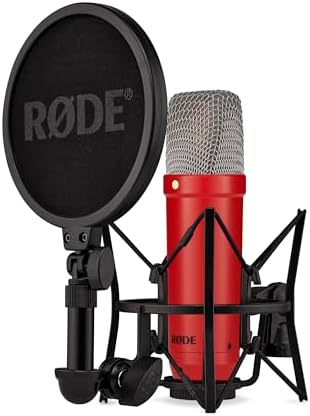
Best for a Treated Room: RØDE NT1 Signature Series
This is the mic I point people toward once their room is sorted, and only then. It is a large-diaphragm cardioid condenser on XLR, so it wants phantom power, a preamp with usable gain, and a space that does not hand every reflection back to the capsule. Put it in a bare room with hard floors and it will tell the truth about that room, loudly.
Put it in a treated corner with a rug and a couple of panels behind the talent, and it does the thing condensers are supposed to do. Voices arrive with detail, the consonants stay intact, and there is enough top end that you can hear a person's mouth move without hearing their whole apartment. It also holds up when someone leans in and belts a line, which matters if you record two people at one table.
The catch is everything around it. It is sensitive to plosives, so a pop filter is not optional. It hears the proximity effect honestly, which means if the host drifts from four inches to ten, you will hear the low end walk away in the edit. It needs an interface, and it needs you to understand gain staging, because a condenser with the gain cranked picks up the room tone you forgot was there.
If your room is untreated, this mic will make your room the star of the show. If your room is treated, it rewards you every episode. Check current Amazon price.
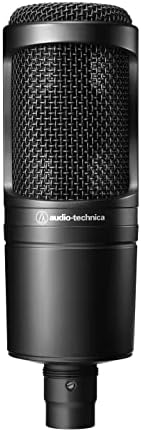
Best First Condenser: Audio-Technica AT2020
The AT2020 is the first XLR condenser for a lot of people, and it has stayed that way for years because it does one job without drama. Cardioid, XLR, phantom power, no switches on the body. You set your gain at the interface and you live with it. For a beginner, that simplicity is a feature, not a limitation.
Tonally it sits in a middle lane that flatters most speaking voices without much fuss. It is not a warm, fat, radio-voice mic, and it is not a bright, sibilant mic either. It is neutral enough that a little EQ in post goes a long way, and honest enough that bad mic technique shows up immediately. Back off it and it thins out. Get close and the low end piles up. Learning to sit still six inches from this capsule is a skill worth having.
Where it beats the NT1 for a beginner is the price of entry. Where it loses is in the fine detail and in how gracefully it handles a room that is fighting back. Both are condensers, both want treatment, and both will happily record your HVAC system if you let them.
Treat this as the training mic. It teaches you gain staging, distance, and the value of a pop filter. If you outgrow it later, you will know exactly why you are upgrading instead of guessing. Check current Amazon price.
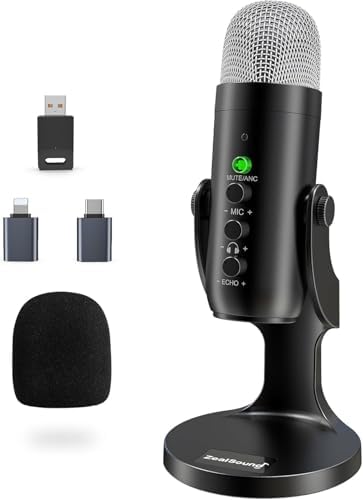
Best Plug-and-Play USB: ZealSound Podcast Microphone
Here is the honest case for a USB mic: no interface, no phantom power, no gain staging homework. You plug it into a computer, a phone, or a tablet, and you are recording in under two minutes. For the person who has been watching gear videos for six months and has not published an episode yet, that matters more than any spec sheet.
This ZealSound has the controls people actually reach for during a session. Gain, volume, and a mute button on the body, so you are not diving into software mid-sentence. There is monitoring through the headphone jack and an echo control, which is a live-monitoring effect rather than something you want baked into a podcast. Leave the echo off for interviews and use the gain knob like it is the only thing standing between you and a clipped take.
The tradeoff is off-axis pickup. USB mics in this class tend to be more forgiving of the room, but that same forgiving nature means they hear more of the room. If there is a fan, a street, or a roommate, this mic will find them. Keep it close, keep the gain low, and put something soft behind the person speaking. And if the noise cancellation is doing heavy lifting, your take will sound processed. Fix the source before you fix it in software.
It also will not grow with you the way an XLR setup does. There is no capsule upgrade, no preamp to swap. But a microphone you actually use beats a better microphone you are afraid of, and this one gets people recording today. Check current Amazon price.
Best for Phone-First Creators: RØDE Wireless Micro
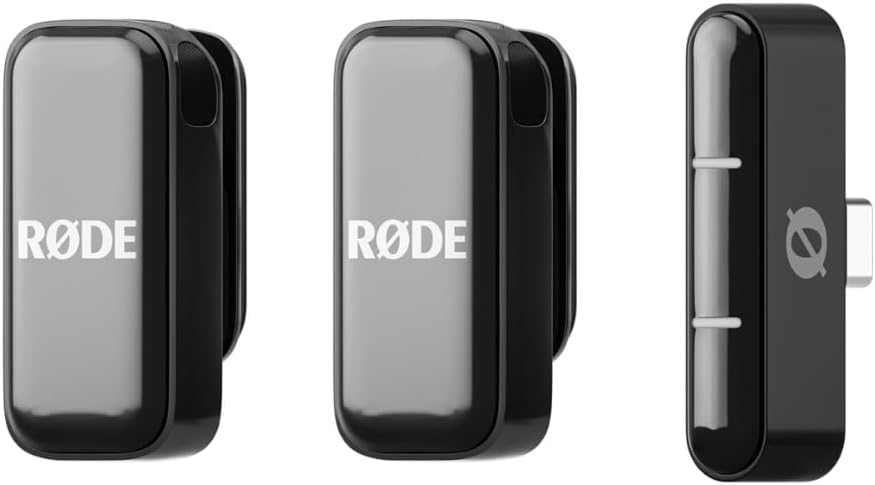
Not every recording happens at a desk. If you shoot video on a phone, interview people on a sidewalk, or film two-person conversations in a space you do not control, a desk mic is the wrong tool no matter how good it is. This kit is two transmitters, a receiver, and a charging case, all USB-C, and it turns a phone into a two-person field recorder.
The advantage is placement. A lav clipped to a collar sits four to six inches from a mouth, which is exactly where a microphone wants to be. That distance buys you more than any frequency response graph, because it puts the voice far above the room in the mix. A street, a cafe, a convention hall floor: proximity beats treatment when you cannot treat anything.
Two mics plus a case means you can hand one to a guest and keep one for yourself without carrying a second bag. For interviews and reaction-style video, that is the whole job. What it will not do is give you the depth of a condenser in a controlled room, and it will not replace a proper desk setup for a scripted podcast. Lav mics also pick up clothing rustle and jewelry, so placement and a little tape are part of the workflow.
If your content is vertical video with talking humans, this belongs in your bag before any studio condenser does. Check current Amazon price.
How I judge a microphone
Four things decide whether a mic survives a real edit: off-axis rejection, self-noise, how it behaves when the person moves, and what it demands from the rest of your chain.
Off-axis rejection matters more than frequency response for anyone with a noisy street outside. A mic that ignores the room behind it gives you a cleaner take with less processing. Self-noise matters in quiet passages, because hiss under a soft-spoken host is impossible to fix later. Movement matters because nobody sits perfectly still for forty minutes, and some capsules punish drifting distance harder than others. And the chain matters because an XLR condenser needs phantom power, a preamp, and cables, while a USB mic needs a port.
Plosives and proximity effect are the two problems I fix most often in other people's files. A pop filter costs less than a re-record. Sitting the same distance from the capsule every session is free.
What these four mics have in common
All four are cardioid, which means they reject the back more than the front. That single fact is why placement and orientation do more for your sound than buying up a tier. Point the null at the noise, whether that is a laptop fan, a window, or a refrigerator.
The two condensers, the AT2020 and the NT1 Signature Series, are the detail champs, and they are also the two that punish an untreated room hardest. The two USB options are the practicality champs, and they trade some depth for the ability to record anywhere with almost no setup. That is the real fork in the road, not brand loyalty.
The home studio microphone reference table
| Microphone | Type | Connection | Best for | Price |
|---|---|---|---|---|
 Visit on Amazon → Visit on Amazon →RØDE NT1 Signature Series |
XLR condenser | XLR, needs phantom power and an interface | Treated room, voiceover, two hosts at one table | $135.00 |
 Visit on Amazon → Visit on Amazon →Audio-Technica AT2020 |
XLR condenser | XLR, needs phantom power and an interface | First studio mic, learning mic technique | $118.00 |
 Visit on Amazon → Visit on Amazon →ZealSound Podcast Microphone |
USB | USB, no interface needed | Recording today with zero setup | $34.99 |
 Visit on Amazon → Visit on Amazon →RØDE Wireless Micro |
Wireless lav, 2 transmitters | USB-C receiver for iPhone and Android | Phone video, field interviews, two people | $85.00 |
Should you buy the RØDE NT1 Signature Series?
Yes, if your room is treated and you already own an interface. It is the most detailed option here and the one that will still be earning its keep in five years. No, if you record in a bare room or you have never set gain before, because it will amplify the wrong things.
Should you buy the Audio-Technica AT2020?
Yes, if you want to learn on a real XLR condenser without spending much. It is the sensible first step into an interface-based setup, and it will teach you distance, plosives, and gain staging in a way a USB mic never will.
Should you buy the ZealSound Podcast Microphone?
Yes, if the alternative is another six months of not recording. It removes every barrier between you and a published episode. Just keep it close, keep the echo off, and know that the room is still doing more damage than the mic.
Should you buy the RØDE Wireless Micro?
Yes, if your camera is a phone and your interviews happen in the real world. Proximity is the one advantage you cannot buy with a better desk mic, and this kit puts a mic on a collar instead of on a stand across the room.